
Goodbye, Millennial Gray: And 3 other flooring trends we are not sad to see go
What's in, what's out, and everything you need to know so that you don't choose a floor that's dated on arrival.
At a Glance
Four cycle-shifts driving 2026, and a floor that captures each new direction.
| Trend | What's Out | What's In | Our Pick |
|---|---|---|---|
| Color Tone | Cold gray vinyl | Warm wood tones | Cyrus 2.0 — Braly |
| Finish | High-gloss shine | Matte realistic textures | Studio — Bozeman |
| Grain Pattern | Busy stripey grain | Calm, cozy simplicity | XL Studio — Quillian |
| Construction | Thin plasticky vinyl | Thick, real-wood realism | Wayne Parc Reserve — Macland |
The End of an Era
Every design cycle ends. The all-beige 90s. The cherry-stained early 2000s. The cool-gray everything-is-a-loft 2010s. And now, finally, the long reign of millennial gray flooring is wrapping up — replaced by warmer tones, calmer grain, more realistic textures, and meaningfully better construction.
Four trends are driving 2026, and none of them are subtle. Below we walk through what is out, what is in, and feature a floor that captures each new direction.
What's Out
Cold gray vinyl
What's In
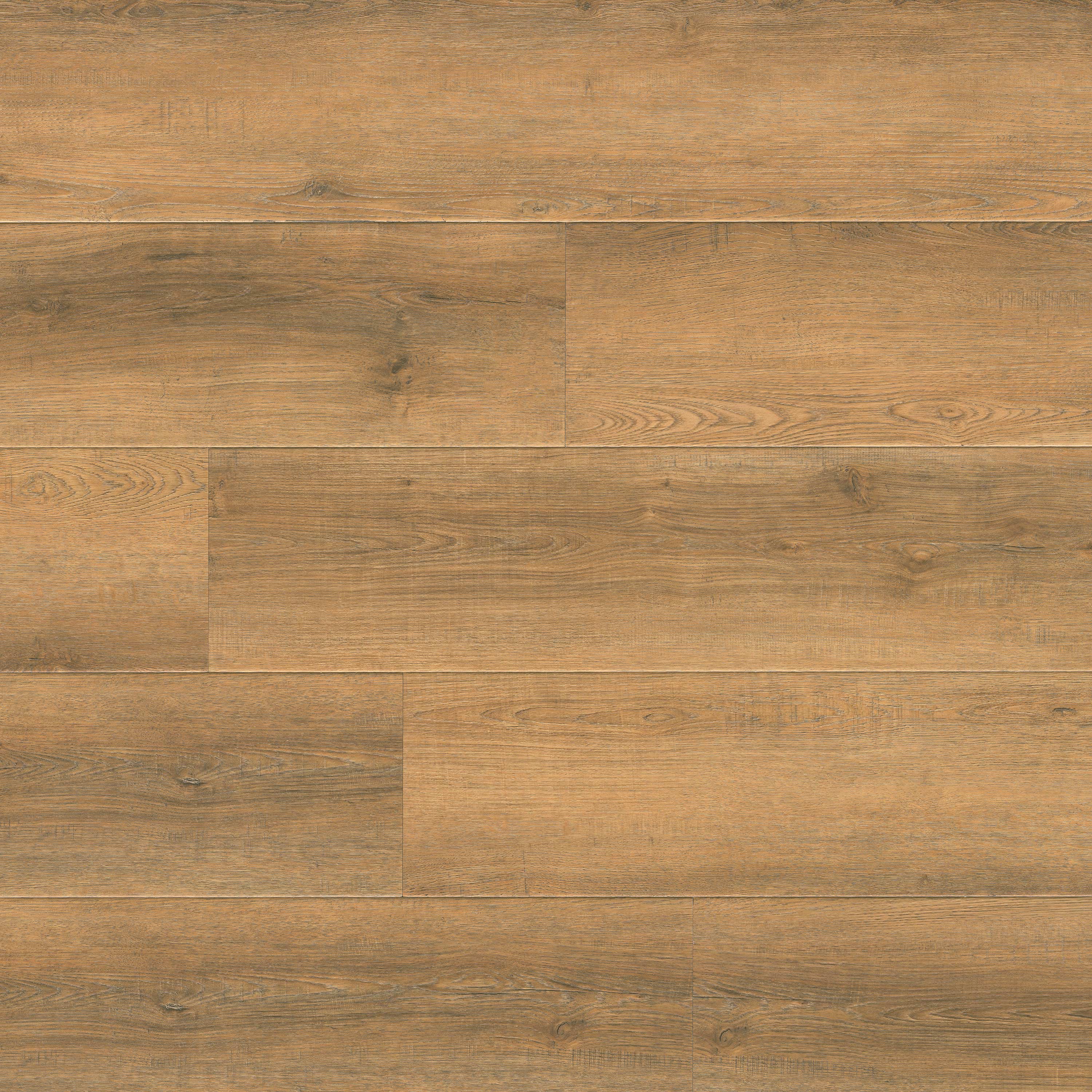
Warm, inviting wood tones
The cool-gray vinyl wave that defined open-concept renovations from 2015 to 2022 has aged poorly. What once read as modern and minimalist now reads as cold, dated, and a little bit hospital-floor. Gray bleaches the warmth out of every other material in the room - wood furniture looks orange, paint colors look wrong, brass and gold finishes look out of place.
Warm wood tones are the dominant story of 2026. Honey oaks, golden browns, soft caramels, and naturally aged tones that look like they belong in a real wood - not a stylized abstraction of one. The shift is partly a reaction to all the gray, but it is also the influence of natural light, biophilic design, and a broader return to comfort over coolness in residential interiors. See our warm wood tones guide.
Featured Floor
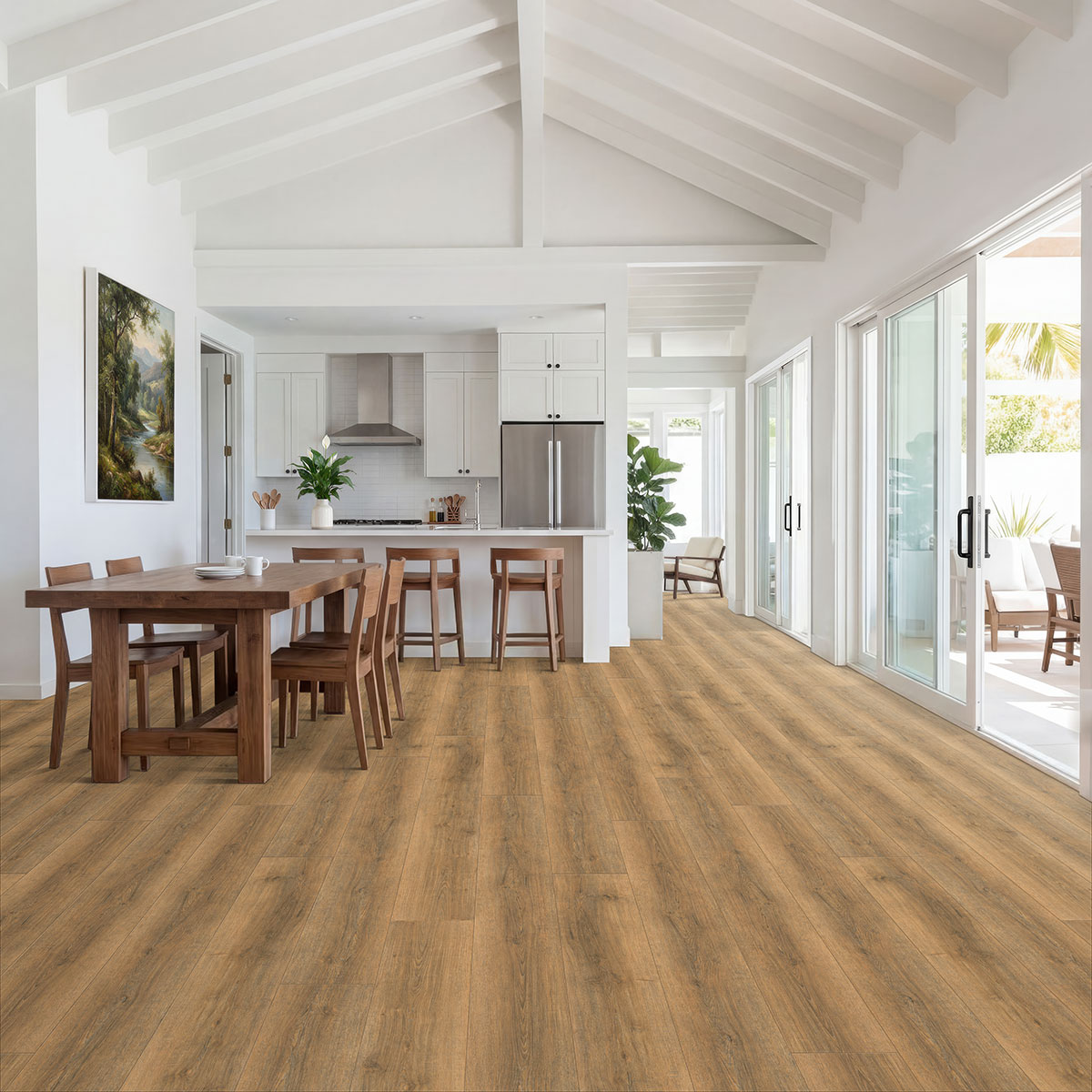
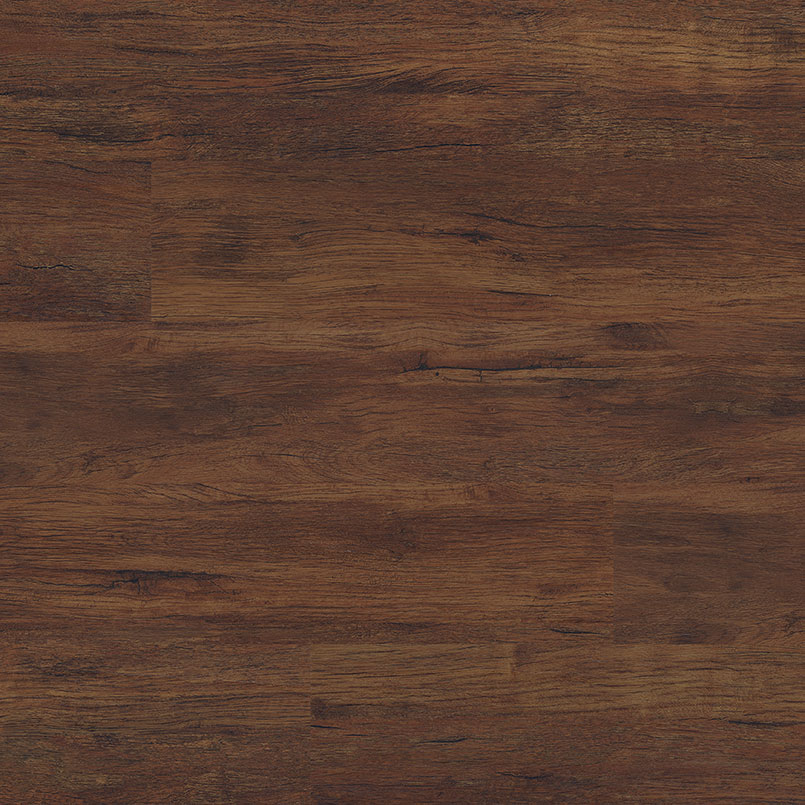
Cyrus 2.0 - Braly
Warm brown · 20 mil wear layer · 5mm SPC core
Best For:
The renovation that needs to feel modern without feeling cold. Braly's warm brown tones bring genuine wood warmth into kitchens, living rooms, and entryways without crossing into too-red or too-yellow territory. The 20 mil wear layer means it stands up to family traffic, while the Cyrus 2.0 construction puts a real-wood look at a real-budget price point.
What's Out
High-gloss, shiny floor finishes
What's In
Matte, realistic wood textures
The shiny showroom-floor finish - the kind that reflects every overhead light and turns a hallway into a mirror - is decisively out. High-gloss finishes show every scuff, every footprint, every pet claw, and they read instantly as plastic. A real wood floor does not look like a polished bowling lane, and neither should a good vinyl one.
Matte and low-sheen finishes with embossed-in-tone textures (where the texture you see in the grain is also felt under foot) are the new standard. The finish absorbs light instead of bouncing it, which makes the wood-look read as wood rather than as printed plastic. It also hides everyday wear far better than gloss - scuffs blend in, dust does not glare, and the floor still looks new five years in.
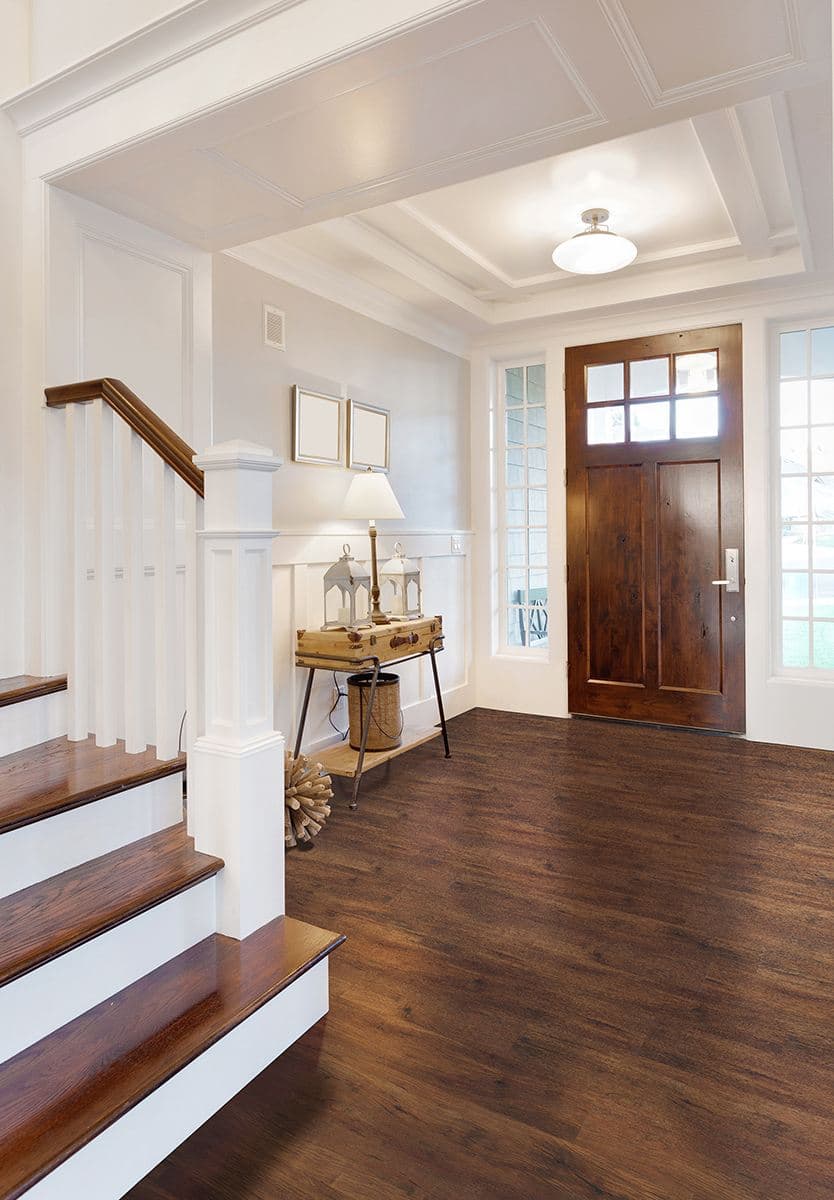
Featured Floor
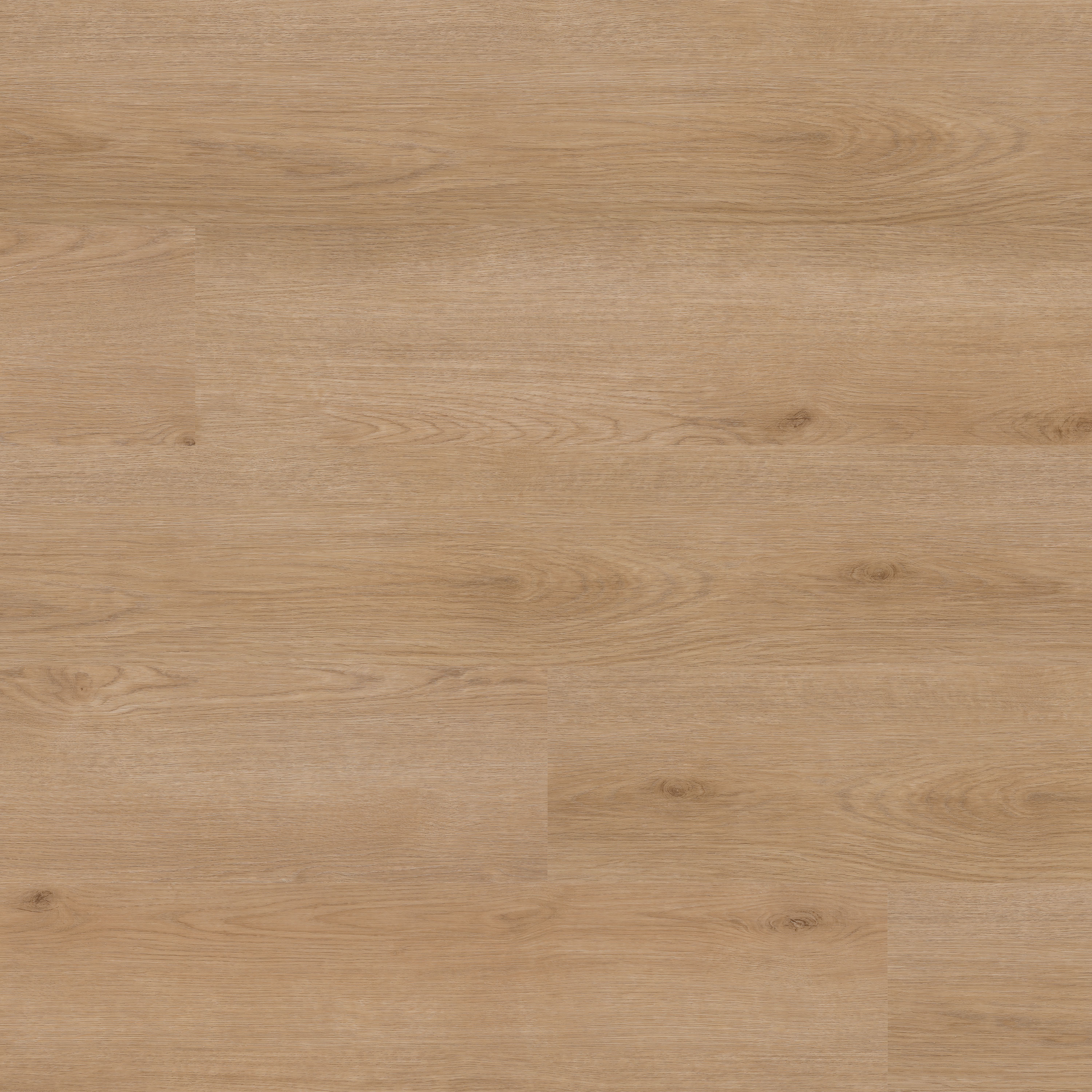
Studio - Bozeman
Blonde · 30 mil wear layer · 9mm SPC core · matte texture
Best For:
Light-filled spaces where you want the floor to disappear into the room instead of dominating it. Bozeman's soft blonde tones and matte embossed texture mean it photographs and lives without glare, and the 30 mil wear layer is heavy-duty commercial-grade construction - overkill for most homes, which is exactly why it lasts.
What's Out
Busy, stripey, high-contrast grain
What's In
Calm, cozy simplicity
The hyperactive grain pattern - where every plank looks like a different tree, the streaks are exaggerated, and the floor practically vibrates from across the room - is wearing out its welcome. Designers call it visual noise. Homeowners call it the floor that makes you tired to look at. Either way, it is on the way out.
The new direction is calm, even-toned planks with subtle grain variation - floors that look intentional and consistent rather than chaotic. Longer plank formats help. So do tighter pattern repeats, softer color transitions, and more restrained graining. The floor becomes a quiet foundation that lets the furniture, art, and architecture speak. See our quiet luxury flooring picks.
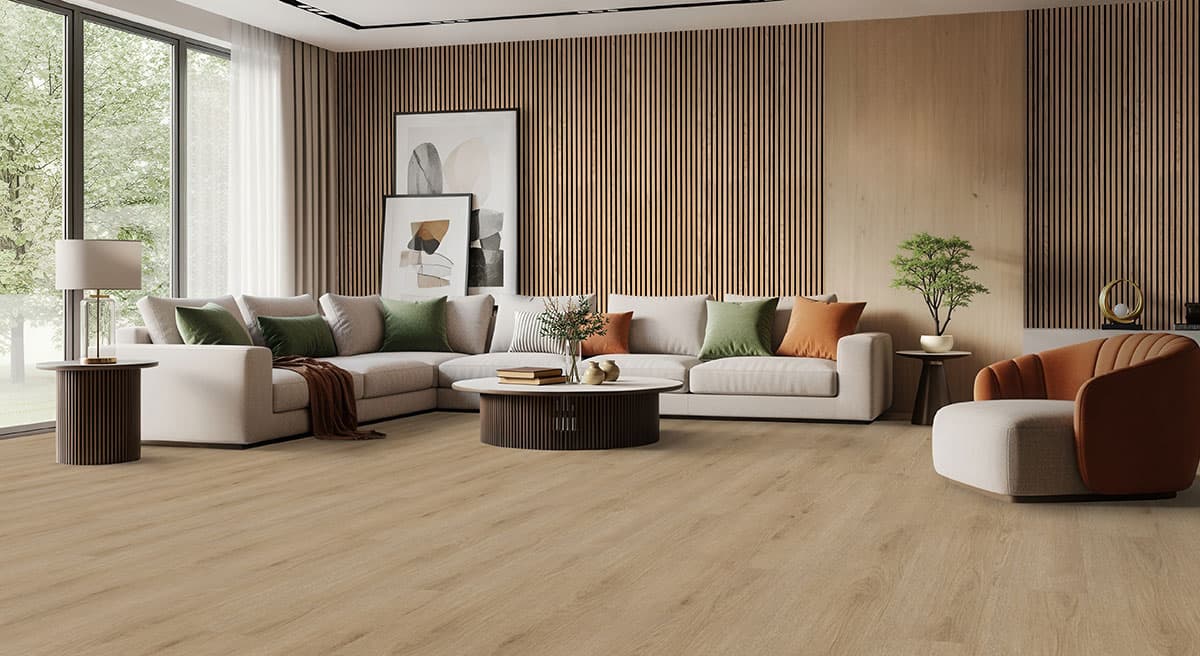
Featured Floor
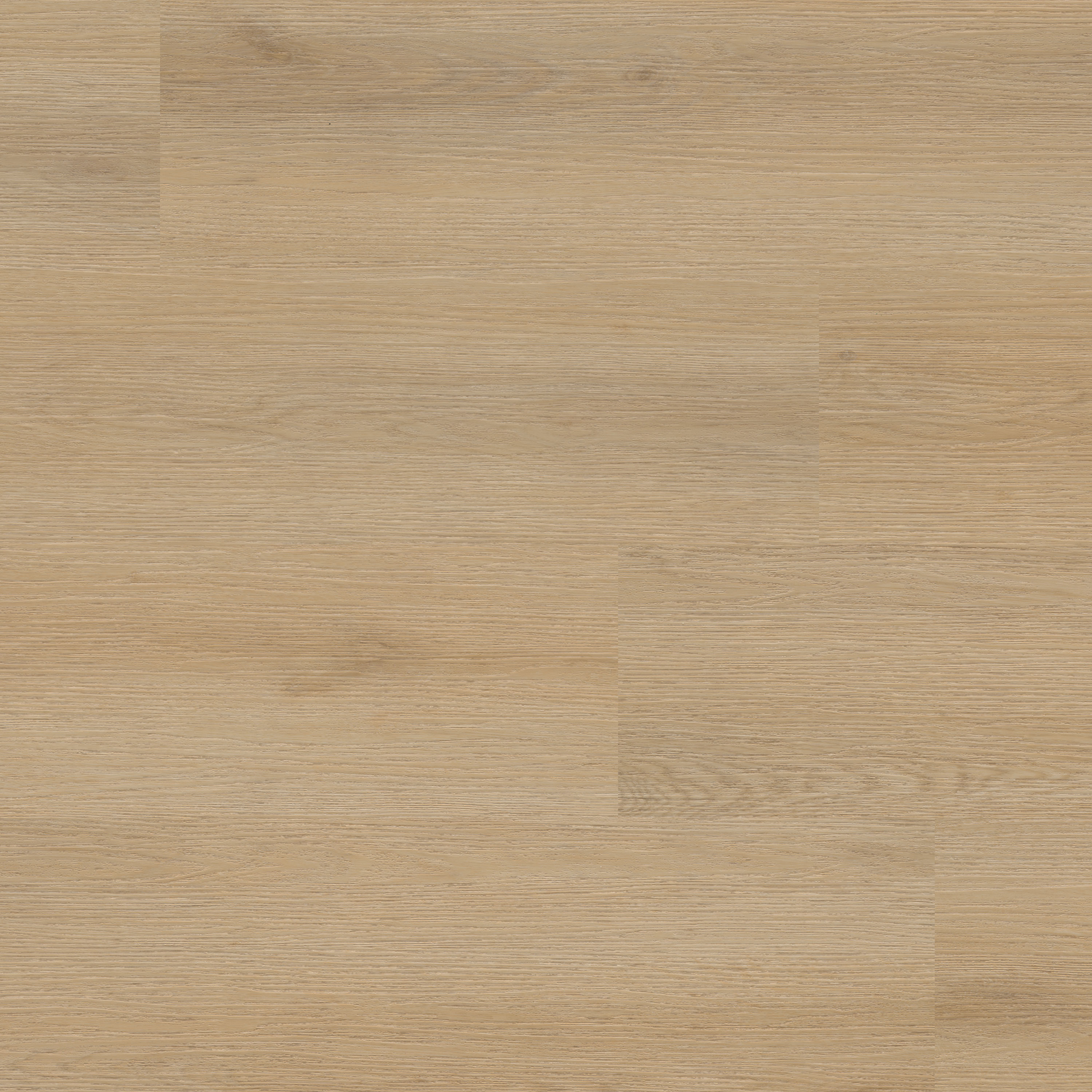
XL Studio - Quillian
Blonde · 30 mil wear layer · 9mm SPC core · 9″ × 60″ planks
Best For:
Open-concept layouts and great rooms where a noisy floor would dominate the space. Quillian's calm blonde palette and the long 60" plank format read as serene - fewer seams, longer sightlines, less visual chatter. The floor sits back and lets the room work.
What's Out
Thin, plasticky, obviously-fake vinyl
What's In
Thick vinyl that looks like real wood
Cheap vinyl plank - the kind with 6 mil wear layers, paper-thin cores, and a print so generic it could be wallpaper - gave the whole category a reputation problem for years. Some buyers still associate the word "vinyl" with a peel-and-stick floor that bows in the sun. That version of vinyl is on its way out, and good riddance.
Modern premium vinyl is built on thick rigid SPC cores (often 8mm and up), 20 to 30 mil commercial-grade wear layers, and wood-look graphics layered under matte embossed textures that match the grain you can see and feel. From four feet away, the better products are genuinely hard to distinguish from real engineered hardwood - and they cost less, install easier, and shrug off water that would ruin a real wood floor. See our why longer planks make better floors.
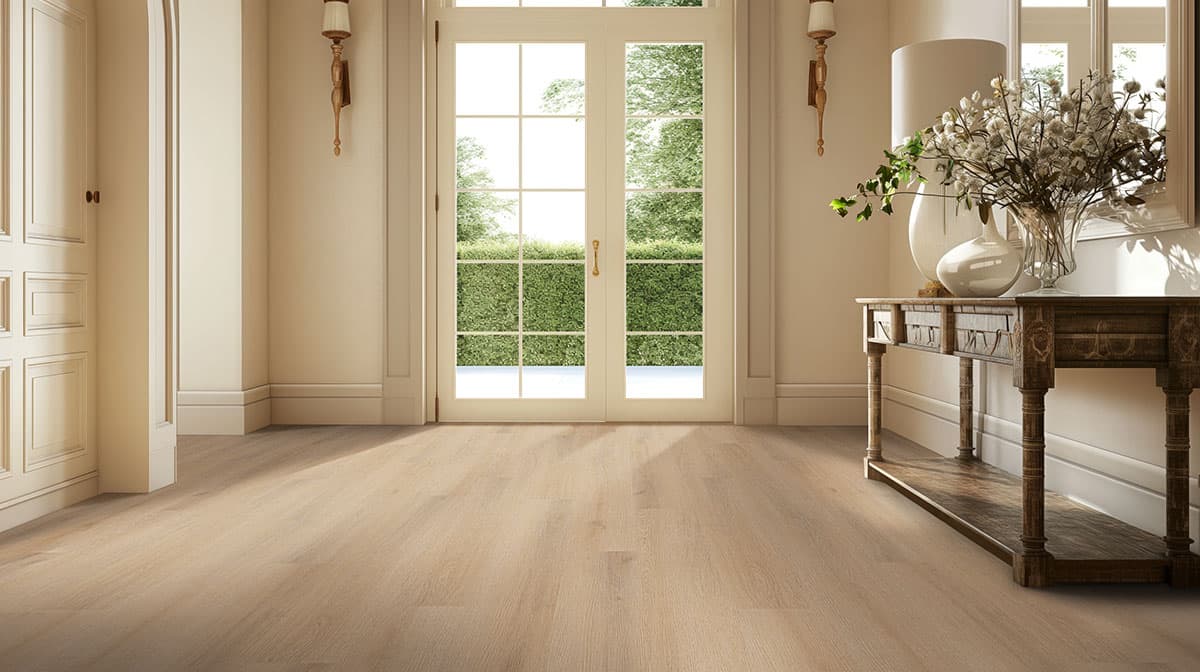
Featured Floor
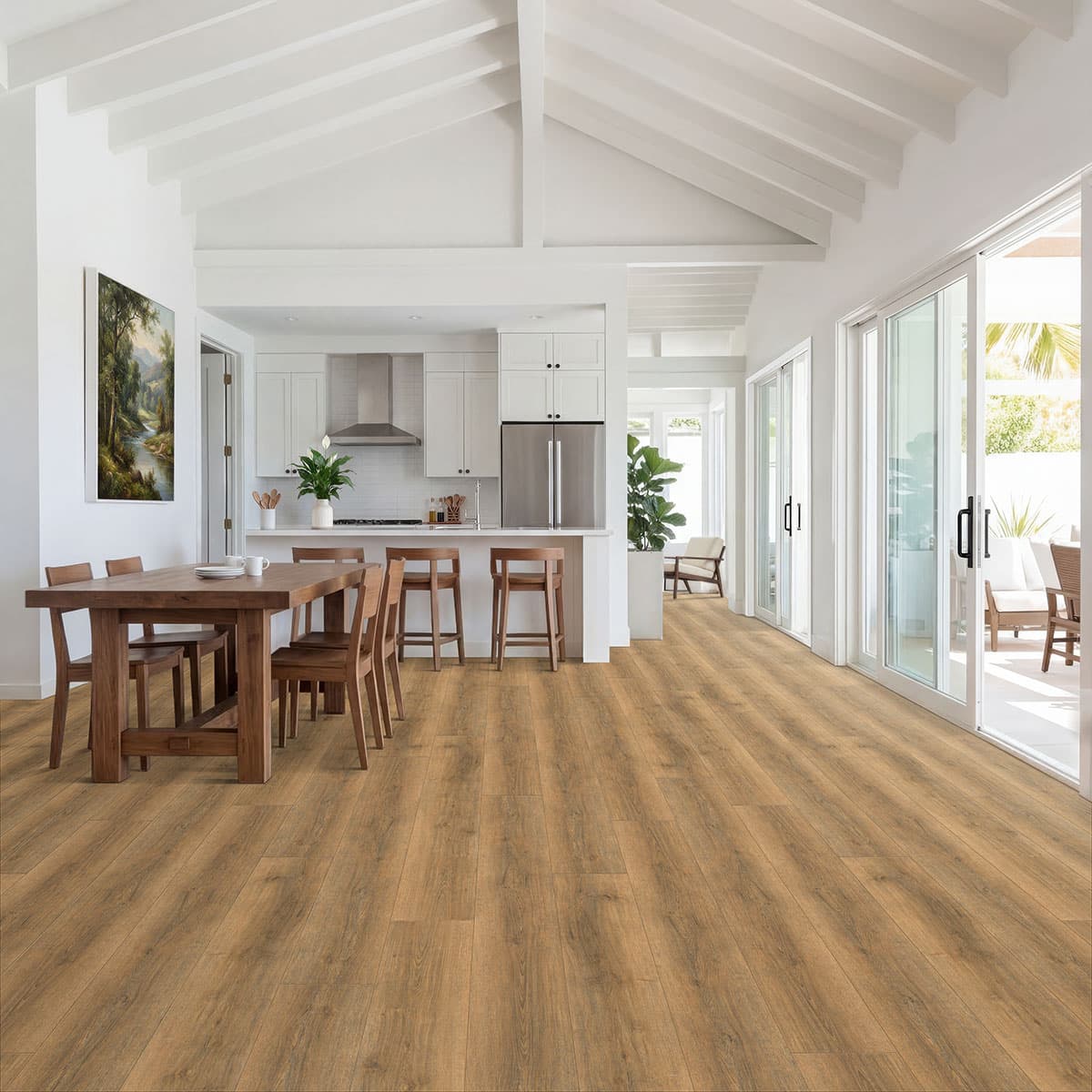
Wayne Parc Reserve - Macland
Honey · 30 mil wear layer · 12mm SPC core · 9″ × 72″ planks · Lifetime residential warranty
Best For:
Forever-home buyers and primary residences where the floor needs to feel like a real investment. Macland is at the top of the MSI catalog - 12mm thick, 30 mil commercial-grade wear layer, 72" planks, and a warm honey tone that reads instantly as upmarket. It is the closest vinyl gets to looking like genuine hardwood, without any of the maintenance penalty.
Order the samples from this guide.
Photos get you close. Holding the plank in your own light gets you certain. Samples are free, shipping is a flat $9.99, and they arrive at your door in days.
Flooring Trends FAQ
The questions homeowners are asking as the cycle turns.
Is millennial gray flooring out of style?
Yes - cool-gray vinyl peaked between 2015 and 2022 and has dropped sharply since. Designers and homeowners are now choosing warm wood tones (honey, golden brown, soft caramel, natural oak) as the default for new installations. The shift is visible across showrooms, design publications, and real-estate staging. Gray is not gone entirely, but it is no longer the safe choice - warm is.
What flooring is trending in 2026?
Four big shifts define 2026 flooring: warm wood tones replacing cold gray; matte and low-sheen finishes replacing high-gloss; calm, even-toned planks replacing busy high-contrast grain; and thick, realistic vinyl construction replacing thin plasticky planks. The common thread is realism and warmth - floors that look like they belong in a real home instead of a 2015 showroom.
What color vinyl flooring is most popular right now?
Warm honey oaks, golden browns, soft caramel tones, and naturally aged blondes are the most-requested colors in 2026. White-washed and very-pale-blonde finishes are also rising, especially in airy modern spaces. The dominant theme is warmth - even the lighter colors carry warm undertones rather than the cool gray-blue undertones that defined the previous cycle.
Why is gray flooring no longer popular?
Gray flooring read as modern when it was new because it broke from the warm wood tones that came before it. After a decade of being used everywhere, it now reads as a default - and worse, it actively works against the warm materials people are using more of (brass, wood furniture, terracotta, jewel tones). Gray bleaches the warmth out of a room. Warm wood-look floors put it back.
Are matte vinyl floors better than glossy ones?
For most homes, yes. Matte and low-sheen finishes hide scuffs, fingerprints, and dust much better than gloss. They also look more like real wood, which has a low-sheen surface in its natural state. High-gloss vinyl photographs well in a showroom but shows every smudge in a real home. Unless you specifically want the lacquered look, matte is the safer choice - and it is what is trending.
How thick should vinyl plank flooring be for it to look like real wood?
For a vinyl plank to be genuinely hard to distinguish from real engineered hardwood, look for: an SPC core of 6mm or thicker, a wear layer of 20 mil or more, embossed-in-tone (EIR) texturing where the surface texture matches the printed grain, and longer plank formats (60" or more). MSI's Wayne Parc Reserve hits all four - 12mm core, 30 mil wear layer, matte texture, and 72" planks. The premium tier of any major brand will deliver similar specs.
What is the most realistic vinyl flooring brand?
MSI Everlife and CALI Floors are both consistently called out for realism. MSI's flagship Wayne Parc Reserve and Studio lines use commercial-grade 30 mil wear layers with embossed-in-tone textures that are convincing from normal viewing distance. CALI's Longboards and Legends collections deliver similar realism with longer plank formats. The realism is driven more by spec tier and construction than by the brand name - within either brand, the premium lines look meaningfully more wood-like than the entry-level lines.
Is wide-plank vinyl flooring still trending?
Yes - and it is getting wider and longer. Standard widths have moved from 6" to 7 - 9" as the default, and premium lines now ship 9" widths in 60- to 72" lengths. The wider, longer plank reads as more refined and more like genuine wide-plank hardwood. Narrow, short planks still exist for traditional or rustic looks, but the trend is clearly toward larger formats.
What flooring trends should I avoid if I'm planning to sell my home in a few years?
Avoid anything that screams a specific year. Cool gray flooring, high-gloss finishes, very busy or high-variation graining, and obviously-cheap vinyl plank are all dated calls that buyers will notice. Stick to warm-toned, matte-finish, wide-plank, premium-spec vinyl or engineered hardwood. Those choices read as timeless to a wider buyer pool - and they are the ones that hold up best when the next style cycle arrives.