
Prefinished Engineered Hardwood vs. Site-Finished Hardwood: Which Is Better?
For most new installations, prefinished engineered hardwood is now the smarter default: real wood, durable factory-applied protection, wide-plank formats, and enough color and texture choice to make site finishing unnecessary. Site finishing still earns its place when an exact custom match matters more than speed, predictability, and project disruption.
Quick Answer: Prefinished engineered or site-finished hardwood?
We recommend prefinished engineered hardwood for most new floors. It delivers real wood, predictable color, a durable factory finish, less dust and downtime, and far more design choice than the category offered a generation ago. Choose site-finished hardwood when you need an exact custom stain, a particular sheen or finish chemistry, or a floor sanded flat from edge to edge after installation.
“Prefinished” and “site-finished” describe where the stain and protective coating are applied. “Engineered” describes the plank construction. Floorzi's prefinished CALI engineered hardwood uses real hardwood veneers over a stabilizing core, with the color, texture, sheen, and aluminum oxide protection completed before the cartons reach the job.
The old case for site finishing was customization. That gap is much smaller now. Floorzi currently lists more than 60 CALI engineered hardwood colors across six collections, with pale and warm stains, unstained species, clean and character grades, Euro-sawn and plain-sliced veneers, matte surfaces, and planks roughly 8 to 10 inches wide. For most buyers, the custom look can now be selected rather than created inside the home.
Prefinished Engineered Hardwood vs. Site-Finished Hardwood
| Factor | Prefinished Engineered Hardwood | Site-Finished Hardwood |
|---|---|---|
| Finish location | Applied and cured in a controlled factory | Applied in the room after boards are installed and sanded |
| Project time | Floor is complete when installation is complete, subject to adhesive and furniture restrictions | Adds sanding, staining, coating, drying or curing, and return visits |
| Customization | Choose from 60+ current CALI colors plus multiple species, veneer cuts, grades, textures, and sheens | Maximum control over stain recipe, sheen, and finish chemistry |
| Dust and odor | No on-site sanding or finish application for a new install | Dust control and ventilation are part of the project; impact varies by system |
| Durability | Factory aluminum oxide finishes are extremely durable | Ranges from water-based to oil-based, moisture-cured, conversion, or other professional systems |
| Board edges | Often uses defined bevels between factory-finished boards | Can be sanded flatter across the installed field |
| Color predictability | Finished product can be sampled before purchase | Test panels are essential; species and site conditions affect the final stain |
| Cost structure | Finish is included in the product price; usually fewer site labor steps | Unfinished material plus sanding, stain, finish, consumables, and additional labor |
| Best fit | Most new installations, occupied homes, wide-plank designs, and schedule-sensitive renovations | Custom design projects where exact color and continuous surface matter most |
Why Prefinished Engineered Hardwood Is Our Recommendation
Site finishing once had a decisive advantage because factory colors were limited. That is no longer the market Floorzi sees. CALI's current hardwood catalog spans more than 60 finished colors across six engineered collections, and every collection offers a different combination of species, veneer cut, grain selection, texture, tone, and plank scale.
That range is why our editorial recommendation leans prefinished: most homeowners can find the visual they want, approve it from a physical sample, and skip sanding, staining, coating, odor, and finish-curing inside the house. These five floors show how much territory the category now covers.
Trending Hardwood Colors for 2026: Light, Natural Oak
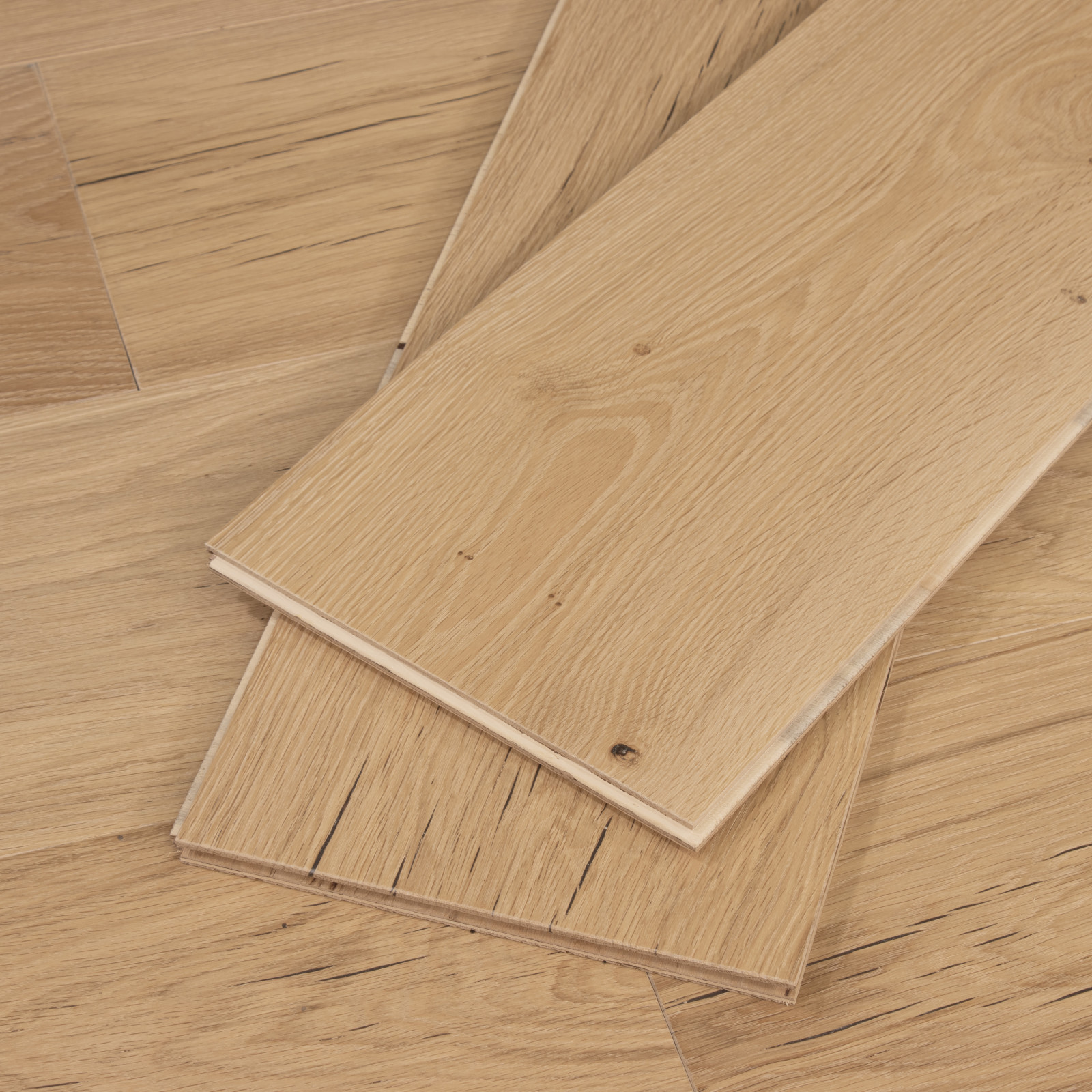
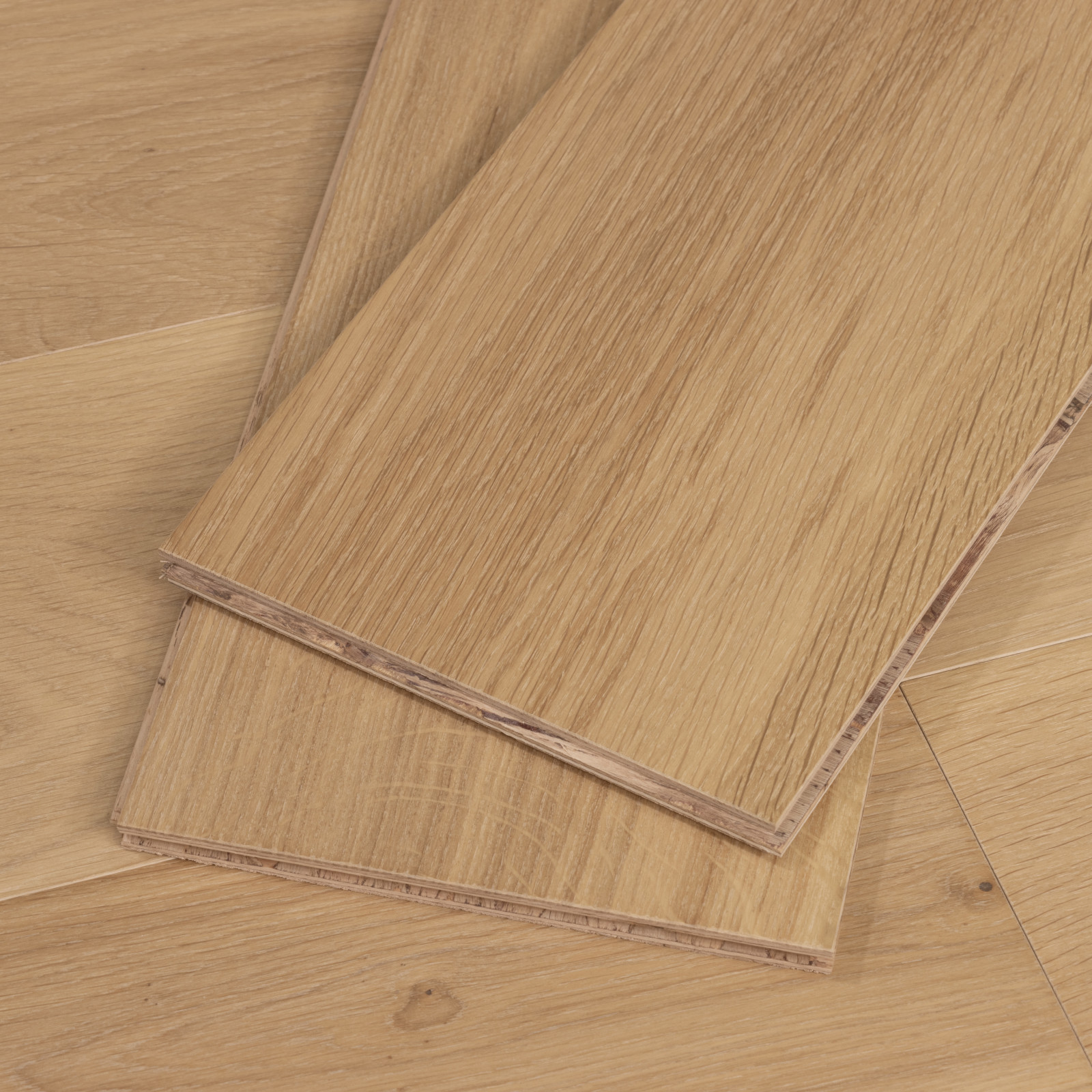
The 2026 NWFA Industry Outlook identifies natural tones, light colors, white oak, factory-finished engineered construction, and longer, wider boards as active demand trends. Coastal Blanc is our pale, sandy wide-plank pick; Early Estate is the cleaner natural-oak alternative for buyers who want less knot and color variation.
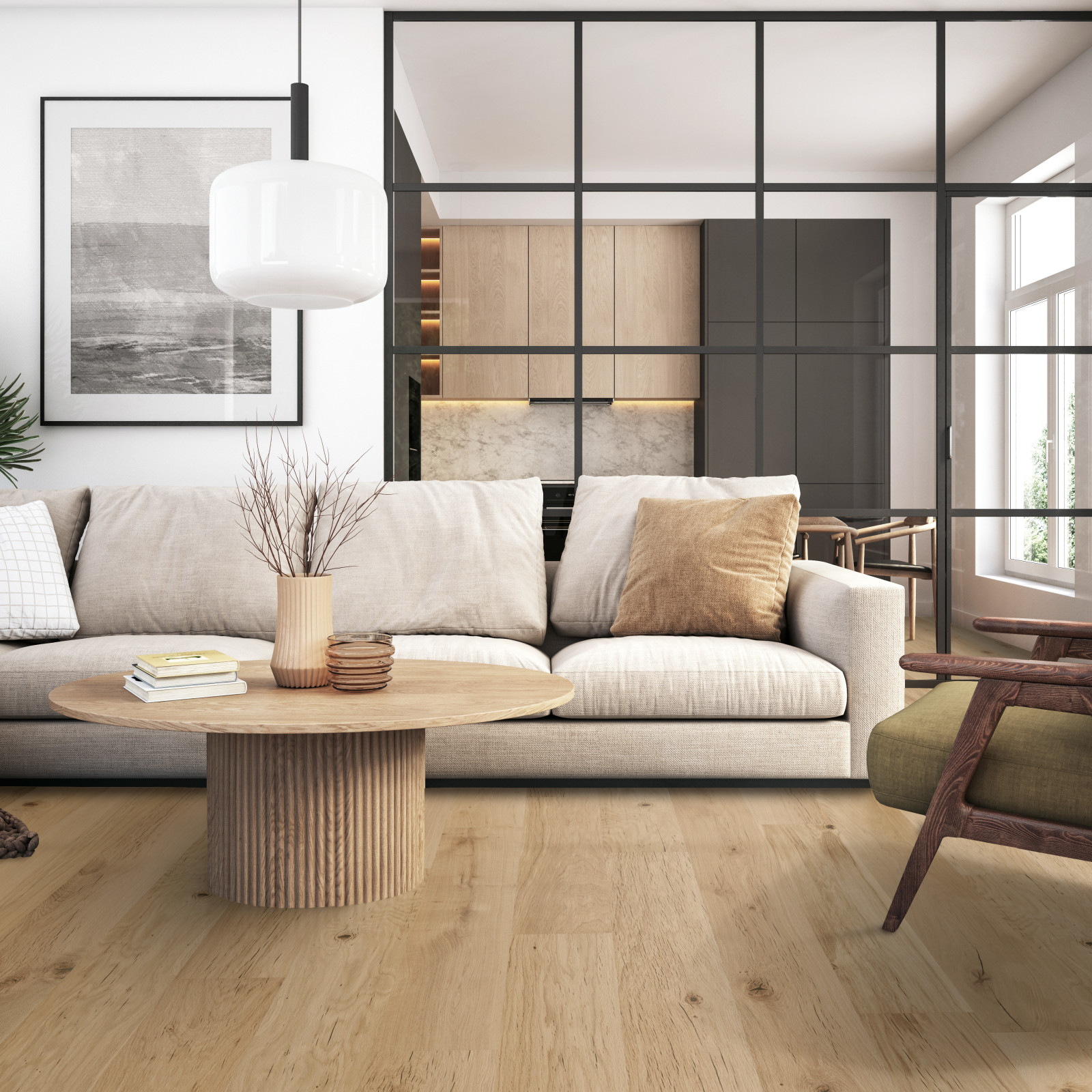
Coastal Blanc CALI Hardwoods Meritage
Pale, sandy European white oak with the scale to make factory-finished hardwood feel architectural. Coastal Blanc pairs a 4mm Euro-sawn veneer with CALI's wide Meritage format.
- • 10" wide; random lengths up to 87"
- • 4mm European white oak veneer
- • Aluminum oxide factory finish
- • 50-year residential / 15-year commercial warranty
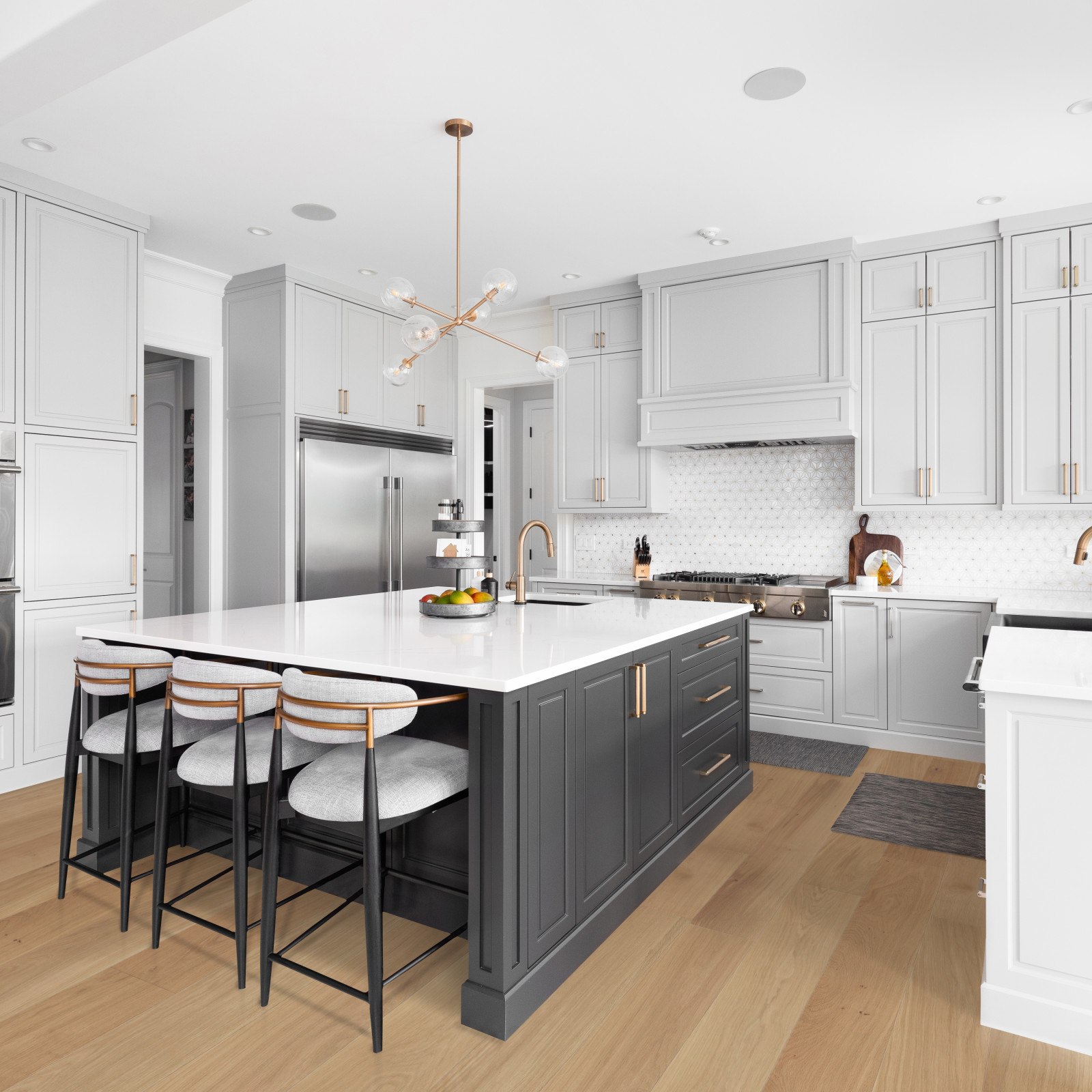
Early Estate CALI Hardwoods Cellar
A clean natural-oak floor built from A/B-grade European white oak. Early Estate is the prefinished choice for a room that needs restrained grain and consistent color rather than dramatic knots.
- • 8" wide; random lengths up to 83"
- • 3mm European white oak veneer
- • Six-coat aluminum oxide finish with light wire brushing
- • Float, glue-down, or nail-down installation
Trending Hardwood Colors for 2026: Warm Browns
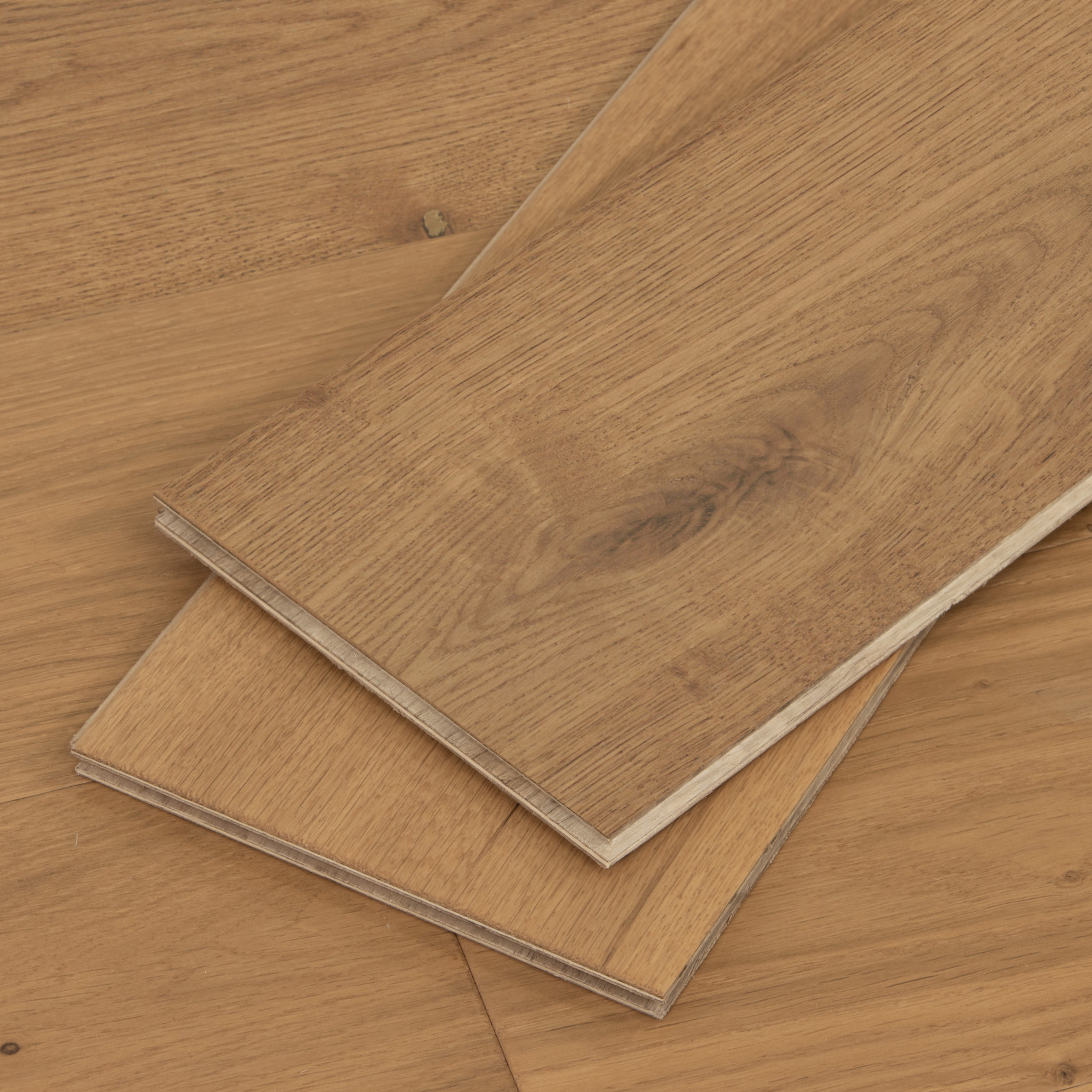
Light does not have to mean washed out. Warm honey, beige, and medium-brown floors are moving forward beside pale oak because they bring back depth while remaining easy to furnish. Vintage Vine delivers that warmer European-oak story. Natural Acacia uses a clear matte finish instead of a standardized stain, letting the species' movement and medium-brown color do the design work.
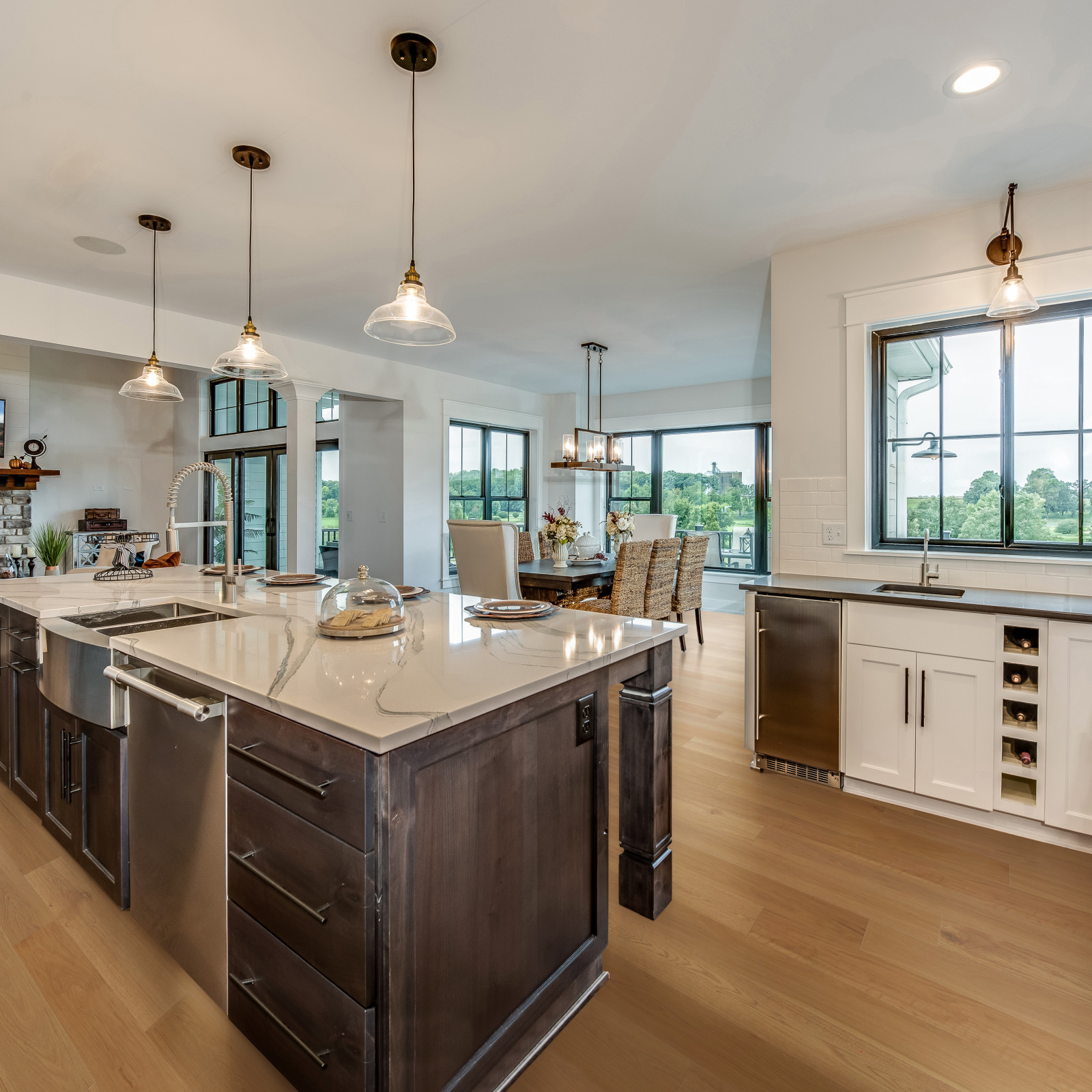
Vintage Vine CALI Hardwoods Barrel
Warm honeyed European white oak with visible grain and a more approachable construction tier. Vintage Vine shows that prefinished hardwood is not limited to pale, perfectly uniform boards.
- • 8" wide; random lengths up to 75"
- • 2mm European white oak veneer
- • Aluminum oxide factory finish
- • Float, glue-down, or nail-down installation
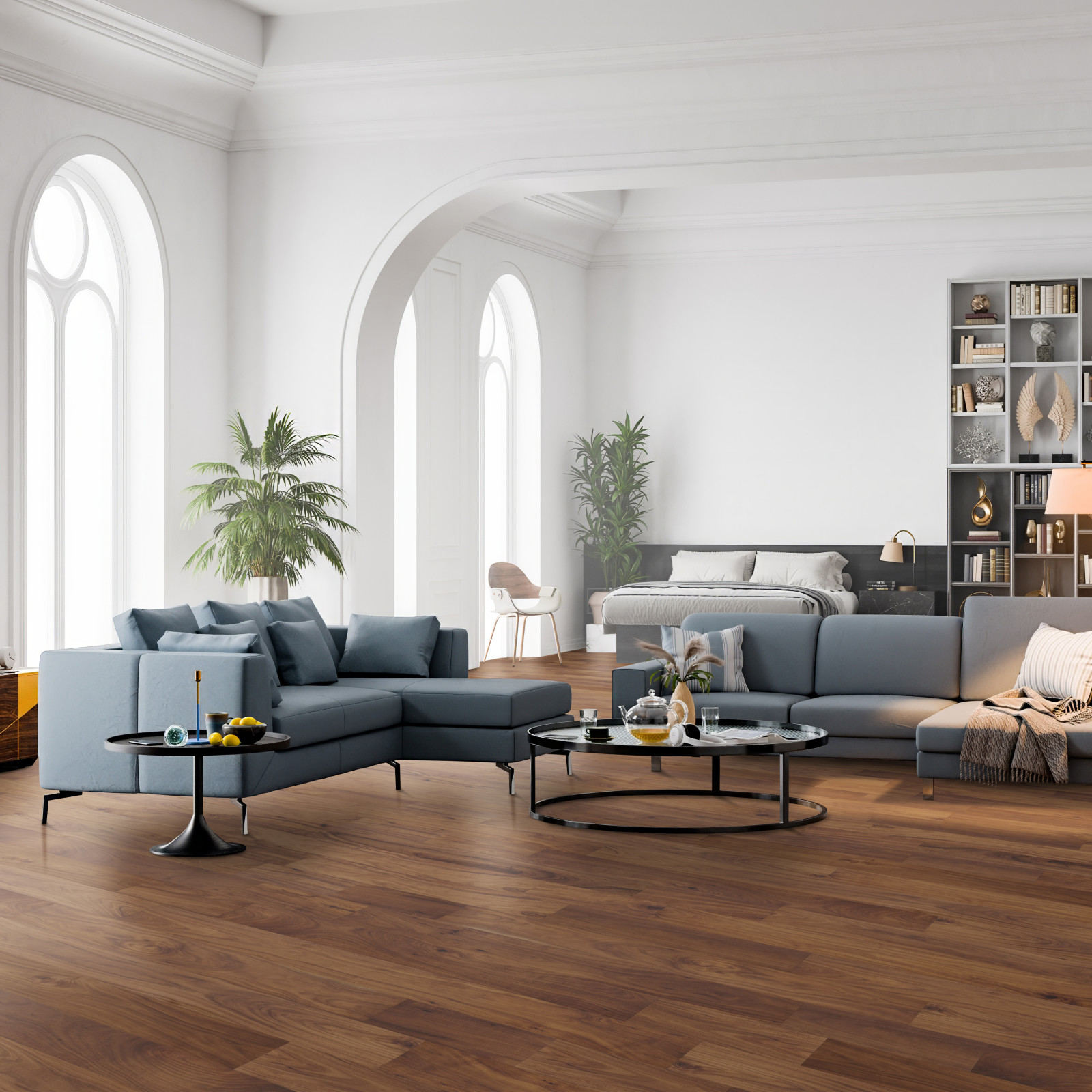
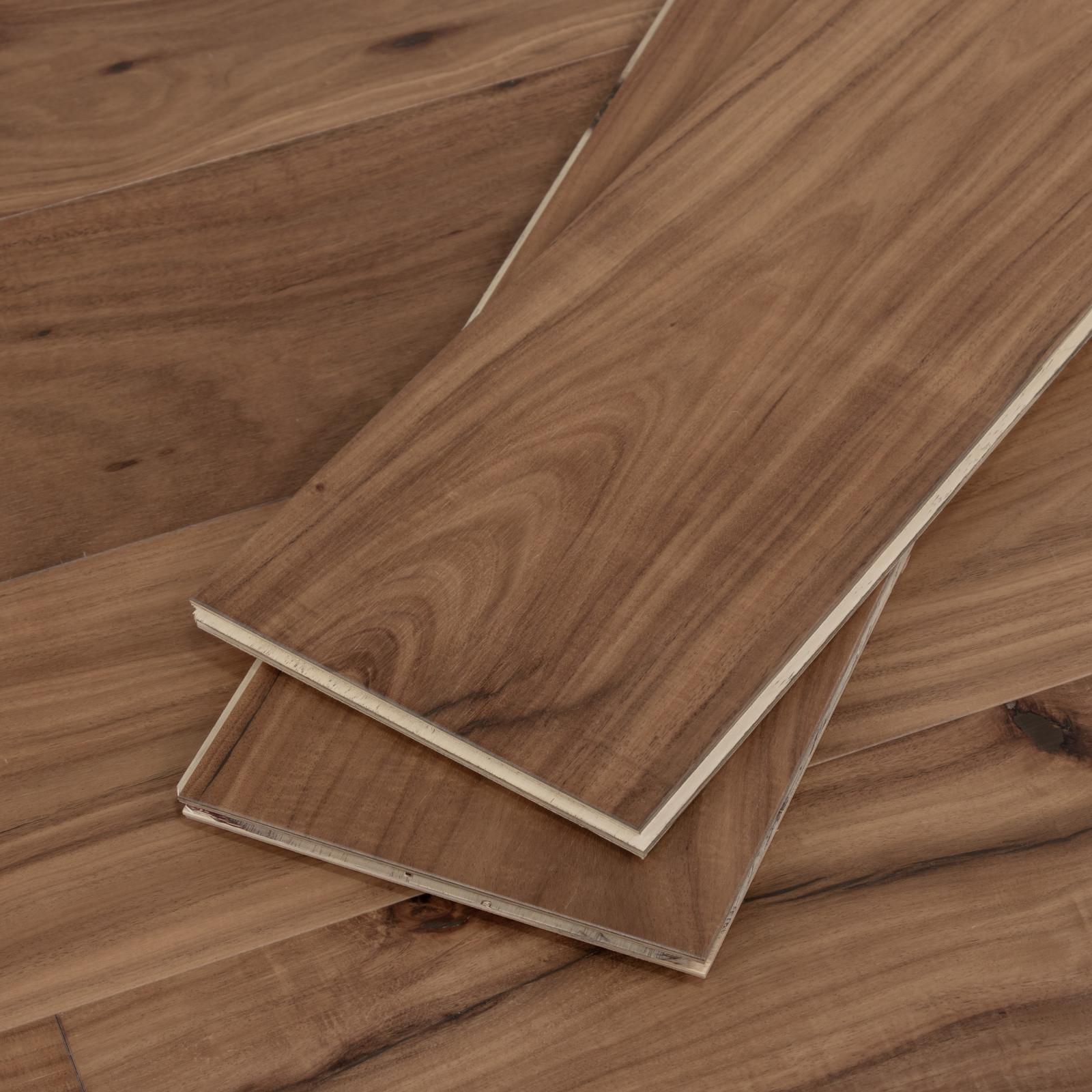
Natural Acacia CALI Hardwoods Varietals
Clear-finished acacia with medium-brown color and bold natural movement. Natural Acacia proves that a factory finish can protect the wood without covering the species with a standardized stain.
- • 8" wide; planks up to 75"
- • 2mm real acacia veneer
- • Clear matte six-coat aluminum oxide finish
- • 50-year residential / 15-year commercial warranty
Wide Planks and Tactile Texture Are the Custom Look
Wide planks are one of the clearest 2026 hardwood directions, and CALI's current engineered collections sit roughly 8 to 10 inches wide. That scale reduces visual seams and gives open rooms a more architectural rhythm. Shipboard Sauv is our texture-led pick: its mushroom-tan oak, sculpted grain, and visible knots give a factory-finished floor the layered character people often assume requires custom finishing.
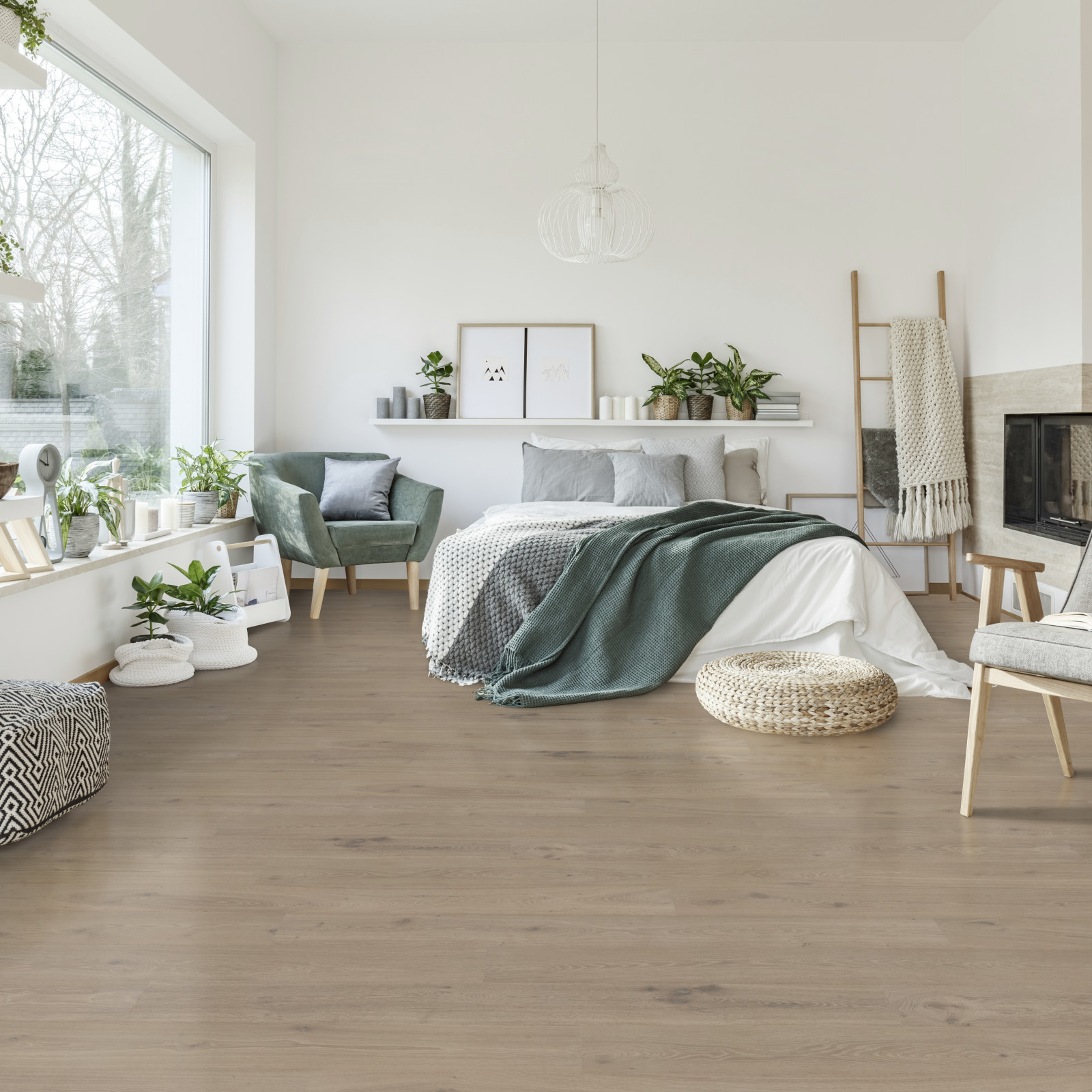
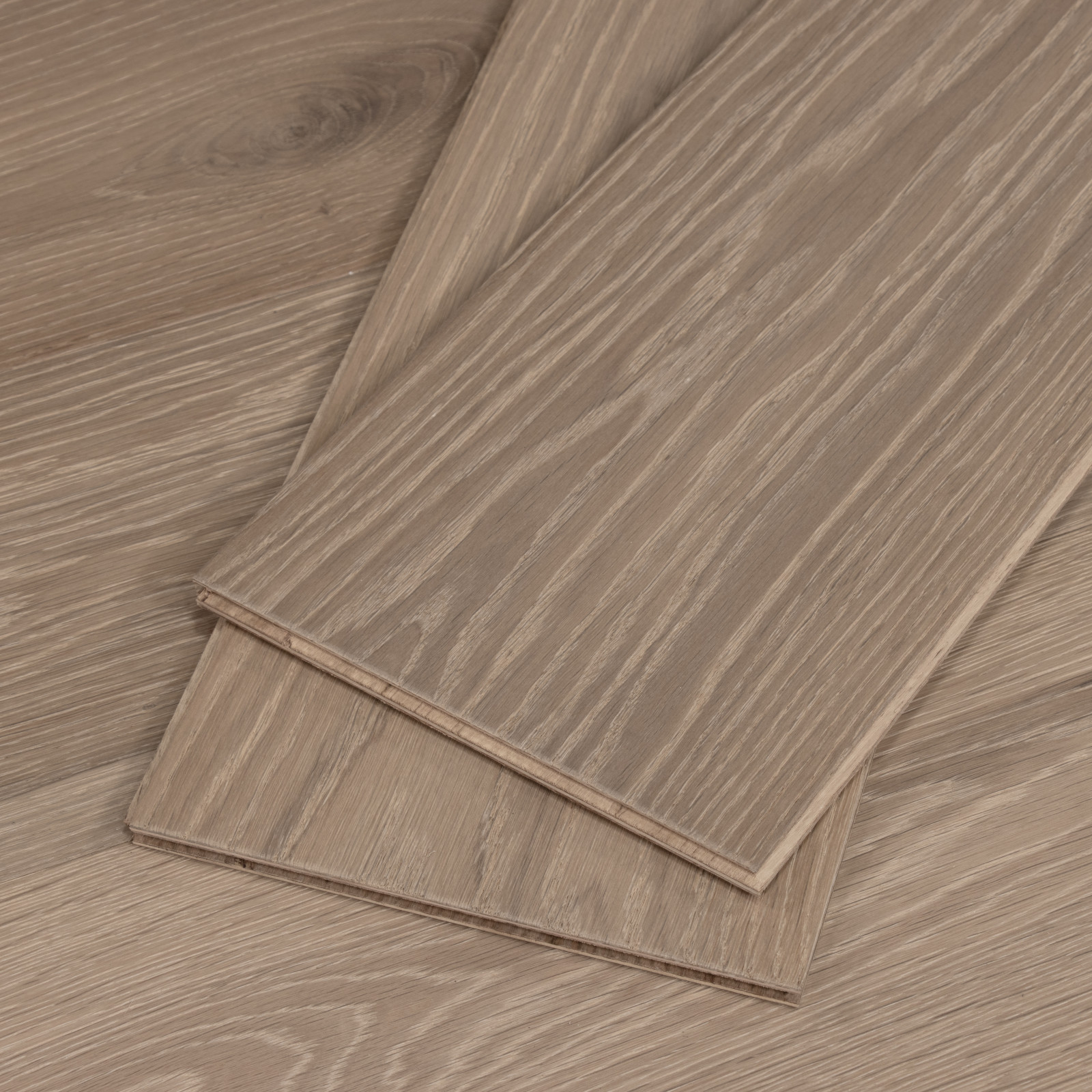
Shipboard Sauv CALI Hardwoods First Press
Cloudy mushroom-tan European white oak with sculpted grain and knots. Shipboard Sauv is the answer for buyers who associate factory finishing with flat, machine-perfect texture: the surface work is deliberately tactile.
- • 10" wide; random lengths up to 87"
- • 2mm European white oak veneer
- • Artisanal texture under an aluminum oxide finish
- • 50-year residential / 15-year commercial warranty
Why Site Finishing Is Becoming Less Necessary
CALI's six collections create customization before installation. Meritage and Cellar use Euro-sawn European white oak in different veneer thicknesses and grades. Barrel, First Press, and Whiskey & Wine move through coastal stains, character-rich grading, and tactile surface treatments. Varietals changes the species itself, offering ash, hickory, acacia, and maple with unstained or species-led visuals.
Site finishing still wins when a designer needs a proprietary stain recipe, an exact match to existing millwork or flooring, a special sheen, or a field-sanded edge-to-edge surface. But if the goal is simply “a distinctive hardwood floor,” a broad prefinished engineered catalog now gets most projects there with less risk, less disruption, and a result you can approve before installation.
Cost: Compare the Complete Project
Prefinished engineered hardwood can cost more per box because the color and protective finish are already part of the product. That does not make the finished project more expensive. The installation quote normally avoids field sanding, stain application, finish coats, finish consumables, and the return visits those steps require.
Site-finished hardwood can start with a lower unfinished-board price, then add more labor and schedule. It may still be the right value when a designer needs an exact stain match, when new boards must blend into an existing site-finished floor, or when the client wants a specific professional finish system. Ask for two itemized installed quotes. A plank-only comparison is not a cost comparison.
Durability: Factory Control vs. Finish Choice
The strongest general argument for prefinished engineered hardwood is the factory coating. The National Wood Flooring Association describes aluminum oxide finishes as extremely durable, and CALI uses aluminum oxide across the featured collections. The coating is applied before shipping under controlled conditions, with no job-site dust settling into a wet finish.
Site-finished does not mean fragile. A qualified finisher can choose among water-based, oil-based, moisture-cured, conversion, and other professional systems based on the room and the desired appearance. Durability depends on the chosen chemistry, preparation, number of coats, application, cure, and maintenance. “Factory” is not magic, and “site” is not one finish.
Project Time, Dust, Odor, and Disruption
Prefinished boards arrive with the color and protection complete. Once the planks are installed, there is no sanding sequence and no wet finish waiting to dry. The room's actual return-to-use time still depends on adhesive cure, furniture instructions, and the installation method, but the finishing phase has disappeared.
Site finishing adds a second trade to the schedule. The floor is sanded, cleaned, stained if desired, coated, and allowed to dry or cure according to the finish manufacturer. Modern dust containment and low-odor water-based products can reduce the inconvenience, but they do not eliminate the work. In an occupied home, that schedule difference is often more important than the material price.
Customization Without Site Finishing
Site finishing still provides the last word in customization. A professional can build stain samples on the installed species, adjust the recipe, choose a specific sheen and finish chemistry, then sand and coat the floor as one field. That remains valuable for exact millwork matches and additions that must blend into an existing site-finished floor.
For a new standalone floor, prefinished engineered hardwood now covers far more of that design territory. CALI offers pale, natural, honey, medium-brown, and character-rich looks; Euro-sawn and plain-sliced veneers; clean A/B-grade and knot-forward grain; multiple real-wood species; matte finishes; and wide planks. You can compare Coastal Blanc, Early Estate, Vintage Vine, Natural Acacia, and Shipboard Sauv in the actual room before approving the project. That predictability is a form of customization too.
Repair and Refinishing
Site-finished floors can be easier to blend across a larger area because the installed surface was sanded and coated as one field. Prefinished floors can make a damaged-board replacement more direct when a matching plank is available, but matching an older finish years later is never guaranteed.
Both types may be refinishable. With engineered hardwood, veneer thickness matters, but it is not the only variable. Meritage has a 4mm veneer, Cellar has 3mm, and the other featured collections use 2mm veneers. Surface texture, flatness, previous sanding, damage, installation, and manufacturer instructions all affect what a professional can safely remove. Have the actual floor inspected before anyone promises a number of future sandings.
The Bottom Line
Our recommendation is prefinished engineered hardwood for most new installations. CALI's 60+ current colors, multiple veneer cuts and species, clean and character grades, tactile textures, matte factory finishes, and roughly 8- to 10-inch-wide planks make a genuinely curated result possible without sanding and coating the floor inside the home.
Choose site-finished hardwood when the project has a specific requirement that the catalog cannot solve: an exact stain match, a special sheen or coating system, integration with an existing floor, or a field-sanded continuous surface. Otherwise, sample the prefinished options first. The practical and design advantages now point in the same direction.
Order the samples from this guide.
Photos get you close. Holding the plank in your own light gets you certain. Samples are free, shipping is a flat $9.99, and they arrive at your door in days.
Prefinished Engineered Hardwood vs. Site-Finished Hardwood FAQ
Is prefinished engineered hardwood better than site-finished hardwood?
For most new installations, we recommend prefinished engineered hardwood. It provides real wood, predictable color and sheen, durable factory-applied protection, less on-site dust and downtime, and a broad range of modern colors and wide-plank styles. Site-finished hardwood remains the better specialist choice for an exact custom stain, a particular finish system, or a field-sanded edge-to-edge appearance.
Why is site finishing becoming less necessary?
Modern prefinished engineered hardwood is no longer a narrow catalog of generic colors. Floorzi currently lists more than 60 CALI hardwood colors across six engineered collections, including light and warm stains, unstained species, Euro-sawn and plain-sliced veneers, clean and character grades, multiple textures, and planks roughly 8 to 10 inches wide. Most buyers can now select a distinctive finished look before installation.
Which costs more, prefinished engineered or site-finished hardwood?
Compare total installed cost, not plank price. Prefinished engineered hardwood includes its stain and protective finish in the product price and usually removes sanding, staining, coating, consumables, and return visits from the installation quote. Unfinished flooring may cost less as raw material, but local finishing labor can reverse that advantage.
Can you walk on prefinished engineered hardwood immediately?
The wood finish is already cured when prefinished planks arrive, so there is no finish-drying wait after installation. Adhesive cure times, furniture placement, and installation-specific restrictions still apply, so follow the flooring and adhesive instructions for the actual project.
Is factory-finished engineered hardwood durable?
CALI uses aluminum oxide factory finishes across the featured engineered hardwood collections. These coatings are applied under controlled manufacturing conditions and are highly durable. Site-applied systems can also perform well; preparation, finish chemistry, application, curing, and maintenance all affect real-world results.
Can prefinished engineered hardwood be refinished?
Some prefinished engineered hardwood can be refinished, but veneer thickness is only one factor. The featured CALI collections use real hardwood veneers from 2mm to 4mm. Texture, floor flatness, prior sanding, damage, installation, and manufacturer guidance also matter. Have a qualified wood-floor professional inspect the installed floor before sanding.
Does site-finished hardwood look smoother?
Often, yes. Sanding after installation can create a flatter edge-to-edge surface, while factory-finished boards commonly use visible bevels that define each plank. That is a legitimate reason to choose site finishing, although many buyers prefer the rhythm and board definition of today's wide prefinished planks.
How should I compare prefinished engineered hardwood samples?
Compare at least three samples in the intended room. Look at color in morning and evening light, run a hand across the texture and bevel, and place each sample beside cabinets, trim, and rugs. Floorzi samples are free, with a flat 9.99 dollar shipping fee for up to 10 samples per order.
See the Factory Finish Before You Commit
Compare color, bevel, texture, and sheen in your own room before you price the full hardwood project.