
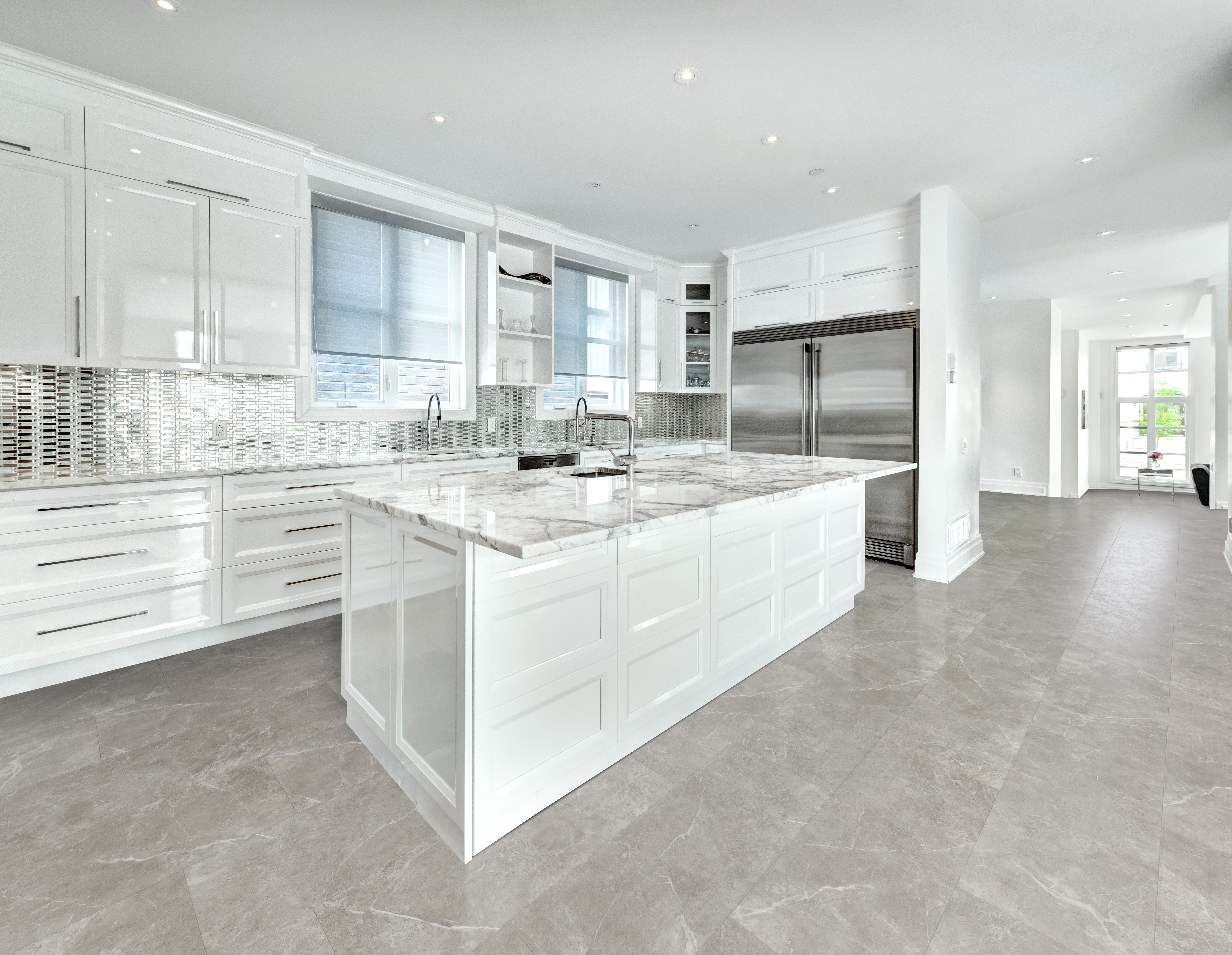

Every CALI Laminate Shorebreak Color: Marble-Look Click-Lock Floating Tile
Stone aesthetics without stone's penalties. A focused two-color collection of marble-look, click-lock floating tile you can install in a weekend, not a week.
At a Glance
| Color | Color Family | Designer's Note | Shop | |
|---|---|---|---|---|
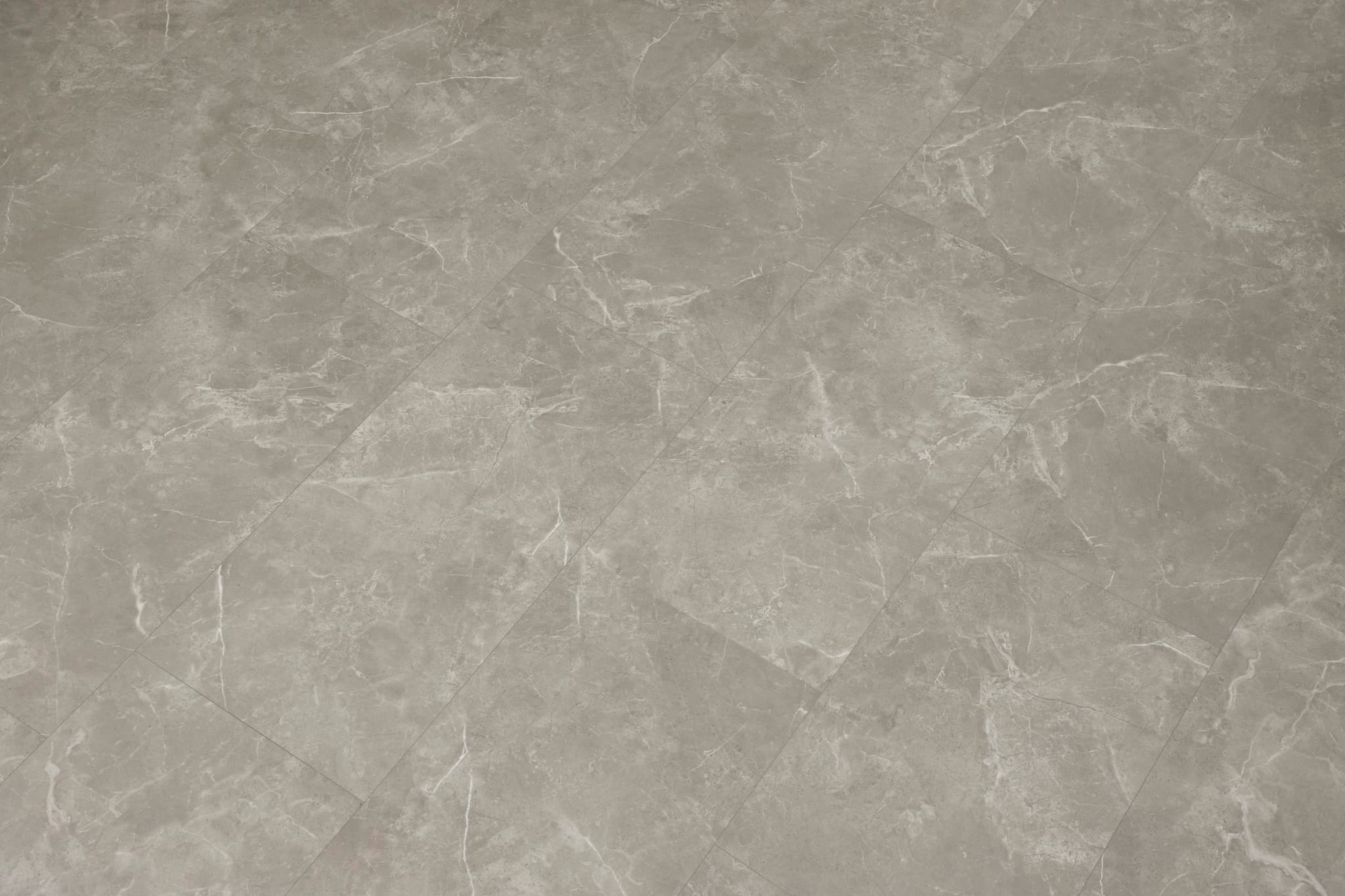 | Bolinas Marble | Light Marble | Neutral weathered with gray tones. | View Product → |
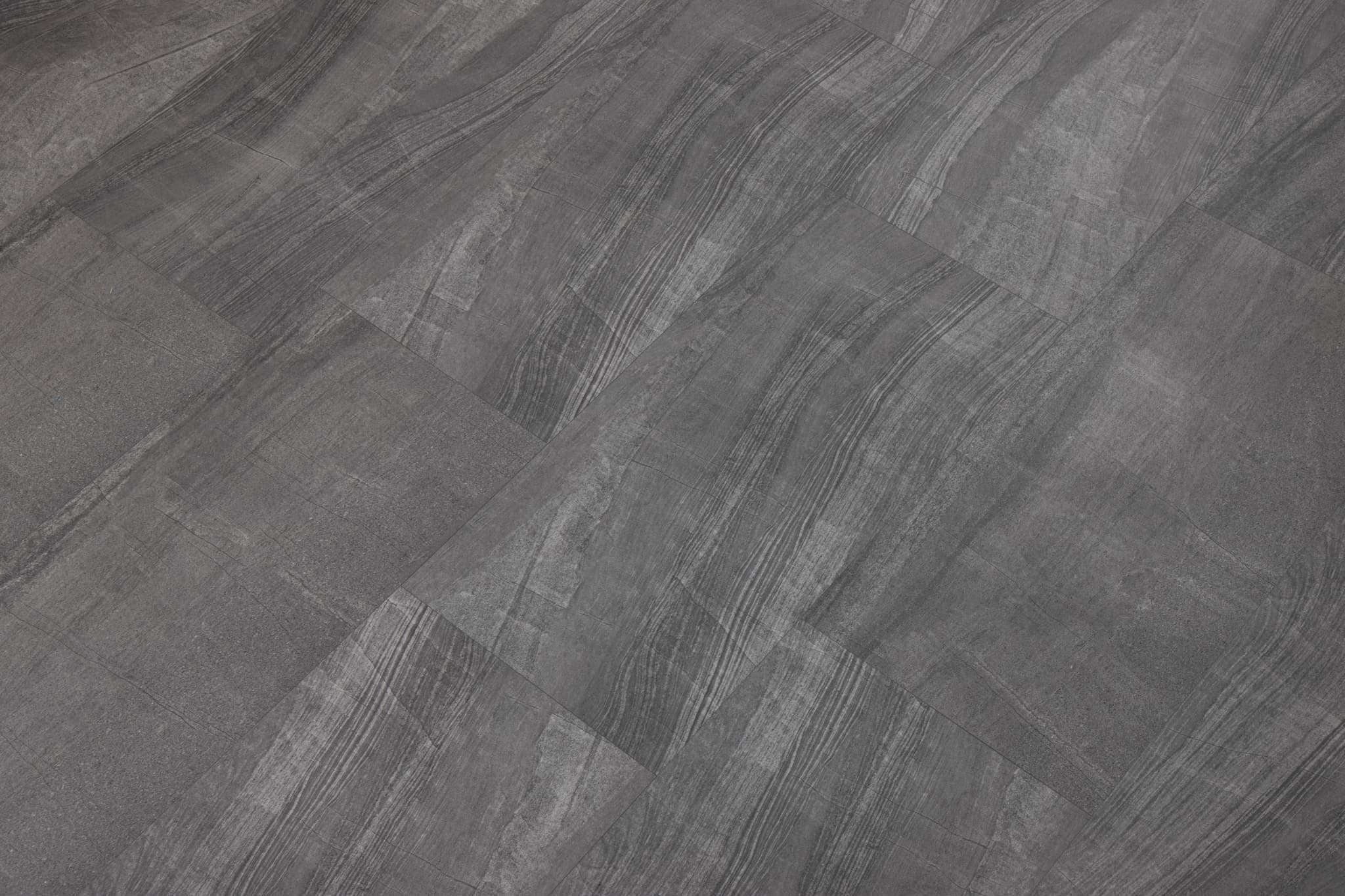 | Black Sands Marble | Dark Marble | Deep charcoal-and-slate marble look with cool gray veining and lighter warm-gray and cream cutting across a near-black tile. Echoes a honed Italian black marble or quarried slate. Anchored, moody, considered. | View Product → |
Stone Without Stone's Penalties
Real natural stone is heavy, cold, expensive, and difficult to install. A quarried-marble or natural-slate floor weighs in around 12 to 18 pounds per square foot, has to be set in mortar by a professional tile installer, requires grouting and sealing, etches permanently from kitchen acids like lemon and tomato, stains from oils, and needs resealing every year or two for the rest of its life. The look is iconic, and there is a reason it has defined high-end residential flooring for centuries. The maintenance and the install reality is what keeps most homeowners from ever putting it in a kitchen.
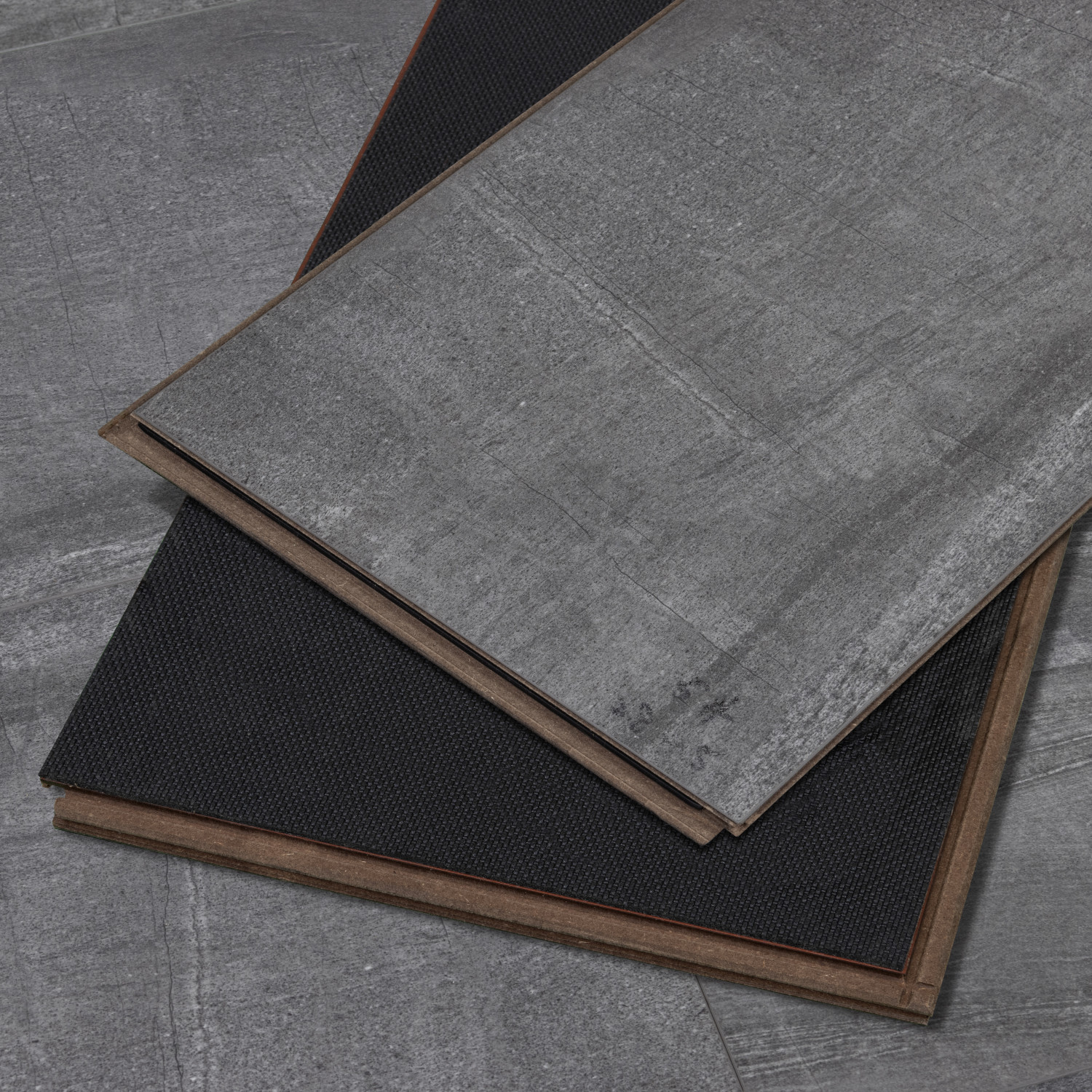
Shorebreak is CALI's answer to that gap. It is a focused two-color collection of stone-look tile that captures the marble aesthetic in a click-lock floating format: twenty-three by eleven inches, lightweight, installable over most existing hard-surface floors, finished in a single weekend rather than a multi-day demolition-and-mortar project. The construction is laminate-style with a high-density wood core, which is what gives the floor its underfoot feel, closer to real stone than vinyl manages, without the actual cold and weight of a quarried slab. The visual is honest about what it is: a printed stone-look surface, not real marble. Within that honest framing, the print and the texture are good enough that a finished Shorebreak floor reads as a considered stone install in ninety-five percent of rooms, ninety-five percent of the time.
The collection is intentionally small. Two colors, both marble-leaning, both designed to cover the dominant uses of stone-look flooring in current residential design: a bright, Carrara-style light marble for kitchens and open-plan living, and a deep, slate-leaning dark marble for entryways, powder rooms, and moody design-led spaces. Below are both active Shorebreak colors, with real notes on where each one belongs and which interiors it pairs with cleanly.
CALI Laminate Shorebreak · Light Marble
Bolinas Marble
23″ × 11″ tile · 12 mm thickness · Click-lock floating install · Natural stone texture
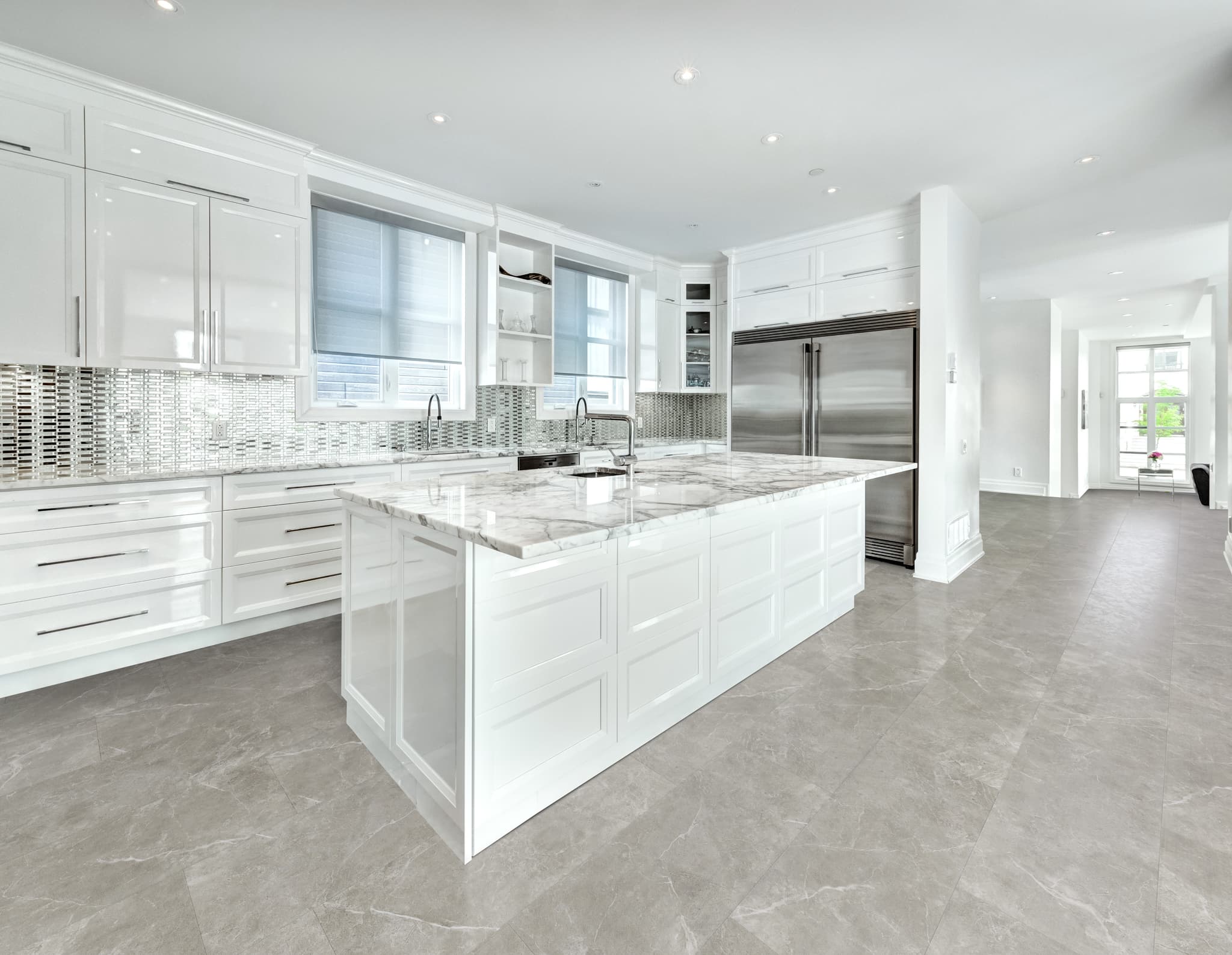
Bolinas Marble is the lighter of the two Shorebreak colors and the one most buyers default to when they put samples down on a kitchen floor. The base is a soft, creamy white with the faintest warm undertone, broken up by gray and taupe veining that runs through each 23-by-11" tile in a believable, irregular pattern. The veining is the detail that separates a good stone-look tile from a bad one, and Shorebreak gets it right: the grain is layered and varied across tiles rather than repeating, so a finished floor reads as a real quarried-marble installation rather than a printed copy. The surface carries a low-sheen natural texture that runs cool underfoot the way real stone does, but without the actual cold transfer that makes a marble bathroom miserable in February. Under direct sunlight it brightens the room without ever flashing back the harsh glare you get from polished porcelain. In overcast or evening light it softens to a warm cream, which is the behavior that makes it work in kitchens with multiple light sources. The result is a floor that captures the classic Carrara marble look in residential design, the bright Carrara kitchen, without the cost of slab marble, the install complexity of cut tile, or the etching and staining problems that real marble brings to a working kitchen.
Best For
Bright kitchens, sun-filled entryways, and open-plan living spaces that want the classic Carrara look without the cost or weight of real stone.
Pairs Well With
Pairs with white shaker and inset cabinetry, warm-brass or polished-nickel fixtures, walnut and rift-oak furniture, cream and bone walls, and the bright modern-traditional palette that defines current kitchen design. Works equally well in coastal interiors that want a stone-look anchor instead of a wood floor.
CALI Laminate Shorebreak · Dark Marble
Black Sands Marble
23″ × 11″ tile · 12 mm thickness · Click-lock floating install · Natural stone texture
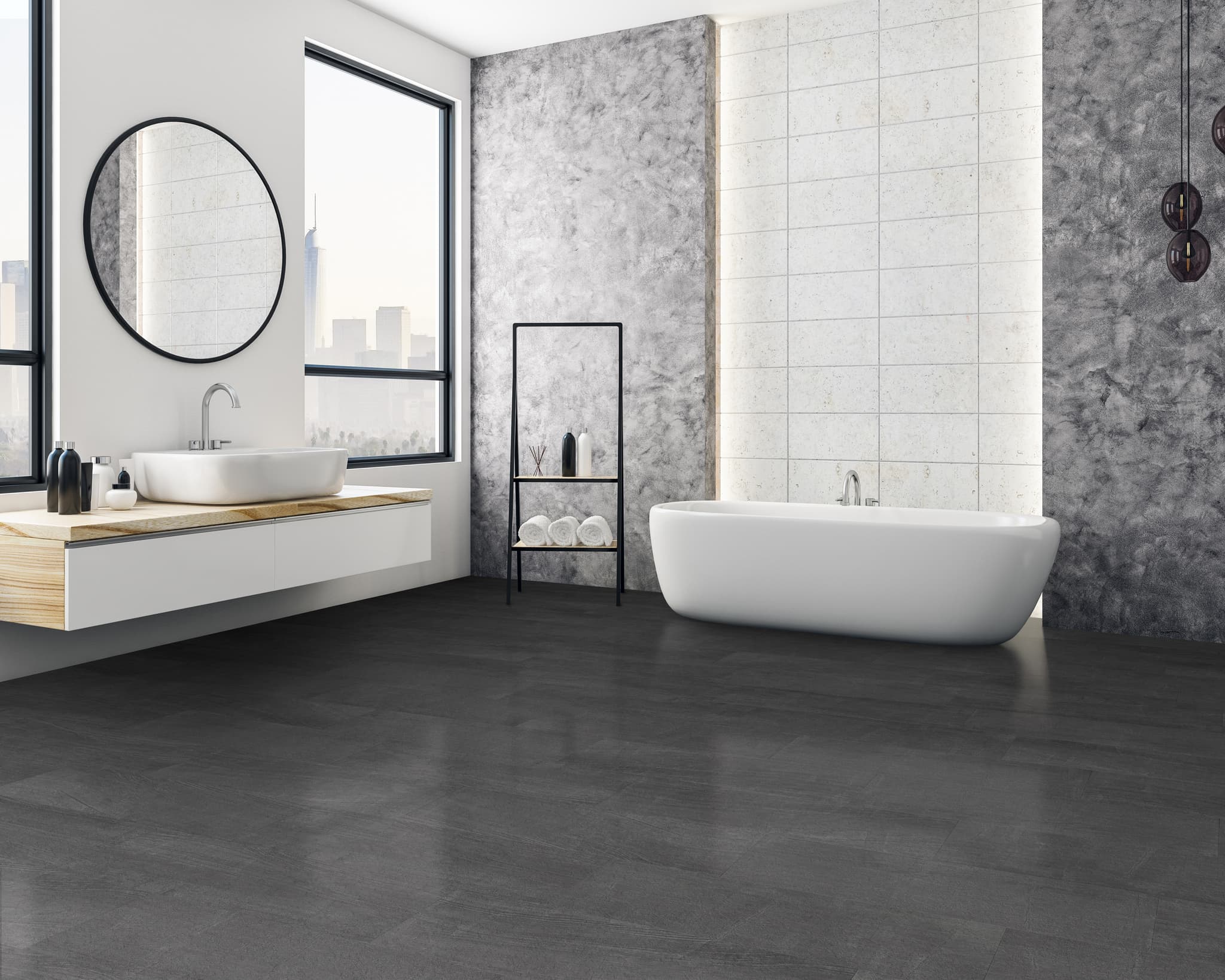
Black Sands Marble is the deeper of the two Shorebreak options - a charcoal-and-slate-leaning marble look with cool gray veining that runs through a near-black base. It is the floor for rooms that want gravity. The depth is the entire point: dark stone has been one of the defining design moves of the past five years, from Italian black-marble kitchens to the moody powder rooms that fill every interior magazine, and Black Sands Marble captures that aesthetic in a click-lock tile that an average homeowner can actually install in a weekend. The veining is restrained but legible, with lighter strands of warm-gray and faint cream cutting across the charcoal base in a believable geological pattern rather than the cartoonish high-contrast print that ruined the first wave of stone-look LVT. The texture has a soft natural grain that catches light the way honed soapstone or honed slate does - matte enough to hide footprints and water spots, present enough to read as real stone rather than as a flat printed surface. In a small footprint like a powder room or entryway, the depth makes the room feel intentional and considered. In a larger kitchen or open-plan space, it works as a chromatic anchor under white or pale cabinetry. The chromatic complexity is what keeps it from ever feeling flat or coffin-like, which is the failure mode of every cheap dark stone-look product on the market.
Best For
Powder rooms, mudrooms, entryways, and dramatic kitchens that want the depth of a dark marble or slate floor without the upkeep or expense.
Pairs Well With
Pairs with white, bone, and creamy off-white cabinetry, brass and gold fixtures for warmth, walnut or rift-white-oak vanities, jewel-toned walls in deep green or navy, and the kind of considered moody interiors where a dark floor is doing real design work rather than just filling space.
The Bottom Line
Shorebreak is the right answer when you want the look of marble or slate in a kitchen, entryway, mudroom, or open-plan living space and you do not want the cost, weight, install complexity, or ongoing maintenance of real stone. It is not the right answer for a wet shower floor or a full bathroom with standing water. Those rooms still need true porcelain or ceramic set in mortar. Inside its honest use case, Shorebreak does something the category has been chasing for years: stone aesthetics in a floor an average homeowner can actually install, on a budget that actually closes.
Pick Bolinas Marble for bright kitchens and open-plan rooms that want the Carrara look. Pick Black Sands Marble for powder rooms, entryways, and moody design-led spaces where a deep stone floor is doing real chromatic work.
Order the samples from this guide.
Photos get you close. Holding the plank in your own light gets you certain. Samples are free, shipping is a flat $9.99, and they arrive at your door in days.
CALI Shorebreak FAQ
The questions homeowners ask when picking a stone-look tile.
How does Shorebreak compare to real marble or natural stone tile?
Visually it captures the look - veining, base color, low sheen, natural texture. Functionally it solves every problem real stone introduces. Real marble is heavy (around 12 to 18 pounds per square foot), requires a reinforced subfloor, demands a professional install with mortar and grout, etches permanently from anything acidic (lemon, vinegar, wine, tomato), stains from oils, requires sealing every 12 to 24 months, and costs multiples of what an engineered alternative costs once you include the install. Shorebreak weighs a fraction of that, floats on its own click-lock system over almost any existing flat surface, never needs sealing, will not etch from kitchen acids, and a homeowner with basic tools can finish a room over a weekend. The trade-off is real: it is a printed surface, not a quarried slab, so it will not develop the patina of natural marble over decades. For the rooms where Shorebreak makes sense - kitchens, entryways, mudrooms, living spaces - that trade-off lands on the right side for most homeowners.
How is Shorebreak different from ceramic or porcelain stone-look tile?
Three things separate them. First: weight and install. Porcelain stone-look tile still has to be set in mortar, grouted, and sealed at the grout lines, which means a professional install and a multi-day project. Shorebreak floats - no mortar, no grout, no curing time - and can be installed over most existing hard-surface floors. Second: underfoot feel. Porcelain is genuinely cold and genuinely hard. Shorebreak has a softer step and runs much closer to room temperature, which is the difference between a kitchen floor you want to stand on while cooking and one you avoid in winter. Third: subfloor and structure. Heavy porcelain often requires subfloor reinforcement and is brittle against impact - dropped cast-iron pans crack tile. Shorebreak handles impact differently and does not load the subfloor the way ceramic or porcelain does. The honest counterpoint: porcelain is the right answer for full bathrooms, showers, and any zone with standing water. Shorebreak is the better answer for everywhere else.
Can I install Shorebreak in a bathroom or shower?
Not a shower, and not a bathroom with consistent standing water. Shorebreak is built on a click-lock laminate-style construction with a high-density core, which performs well against incidental moisture - splashes, spills, mopping, wet shoes from the entryway - but is not designed for the constant water exposure of a shower floor, a wet-room bathroom, or a steam shower. For those zones, you want real porcelain or ceramic tile set in mortar with proper waterproofing membrane underneath. Shorebreak is the right call for kitchens, powder rooms, half baths, mudrooms, entryways, laundry rooms, and general living spaces. If your bathroom is a standard layout with a tub or enclosed shower and a normal vanity area, Shorebreak can live in the vanity zone, but the wet zones inside the shower itself need a true tile system.
Can I install Shorebreak over an existing floor?
Yes, in most cases. The click-lock floating-tile design means Shorebreak does not need to be glued or nailed to the subfloor - it locks plank-to-plank and floats as a unified surface. That means it can install directly over existing vinyl, laminate, hardwood, engineered wood, and most existing ceramic tile, as long as the existing surface is flat, structurally sound, and clean. Hollow tiles, cracked tiles, or grout lines wider than about a quarter inch need to be repaired first. Carpet has to come up before install. The big advantage of the floating system is that a stone-look renovation that would normally require ripping up an existing floor down to the subfloor - a demolition project on its own - can be done in a single phase on top of what is already there.
Is Shorebreak actually waterproof?
It is highly water-resistant and built to handle the splashes, spills, and incidental moisture of a kitchen or entryway, but it is not waterproof in the same absolute sense as a true vinyl SPC plank with a solid stone-polymer core. Shorebreak is a laminate-style construction with a high-density wood core, which is what allows it to feel and sound underfoot more like real stone than vinyl does. Routine spills, mopping, pet accidents, and tracked-in rain are all easily handled - wipe and move on. What you want to avoid is leaving standing water sitting on the floor for hours or running the floor in a true wet zone (shower, sauna, full bathroom with no tub or curtain). For 95 percent of the rooms in a normal house, that distinction never matters.
What size are the Shorebreak tiles?
Each Shorebreak tile is roughly 23" by 11", which is a large-format tile size that helps the installed floor read as real stone rather than as small printed squares. Larger tiles mean fewer visible seams across a finished room, which is one of the details that separates expensive stone-look installs from cheap ones. The proportions also intentionally avoid the perfect-square format that screams generic vinyl tile - the rectangular 23" by 11" dimension reads closer to honed-marble or honed-slate tile sizing in current high-end kitchen design.
How is Shorebreak installed?
Click-lock floating install. Each tile has a tongue-and-groove edge system that snaps into the neighboring tile, locking the entire floor together as a single floating surface that sits on top of the subfloor without being mechanically fastened to it. No mortar, no grout, no thinset, no wet-saw cutting required for most cuts - a sharp utility knife or a basic miter saw handles the standard cuts. A homeowner with average DIY experience can finish a small to medium room over a weekend. For larger or more complex installs, a flooring professional can finish the project in a fraction of the time required for traditional stone or porcelain tile.
What is the warranty on CALI Shorebreak?
50-Year Residential and 15-Year Commercial. That is a long warranty on the wear surface and the structural integrity of the click-lock system, and it reflects the laminate-construction durability. The residential coverage handles manufacturing defects, wear-through of the design layer under normal residential use, and the structural performance of the locking system. Shorebreak is built to outlast a typical kitchen renovation cycle by a wide margin.