
Every CALI Engineered Bamboo Color: Solid-Strand Moso, Carbonized for Depth
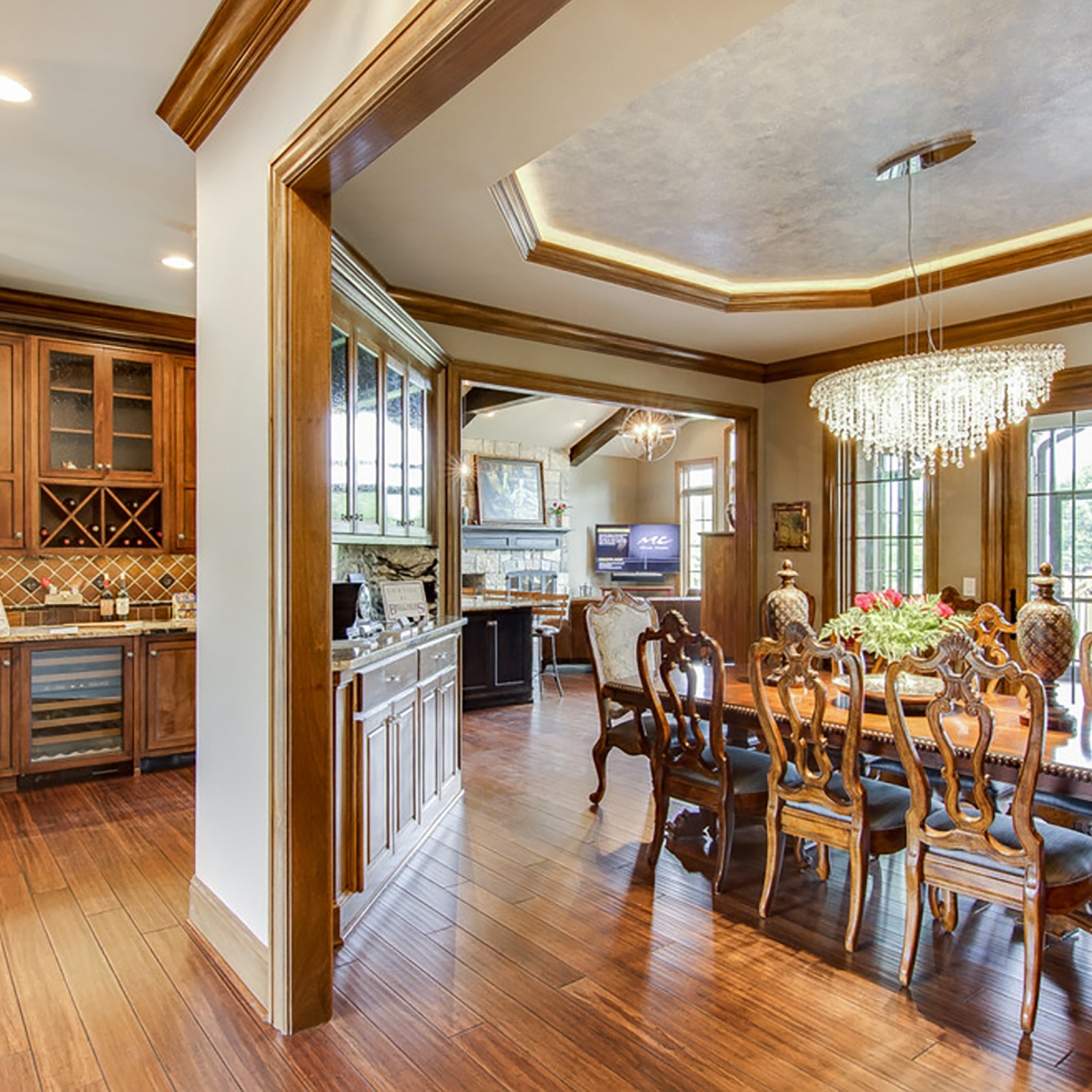
Moso bamboo, harvested on a five-year cycle. Solid strand construction, denser than most domestic hardwoods. Carbonized for color rather than stained. A four-floor lineup that runs from honest golden Natural to a fully carbonized espresso the brand has been building its reputation on for over a decade.
At a Glance
| Color | Color Family | Designer's Note | Shop | |
|---|---|---|---|---|
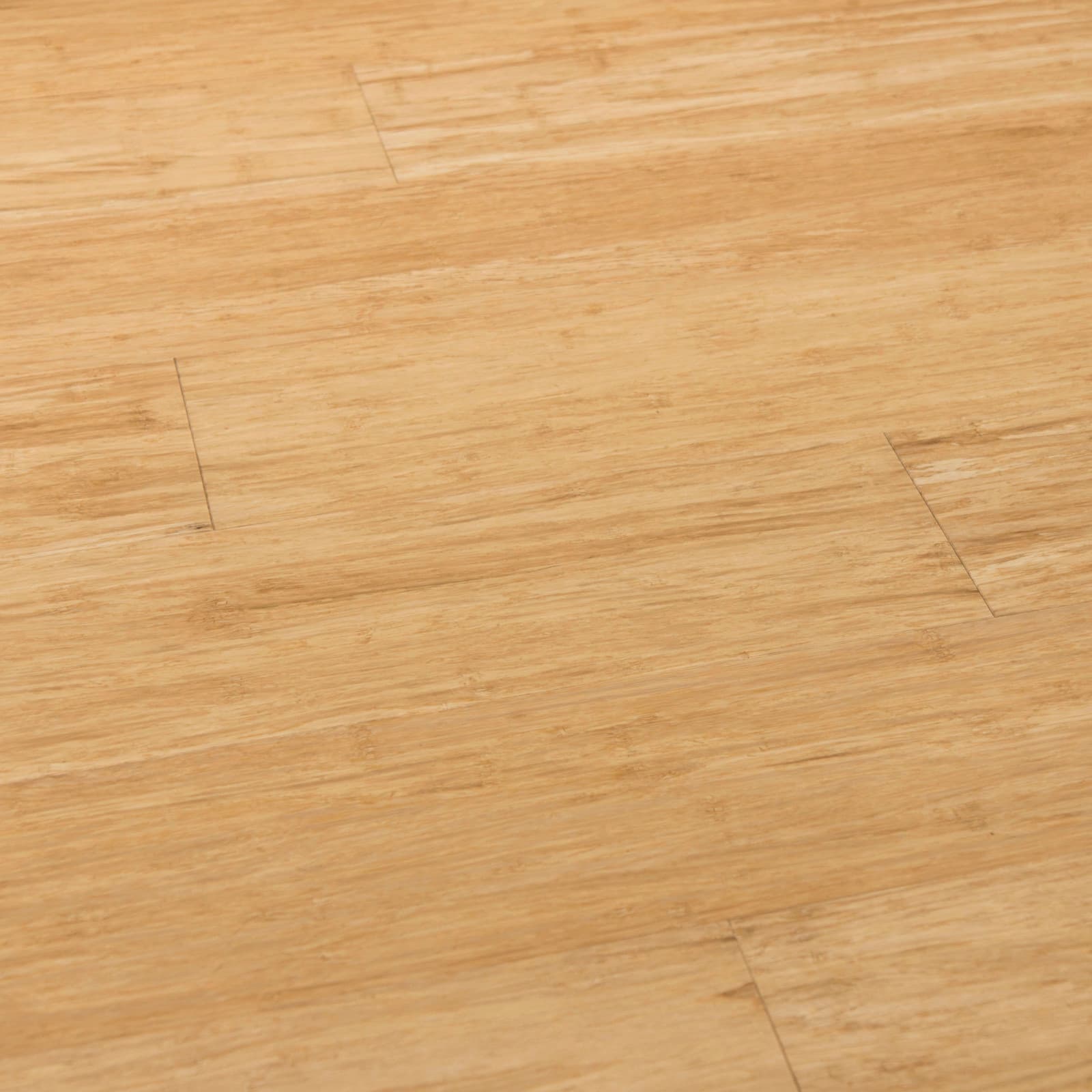 | Natural | Tan | Warm golden-blonde bamboo in its honest, uncarbonized state, with tight linear figure that reads very differently from the broader pattern of oak. Echoes raw Moso bamboo milled and pressed without any heat treatment to darken it. Honest, golden, bright. | View Product → |
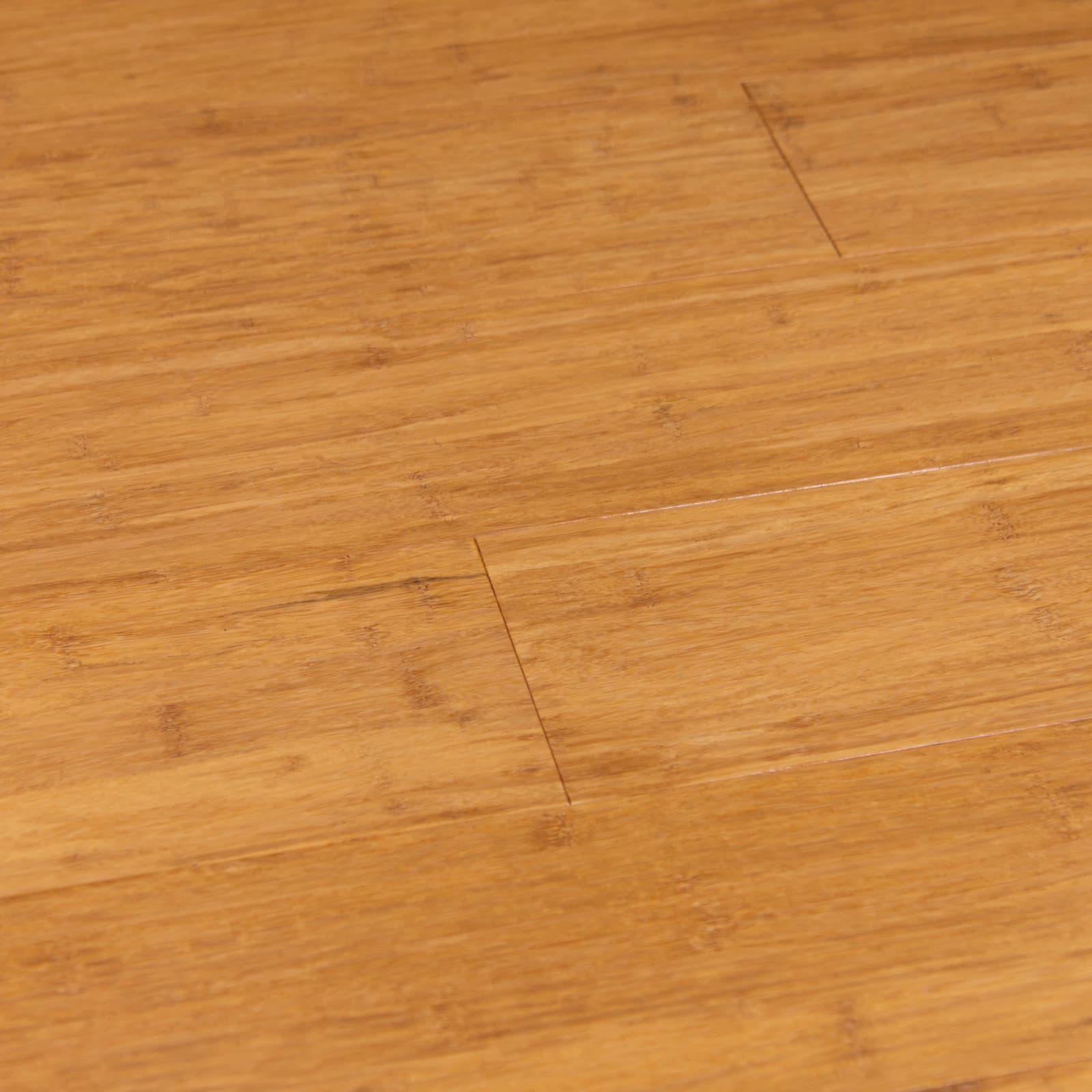 | Mocha | Honey | Soft pecan-brown with real plank-to-plank warmth and a golden undertone in the lighter passages that keeps the floor from ever reading heavy. Resembles classic warm-brown oak, with the tighter linear figure that gives bamboo its own visual signature. Warm, pecan, layered. | View Product → |
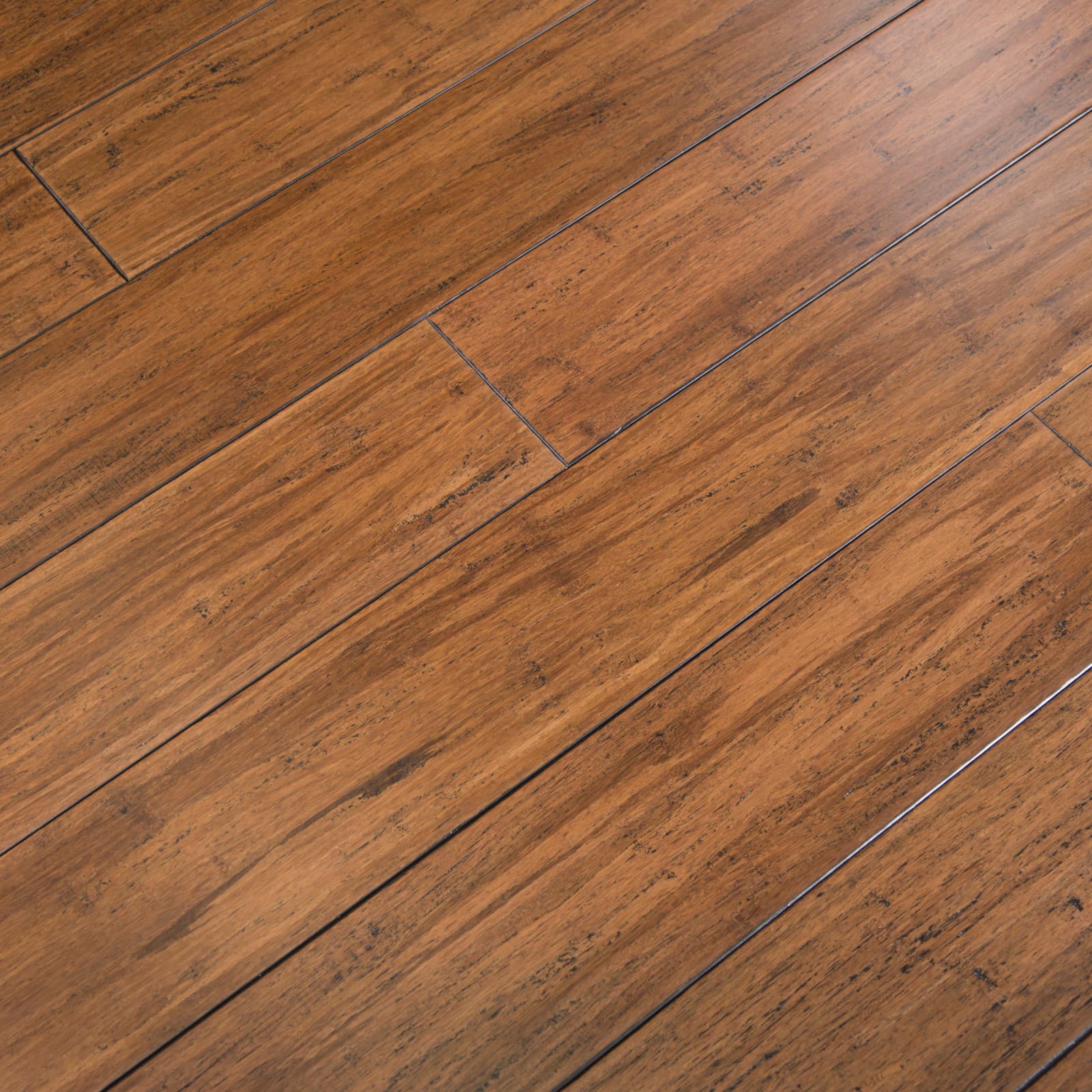 | Antique Java | Warm Brown | Deep espresso bamboo with a soft, hand-scraped surface that reads as aged and weathered rather than as a flat coating. Modeled after long-aged dark hardwood, except the color is structural to the material — fully carbonized strands cooked all the way through rather than surface-stained. Deep, weathered, considered. | View Product → |
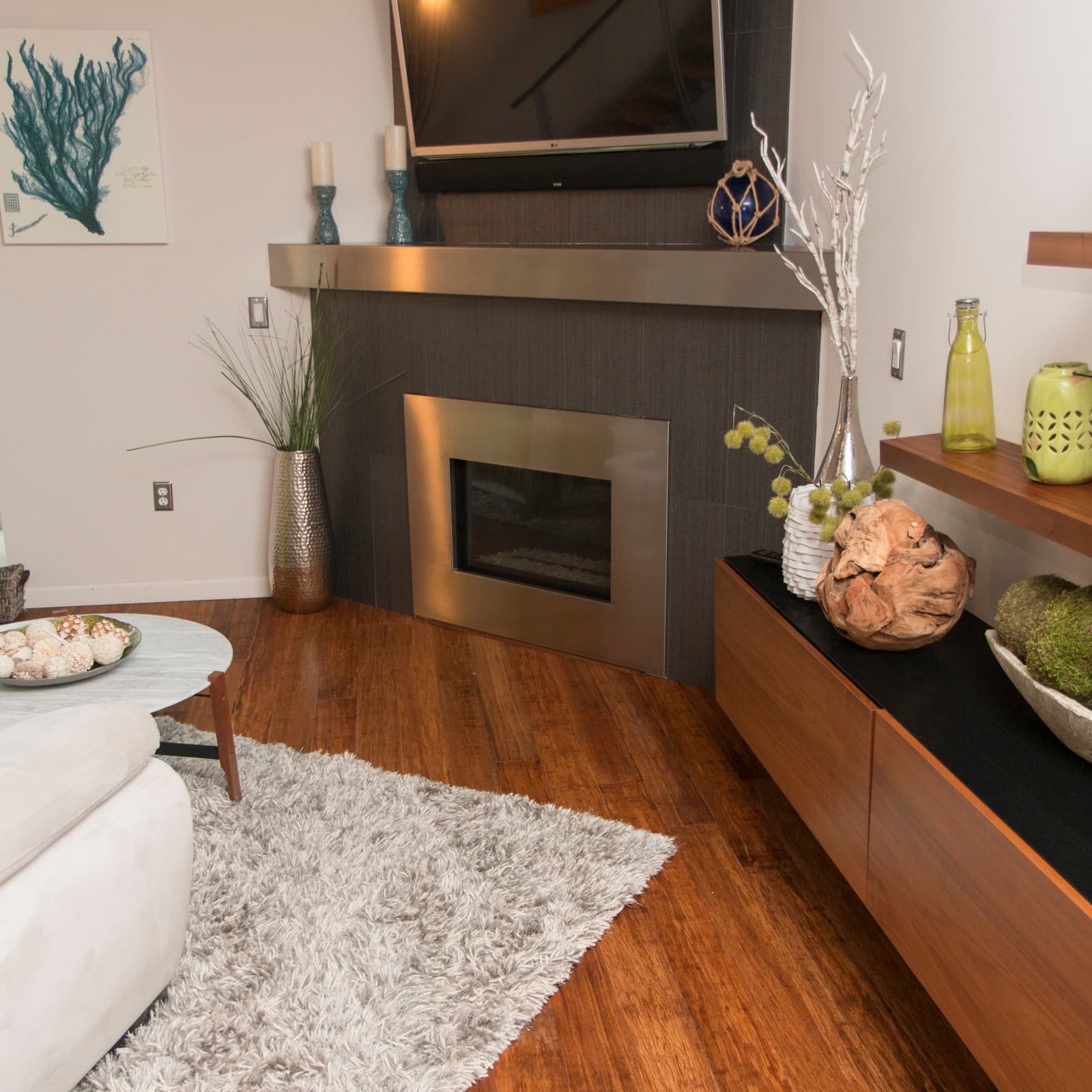 | Java Atlas | Warm Brown | View Product → |
Why Bamboo, and Why Now
Bamboo is having a moment, and the moment is overdue. For most of the last two decades, the flooring conversation has run on the assumption that “real wood” meant oak, walnut, hickory, or maple harvested from a hardwood forest that takes fifty to a hundred years to regrow. Moso bamboo, the species used in every plank of this collection, reaches harvest maturity in roughly five to seven years, sends new culms up from the same root system after every cut, and produces something like twenty times the usable material per acre per decade of an oak forest. The sustainability claim is unusual in flooring for being specific and verifiable rather than vague green-washing.
The durability claim is just as concrete. Strand-woven bamboo, the construction used across this entire line, rates around 4,000 to 5,000 on the Janka hardness scale. White oak is around 1,360, red oak around 1,290, hard maple under 1,500. The way you get there is mechanical: thin bamboo strips are compressed under enormous pressure with resin into a single dense block, then milled into planks. The result is a wear surface denser than most domestic hardwoods and competitive with exotic species like Brazilian cherry, mounted on an engineered core for dimensional stability across humidity swings that would stress solid bamboo.
Then there is the color story, which is the most honest part of the line. Where most dark hardwood floors get their color from a surface stain that wears off and fades unevenly, CALI's deeper bamboo colors are carbonized: the strands are pressure-cooked under steam until their natural sugars caramelize all the way through. Cut a carbonized plank in half and the cross-section is the same shade as the surface. The color is structural to the material. That is what makes Antique Java feel like aged wood rather than like a coating, and it is the single most underrated feature in the bamboo category. Below is each of the four active colors, in its own section, organized from the honest golden Natural through the carbonized depths of Antique Java and its compact Atlas companion. Every section is built around what the color actually looks like in a real room.
CALI Engineered Bamboo · Tan
Natural
5/8″ × 5-1/4″ × 72-3/4″ plank · Solid-strand bamboo, engineered construction · Aluminum Oxide finish · Uncarbonized
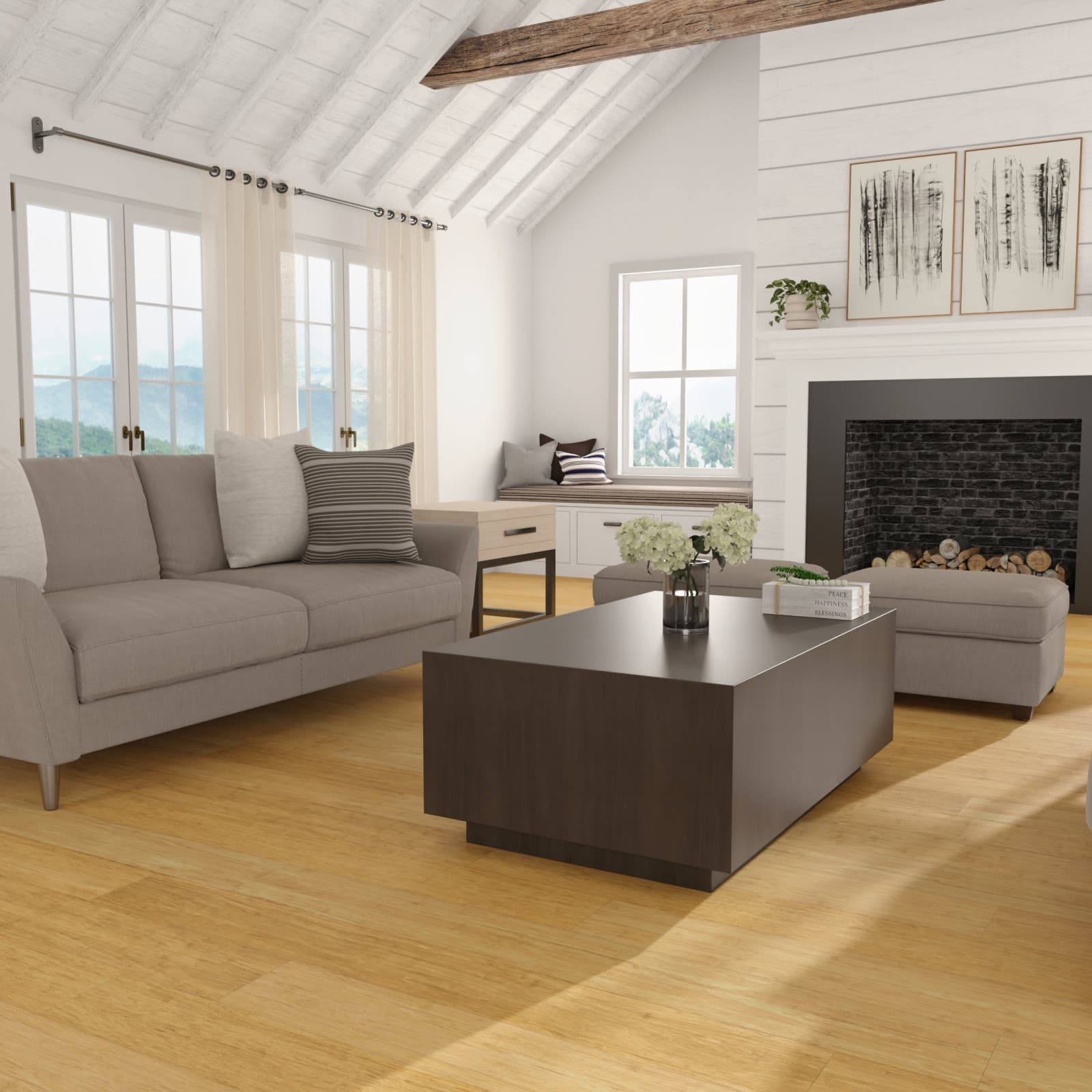
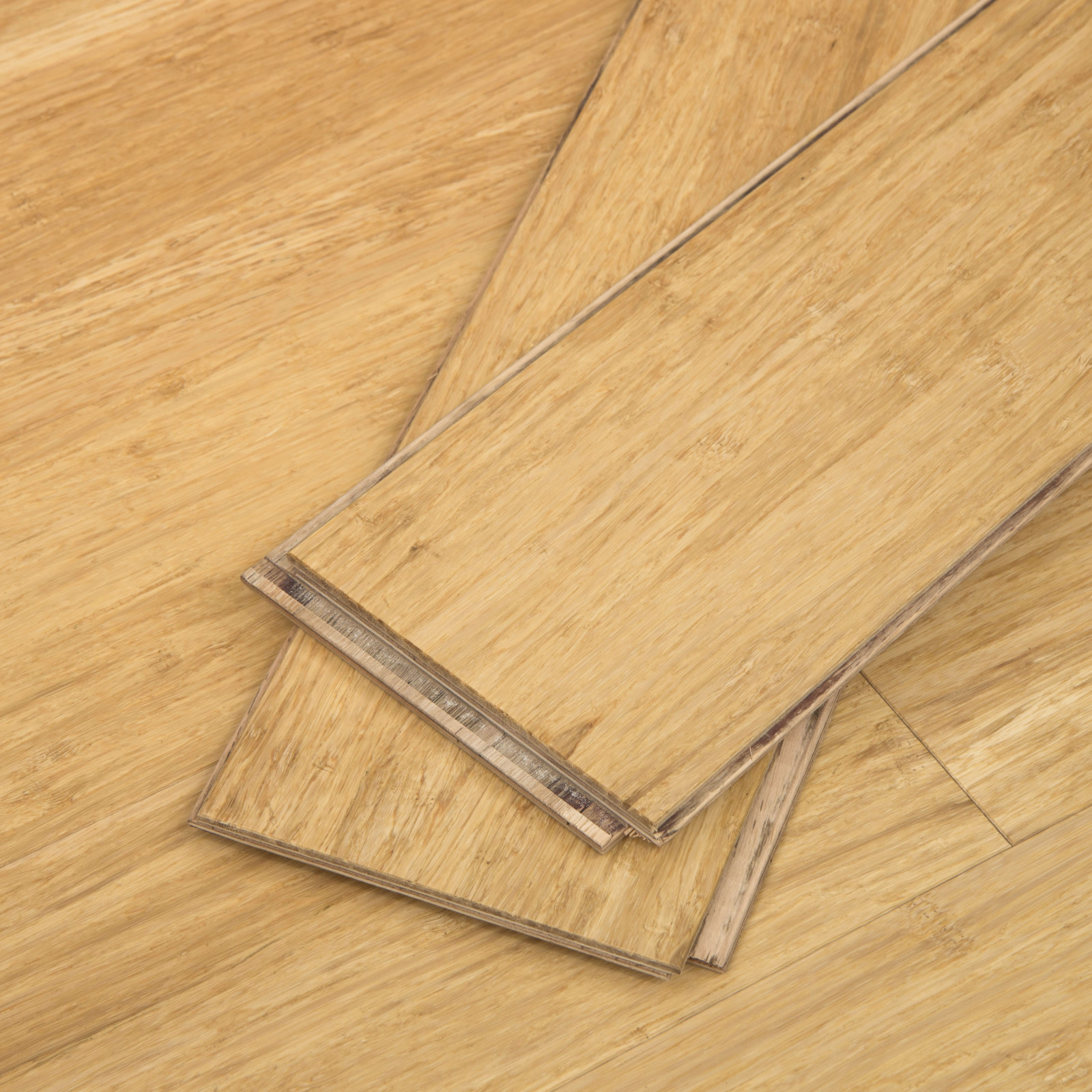
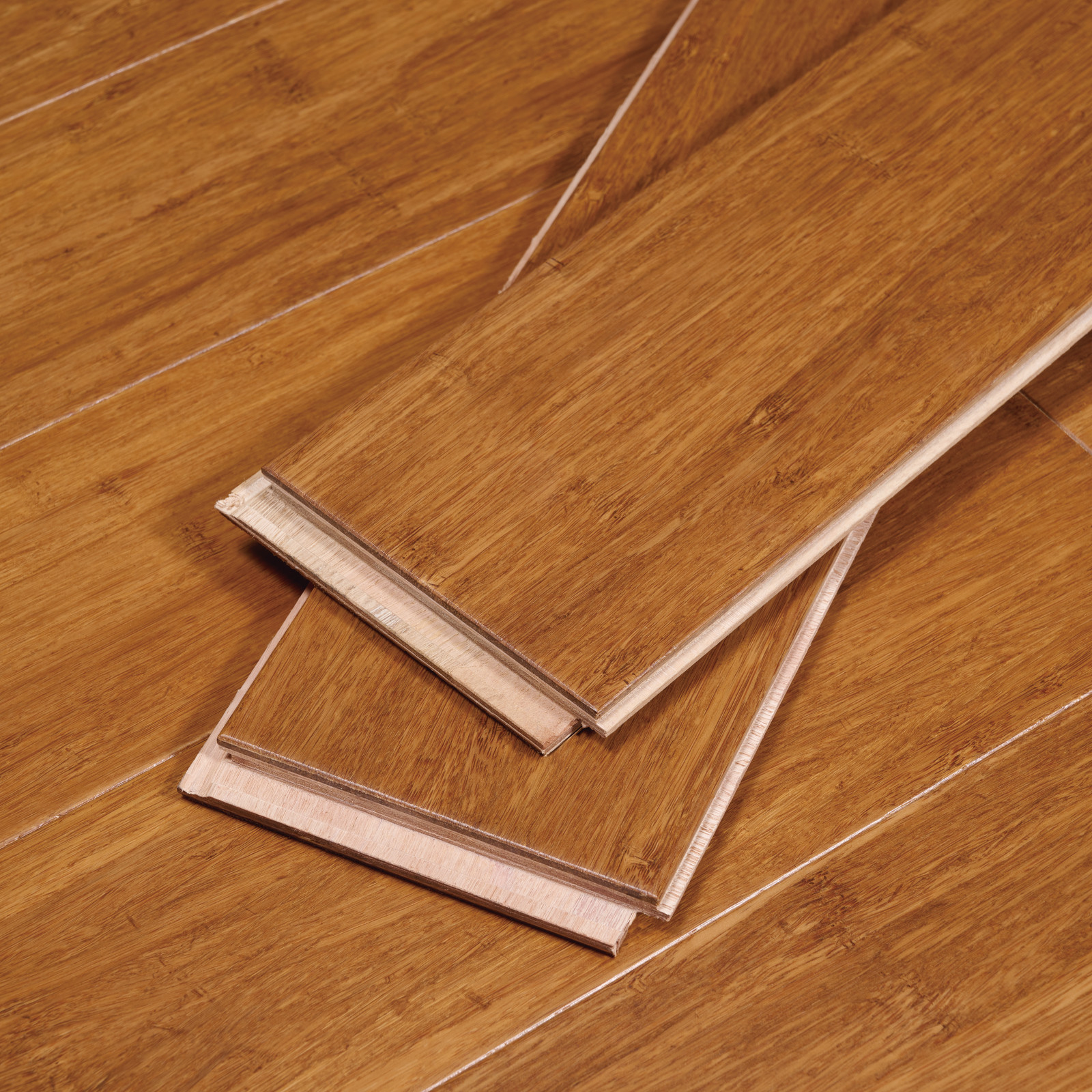
Natural is bamboo in its honest state - the warm, golden-blonde color the Moso stalk takes on after it has been milled, glued, and pressed into strand form, with no heat treatment to darken it. The grain runs tight and linear, very different from the broad, knotted grain of oak, and the color holds its golden cast across daylight and lamplight without ever tilting toward yellow. It is the entry-point color and the one that reads most distinctly as bamboo rather than as a wood substitute.
Best For
Bright, airy interiors that want the honest, golden color of raw bamboo without any heat treatment darkening it.
Pairs Well With
Works under white and bone cabinetry, raw-linen upholstery, brass or polished-nickel fixtures, soft sage and seafoam accents, and the bright Scandinavian-coastal palettes that lean into pale, warm floors rather than fighting them.
CALI Engineered Bamboo · Honey
Mocha
5/8″ × 5-5/16″ × 72.83″ plank · Solid-strand bamboo, engineered construction · Aluminum Oxide finish · Lightly carbonized
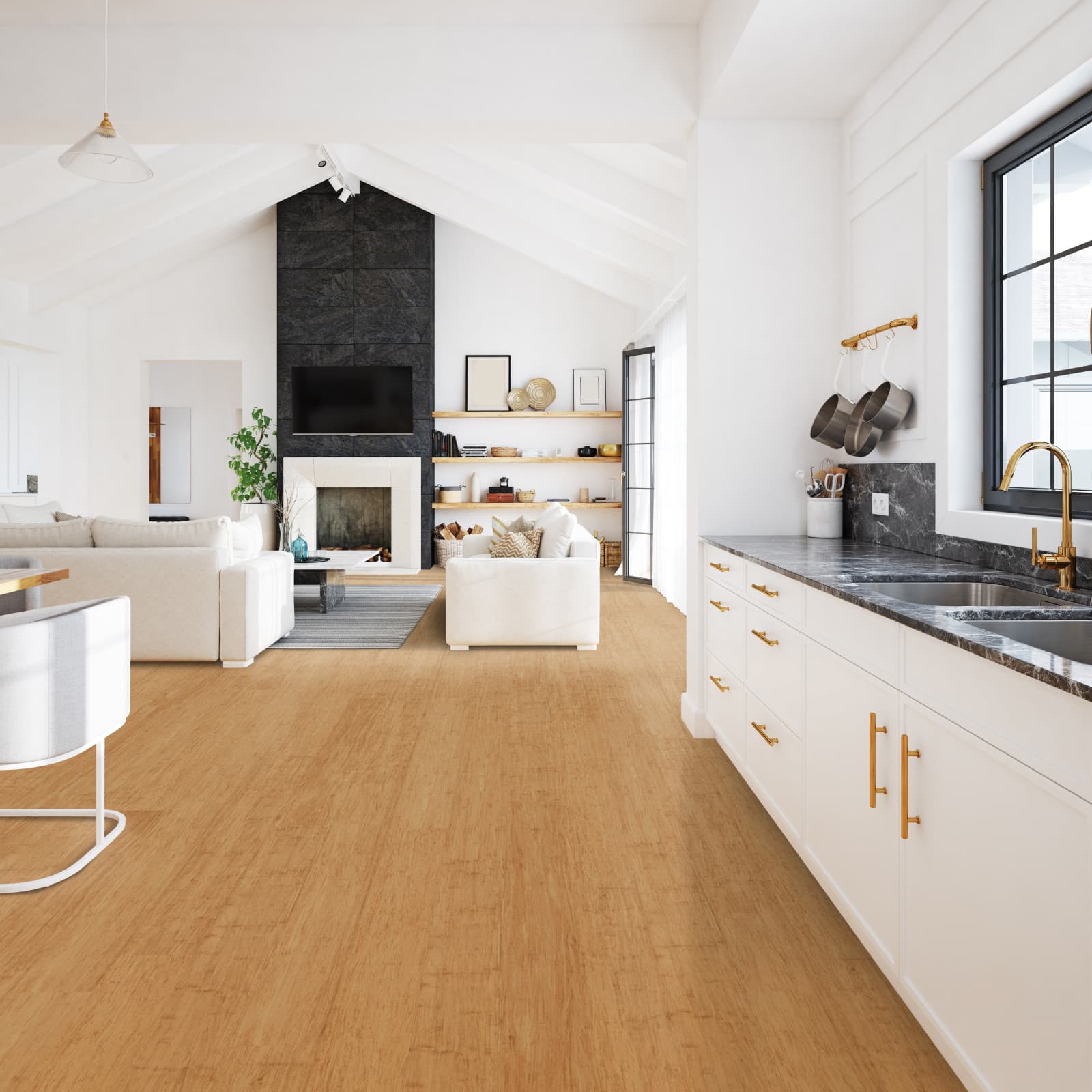
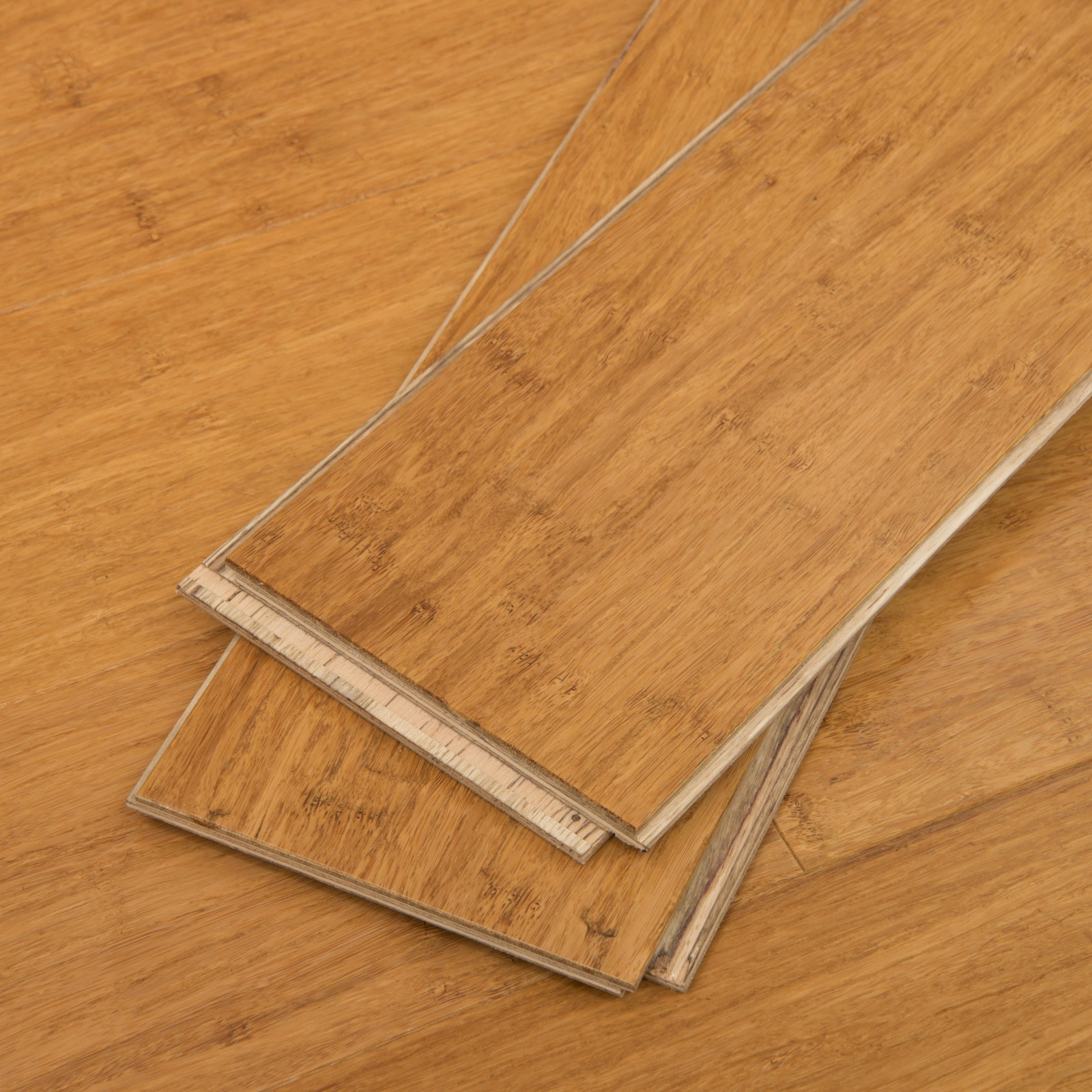
Mocha sits in the middle of the carbonization scale - the bamboo has been heat-treated long enough to caramelize its natural sugars and pull a soft pecan-brown out of the grain, but not so long that the color flattens. The result is a floor with genuine chromatic warmth, real plank-to-plank variation, and enough golden undertone in the lighter strands to keep the room from ever reading heavy. It is an easy color to live with for a reason: it lands in the same warm-brown tone that oak buyers default to, but with the tighter linear grain that gives bamboo its own visual signature.
Best For
Transitional kitchens, family rooms, and warm interiors that want pecan-brown depth without going dark.
Pairs Well With
Pairs cleanly with white shaker and painted-cream cabinetry, warm-greige walls, leather and oiled-walnut furniture, antique brass, and the layered transitional palette most renovating homeowners are working in.
CALI Engineered Bamboo · Warm Brown
Antique Java
9/16″ × 5-5/16″ × 72-7/8″ plank · Solid-strand bamboo, engineered construction · Aluminum Oxide finish · Fully carbonized, hand-scraped texture
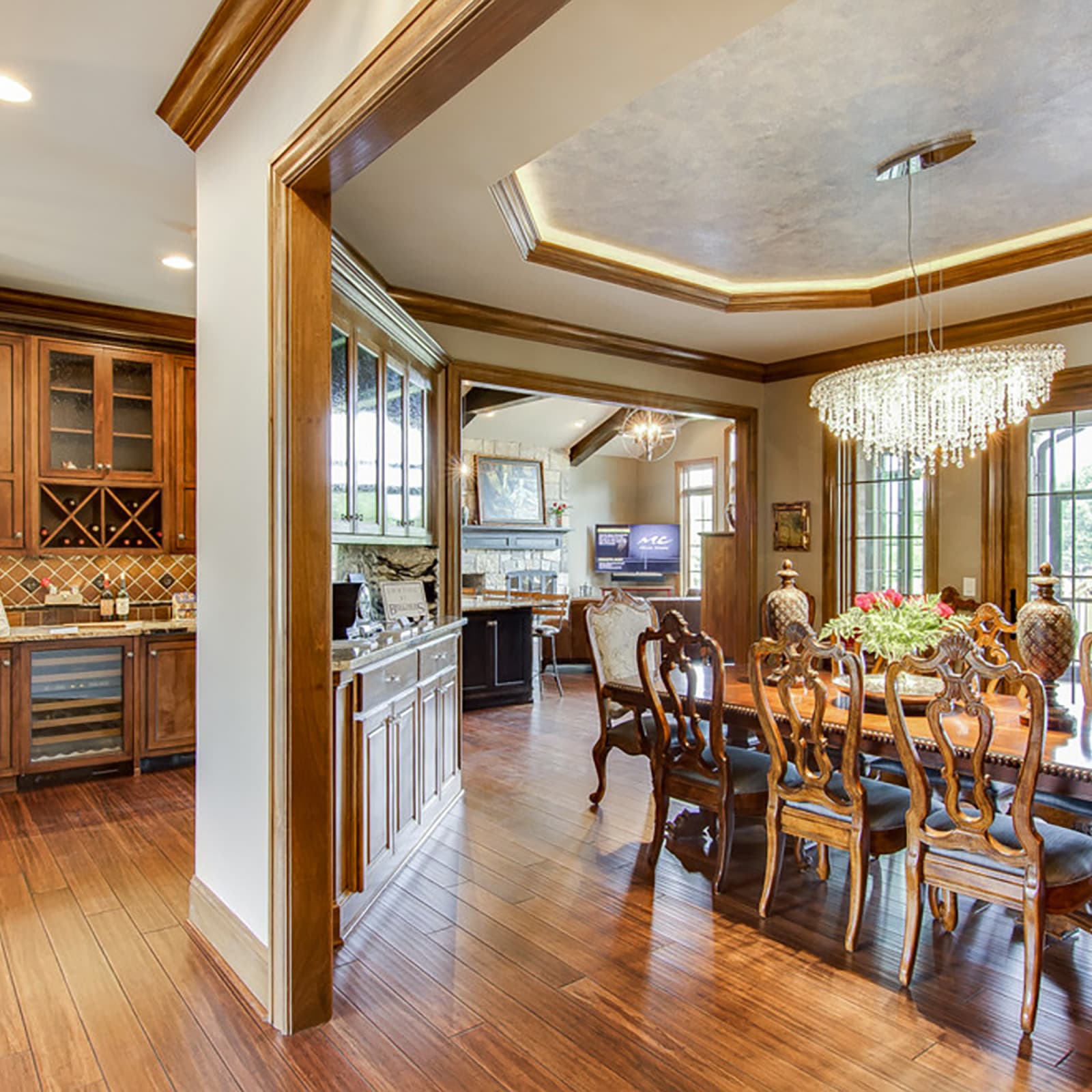
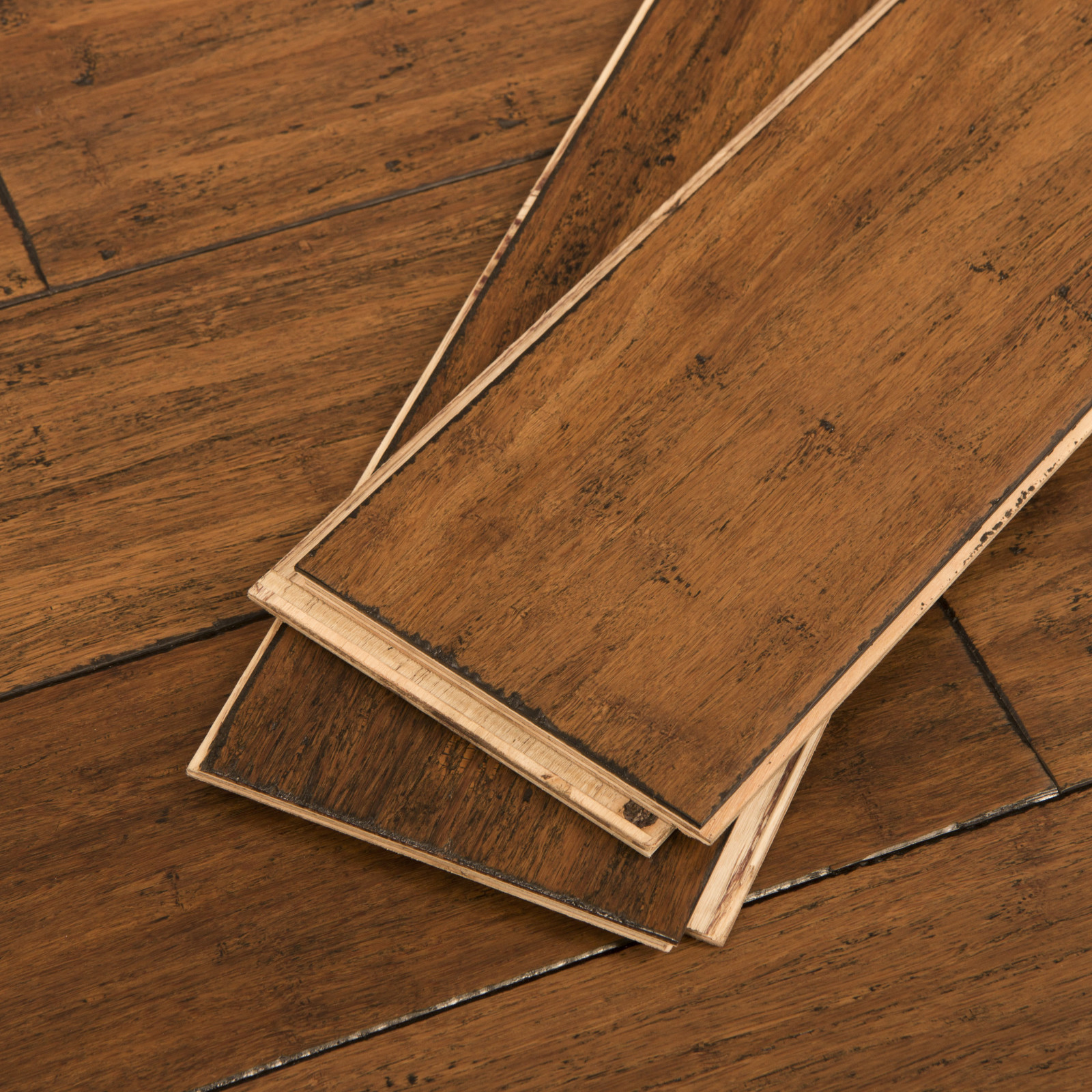
Antique Java is the signature color and the one that has carried the CALI Bamboo brand for over a decade. The depth comes from full carbonization - the bamboo strands are pressure-cooked under steam long enough to caramelize their sugars all the way through, producing a deep espresso color that is the same shade top to bottom rather than a surface stain. Every plank then gets hand-scraped, which leaves a soft undulating texture across the surface that reads as aged and weathered rather than as a flat coating. It is one of the few genuinely dark floors on the market whose color is structural to the material itself.
Best For
Victorian and Italianate restorations, library studies, mountain homes, and any interior that wants the gravity of a genuinely dark floor with real material substance underneath.
Pairs Well With
Pairs with cream and bone walls, polished brass and antique bronze, oxblood and forest-green accents, leather-bound and oiled-walnut furniture, and the deep, considered palettes of Victorian, Italianate, and Colonial restoration work.
CALI Engineered Bamboo · Warm Brown
Java Atlas
11mm × 3-3/4″ × 36″ plank · Solid-strand bamboo, engineered construction · Compact format
Java Atlas is the small-format companion to Antique Java - the same deep, fully carbonized java-brown color, but in a tighter 3-3/4"-wide, 36"-long plank rather than the longer wide-plank format that defines the rest. The smaller scale is deliberate: in compact rooms, narrow hallways, and condo footprints, very wide and very long planks can fight the proportions of the space, while the Atlas format keeps the same color depth and the same engineered-bamboo construction at a scale that fits tighter rooms. It is the version of the dark-bamboo look built for places where a 6-foot plank simply will not work.
Best For
Smaller rooms, hallways, condos, and renovations where a more compact plank format reads better than long wide planks - same Java depth, tighter scale.
Pairs Well With
Pairs with the same warm cream walls, brass fixtures, and deep accent colors as Antique Java, with the added flexibility of fitting compact and irregular footprints where wide-plank formats run into trouble.
Order the samples from this guide.
Photos get you close. Holding the plank in your own light gets you certain. Samples are free, shipping is a flat $9.99, and they arrive at your door in days.
CALI Engineered Bamboo FAQ
The questions homeowners ask when picking a bamboo floor.
Is bamboo flooring really more sustainable than oak?
Yes, and the math is not close. Moso bamboo - the species CALI uses - is a grass that reaches harvest maturity in roughly five to seven years, and harvesting does not kill the plant. The same root system sends up new culms after every cut, year after year, with no replanting required. An oak tree, by comparison, needs fifty to a hundred years before it is millable, and harvesting is a one-time event. On a per-acre, per-decade basis, Moso bamboo produces something like twenty times the usable material of a hardwood forest. The sustainability claim is unusual in flooring for being specific and verifiable rather than vague.
How does carbonization actually work?
Carbonization is a heat treatment, not a stain. Raw Moso strands are placed in a sealed pressure vessel and steamed under controlled heat for hours - the longer the cook, the darker the color. What is happening chemically is that the natural sugars and starches inside the bamboo caramelize all the way through the strand, the same way sugar darkens in a pan. The color that comes out is structural to the material: cut a carbonized plank in half and the cross-section is the same shade as the surface. That is why Antique Java looks like aged wood rather than like a finish coating - the depth is in the bamboo itself.
How hard is strand-woven bamboo compared with oak?
Significantly harder. Strand-woven bamboo - the construction CALI uses across this entire line - rates around 4,000 to 5,000 on the Janka hardness scale. White oak rates around 1,360 and red oak around 1,290. Even hard maple comes in below 1,500. The reason for the gap is the construction itself: strand bamboo is milled into thin strips, then compressed under enormous pressure with resin into a single dense block before being cut into planks. The result is a flooring material denser than most domestic hardwoods and competitive with exotic species like Brazilian cherry, at a fraction of the environmental cost.
Is CALI Engineered Bamboo refinishable?
Yes - unlike most engineered hardwoods, which have a thin veneer of real wood over a plywood core, the wear surface on CALI Engineered Bamboo is solid strand-woven bamboo all the way down. That gives the floor real refinishing capacity later in its life. A light sand and refinish can refresh the surface without exposing a substrate, which is one of the meaningful differences between engineered bamboo and most veneer-on-plywood engineered wood floors on the market.
Can engineered bamboo be installed in kitchens and bathrooms?
Kitchens, yes, with the same caveats as any real-wood floor: clean up standing water promptly, and use rugs at the sink and dishwasher. Engineered bamboo handles the routine moisture of a working kitchen well, and the engineered construction adds dimensional stability that solid bamboo does not have. Full bathrooms are not the recommended application - standing water, daily steam, and prolonged humidity are harder on any wood-based floor than the rest of the house, and there are better tools for that room. For powder rooms and laundry rooms, engineered bamboo is generally fine.
How does the install work?
Engineered Bamboo installs by glue-down or nail-down over wood subfloors, and by glue-down or floating over approved substrates depending on the specific SKU and the format. The wider, longer planks (Natural, Mocha, Antique Java) are typically nail-down or glue-down, while the compact Java Atlas format is more flexible. Acclimation is mandatory - cartons should sit unopened in the install environment for at least 72 hours so the bamboo can equalize to the room's humidity before the planks go down. As with any real-wood floor, the install method has to match the subfloor and the climate.
Does carbonized bamboo fade over time?
Less than you would expect, and far less than stained dark hardwood. Because the carbonized color is created through caramelization of the bamboo's own sugars all the way through the strand, there is no surface stain to wear off and no top-coat tint to fade. Direct unfiltered sunlight will lighten any wood-based floor over years of exposure, and bamboo is no exception, but the change is gradual and even rather than the patchy fading that hits stained floors. The aluminum oxide finish on Natural, Mocha, and Antique Java also adds a UV-resistant top layer that slows the process further.
What is the warranty?
CALI publishes a residential structural warranty for the Engineered Bamboo line, with finish warranty coverage that varies by SKU and install method. Coverage applies to first-owner residential installs with documented acclimation and approved subfloor preparation. Before ordering, we recommend confirming the specific warranty terms for the color and format you are installing, since coverage on hand-scraped textures (like Antique Java) and compact formats (like Java Atlas) is documented separately from the main wide-plank colors.