
Bamboo Flooring Guide 2026: The Complete Guide to Sustainable, Ultra-Durable Floors
Bamboo isn't just eco-friendly—it's one of the hardest, most durable flooring materials available. This guide covers everything you need to know: why engineered bamboo beats solid, how carbonization creates different colors, and which of our three beautiful shades fits your home's style.
Quick Summary: Why Choose Bamboo?
- Harder than oak: Strand-woven bamboo is 2-3x harder than traditional hardwood
- Sustainable: Bamboo regrows in 5-7 years vs. 50+ years for hardwood trees
- Ultra-low VOC: FloorScore certified, safe for families and pets
- 50-year warranty: Built to last generations
Bamboo flooring has come a long way from the thin, scratch-prone planks of the early 2000s. Modern strand-woven bamboo is engineered for extreme durability—harder than Brazilian cherry, more stable than solid hardwood, and produced from one of the most renewable resources on the planet.
Whether you're drawn to bamboo for its eco-credentials, its resistance to dents and scratches, or its warm, natural beauty, this guide will help you understand your options and choose the perfect color for your space.
In This Guide:
Benefits of Bamboo Flooring
Bamboo offers a unique combination of benefits that no other flooring material can match:
1. Exceptional Hardness & Durability
Strand-woven bamboo (also called "fossilized" bamboo) is created by compressing bamboo fibers under extreme heat and pressure. The result? A floor that's 2-3x harder than red oak and rivals exotic hardwoods like Brazilian cherry.
This hardness translates to superior scratch and dent resistance—perfect for homes with pets, kids, or heavy furniture.
2. Eco-Friendly & Sustainable
Bamboo is technically a grass, not a wood—and it grows incredibly fast. A bamboo plant reaches maturity in 5-7 years, compared to 50-100 years for oak trees. Harvesting bamboo doesn't kill the plant; it regrows from the same root system.
CALI Bamboo is harvested from FSC-certified forests in China, where bamboo has been cultivated sustainably for centuries.
3. Ultra-Low VOC Emissions
All CALI bamboo flooring is FloorScore certified and meets the strictest indoor air quality standards. The adhesives used fall well below E0 emissions standards, making it safe for families, children, and pets.
4. Timeless Natural Beauty
Bamboo has a unique grain pattern that's distinctly different from traditional hardwood. The tight, linear grain creates a clean, contemporary look that works beautifully in both modern and traditional settings.
Why Engineered Bamboo Beats Solid
You'll see two types of bamboo flooring: solid and engineered. Here's why we recommend engineered bamboo for most homes:
Engineered Bamboo ✓
- • Superior stability: 7-layer eucalyptus core resists humidity changes
- • Works everywhere: Safe for basements, over concrete, over radiant heat
- • Easy installation: Click-lock system for DIY floating install
- • Same top layer: Identical hardness and wear resistance as solid
- • Longer planks: 72-7/8" planks for a more premium look
Solid Bamboo
- • More prone to expansion/contraction with humidity
- • Not recommended for basements or below-grade
- • Requires nail-down or glue-down installation
- • Shorter plank lengths typical
- • Can be refinished more times (rarely needed)
Bottom line: Engineered bamboo gives you the same incredible hardness and beauty as solid bamboo, with far better dimensional stability and installation flexibility. Unless you have a specific reason to choose solid, engineered is the smarter choice.
Our Three Beautiful Bamboo Colors
CALI's Engineered Bamboo collection offers three distinct colors, each created through a different level of carbonization—a heat treatment that caramelizes the bamboo's natural sugars, darkening the color.
- Natural: No carbonization—the pure, golden color of bamboo
- Mocha: Light carbonization—warm pecan tones
- Antique Java: Full carbonization + hand-scraping—rich, rustic character
Natural Bamboo: Light, Bright & Modern
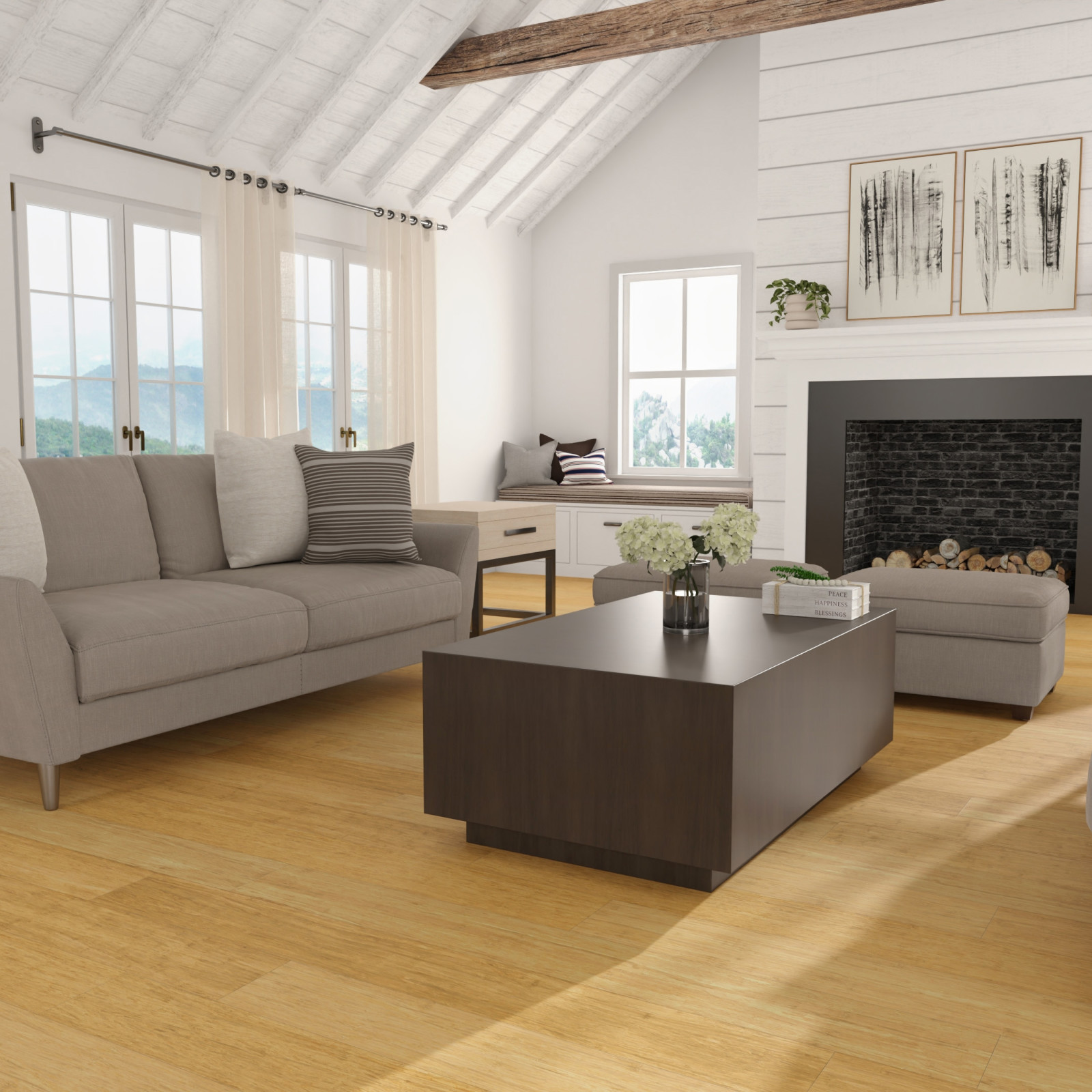
Natural Bamboo
The pure, untreated color of bamboo
Natural bamboo showcases the golden honey color that bamboo is known for. Without any carbonization, this is bamboo in its purest form—bright, cheerful, and endlessly versatile.
Best Styles for Natural Bamboo
- Scandinavian: The light, airy tones pair perfectly with minimalist Nordic design
- Japandi: Bamboo's Asian origins make it authentic for Japanese-Scandinavian fusion
- Coastal: Bright and beachy—works beautifully with blues and whites
- Modern: Clean lines and light floors create a crisp, contemporary feel
Pairs Well With
- Cabinets: White, light gray, natural wood, or bold colors like navy or sage
- Furniture: White oak, birch, maple, or painted pieces
- Walls: Bright whites, soft grays, or accent walls in any color
Mocha Bamboo: Warm, Rich & Inviting
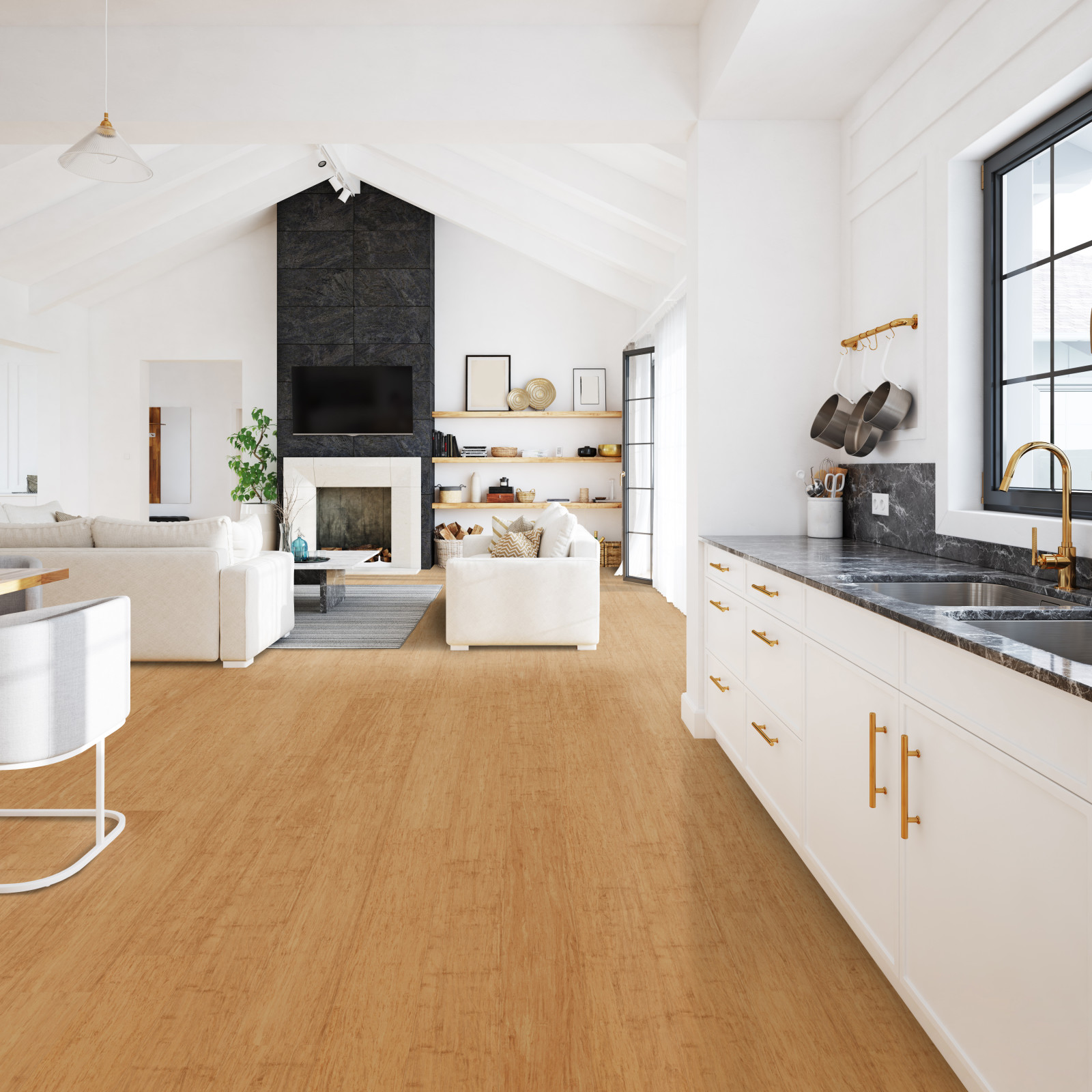
Mocha Bamboo
Lightly carbonized for warm pecan tones
Mocha is created through a delicate carbonization process that brings out warm, pecan-brown tones. It's our most popular bamboo color—rich enough to add warmth, but not so dark that it shows dust or makes rooms feel smaller.
Best Styles for Mocha Bamboo
- Transitional: The versatile mid-tone bridges traditional and contemporary
- Mid-Century Modern: Warm wood tones are essential to authentic MCM design
- Craftsman: Complements the warm wood trim typical of Craftsman homes
- Bohemian: The rich warmth anchors eclectic, globally-inspired spaces
Pairs Well With
- Cabinets: White, cream, sage green, or matching wood tones
- Furniture: Walnut, teak, leather, or upholstered pieces in warm neutrals
- Walls: Warm whites, beige, terracotta, or deep greens
Antique Java: Rich, Rustic & Character-Filled
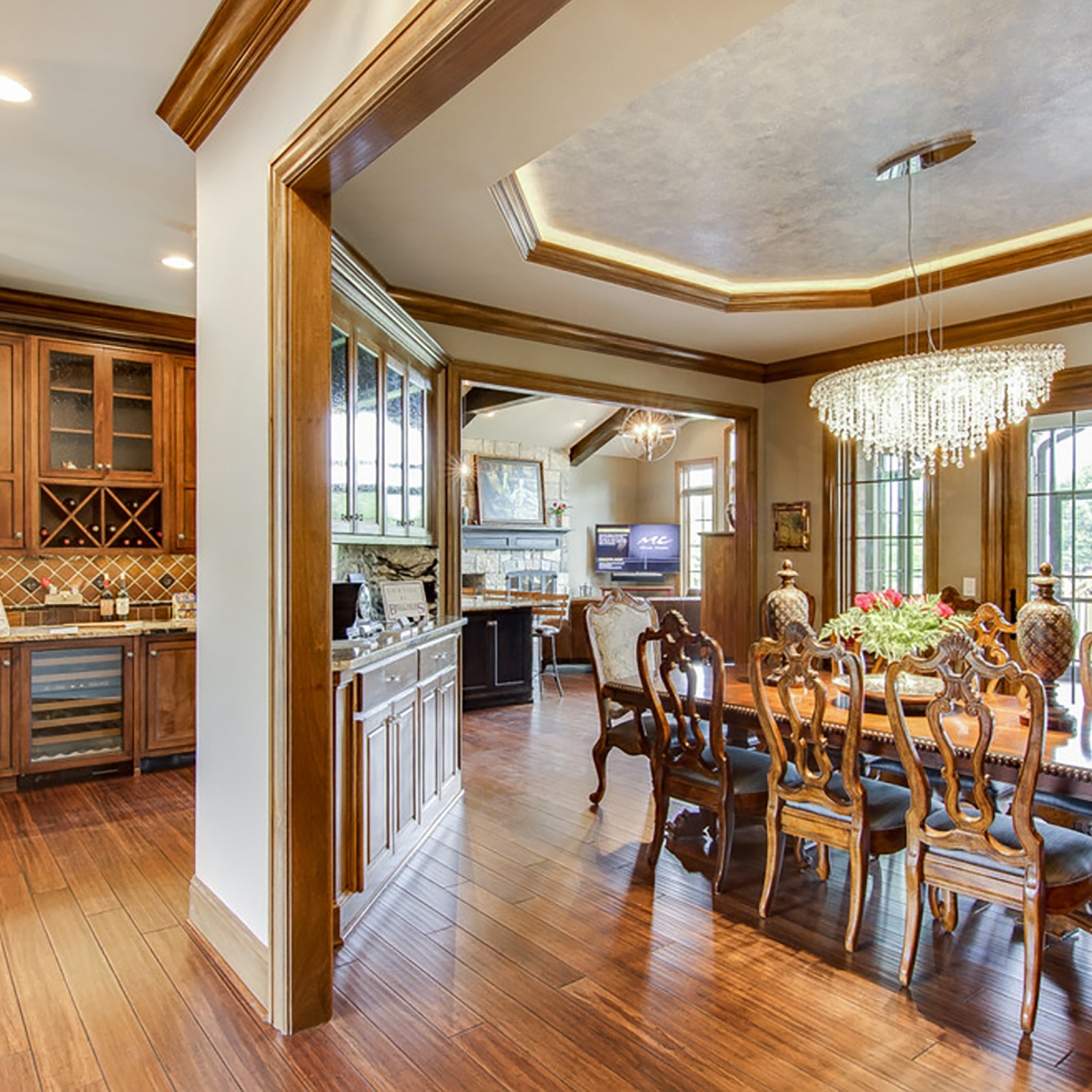
Antique Java Bamboo
Fully carbonized with hand-scraped texture
Antique Java is our most dramatic bamboo option. Full carbonization creates deep, espresso-like tones, while artisan hand-scraping adds rustic texture and character. Each plank is a unique work of art—aged to perfection like a mountain cabin floor with decades of history.
Best Styles for Antique Java
- Rustic/Farmhouse: The hand-scraped texture and rich color are made for this aesthetic
- Cottagecore: Evokes the warmth of a cozy cabin or countryside retreat
- Traditional: The depth and character complement formal, classic interiors
- Mountain/Lodge: Perfect for ski homes and mountain retreats
Pairs Well With
- Cabinets: Cream, antique white, sage, or matching dark wood
- Furniture: Distressed wood, leather, wrought iron, natural textiles
- Walls: Warm whites, stone textures, exposed brick, or forest greens
Bamboo Color Comparison Table
| Feature | Natural | Mocha | Antique Java |
|---|---|---|---|
| Color Tone | Golden honey | Warm pecan | Rich espresso |
| Carbonization | None | Light | Full |
| Texture | Smooth | Smooth | Hand-scraped |
| Best For | Modern, Scandinavian, Coastal | Transitional, Mid-Century, Craftsman | Rustic, Farmhouse, Traditional |
| Room Feel | Bright, airy, spacious | Warm, welcoming, balanced | Cozy, dramatic, character-rich |
| Shows Dust? | Less visible | Moderate | More visible |
| Cabinet Pairing | White, light gray, bold colors | White, cream, sage, wood tones | Cream, antique white, dark wood |
| Plank Size | 72-7/8" x 5-5/16" | 72-7/8" x 5-5/16" | 72-7/8" x 5-5/16" |
| Thickness | 9/16" | 9/16" | 9/16" |
| Warranty | 50-year residential | 50-year residential | 50-year residential |
Installation & Care
Installation Options
CALI Engineered Bamboo features a click-lock system for easy installation:
- Floating installation: Click planks together over underlayment—no glue or nails needed. Best for DIY and works over most existing floors.
- Glue-down installation: Apply flooring adhesive directly to concrete or wood subfloors for a permanent, quieter installation.
Where to Install
Engineered bamboo can be installed:
- Living rooms, bedrooms, hallways
- Kitchens (wipe up spills promptly)
- Basements (over concrete with moisture barrier)
- Over radiant heat systems
Note on Bathrooms
While bamboo is more water-resistant than traditional hardwood, it's not waterproof. For bathrooms with showers/tubs, we recommend waterproof flooring like vinyl instead.
Care & Maintenance
- Sweep or vacuum regularly to remove grit that can scratch the finish
- Use a damp mop (not wet) with a pH-neutral cleaner
- Wipe up spills promptly—don't let water sit
- Use felt pads under furniture legs
- Trim pet nails to prevent scratching
Frequently Asked Questions
Is bamboo flooring good for dogs?
Yes—bamboo is one of the best flooring choices for dogs. Strand-woven bamboo is harder than most hardwoods, so it resists scratches from pet nails better than oak, maple, or other traditional options. The Aluminum Oxide finish adds another layer of protection.
Is bamboo harder than hardwood?
Strand-woven (fossilized) bamboo is significantly harder than most hardwoods. It rates around 4,000-5,000 on the Janka hardness scale, compared to 1,290 for red oak or 1,360 for white oak. Only exotic hardwoods like Brazilian cherry come close.
How long does bamboo flooring last?
With proper care, engineered bamboo flooring can last 50+ years. CALI backs their bamboo with a 50-year residential structural warranty and 50-year finish warranty.
Can I refinish bamboo flooring?
Engineered bamboo can typically be refinished 1-2 times, depending on the thickness of the bamboo wear layer. However, with proper care and the durable Aluminum Oxide finish, refinishing is rarely needed.
Is darker or lighter bamboo better?
Neither is "better"—it depends on your style and practical needs. Lighter floors (Natural) make rooms feel larger and show less dust. Darker floors (Antique Java) create drama and warmth but show dust more easily. Mocha is the versatile middle ground.
See & Feel the Quality
Order samples of all three bamboo colors. Experience the hardness, see the grain, and find your perfect match.