
Best Basement Flooring Over Concrete: SPC vs. Laminate (2026)
A concrete slab is the toughest floor in the house to finish. Groundwater pushes up from below, humidity swings with the seasons, and the wrong floor cups, warps, or traps mold. Here is how to test your slab, plan your vapor barrier, and choose between SPC vinyl and waterproof laminate with confidence.
Quick Answer: What is the best basement flooring over concrete?
- SPC vinyl is the safest all-around choice over a concrete slab. It is 100% waterproof, dimensionally stable, and floats directly over the concrete.
- Waterproof laminate is a great option for dry, conditioned basements when you want a warmer, more solid feel underfoot and a highly realistic wood look.
- Always test slab moisture first. A quick plastic-sheet test plus a calcium chloride test tells you what your slab is really doing.
- Use a vapor barrier where required. Most bare-concrete installs call for a 6-mil poly vapor barrier unless the plank has an attached moisture-blocking pad.
A finished basement is some of the best square footage you can add to a home, but it sits on the one surface every flooring product respects: a poured concrete slab in direct contact with the ground. Unlike a wood subfloor upstairs, that slab is porous, cool, and constantly exchanging moisture with the soil beneath it.
Get the moisture question right and your basement floor lasts for decades. Get it wrong and you are looking at cupping, edge swelling, or trapped humidity under the planks. This guide walks you through testing your slab, deciding whether you need a vapor barrier, and choosing between the two floors we recommend most for basements: rigid SPC vinyl and waterproof laminate.
In This Guide:
Why Basements Are Different
Every other room in your house sits above grade on a wood or joisted subfloor with air moving underneath. A basement floor is below grade, poured directly onto or into the ground, and that changes everything about how it behaves.
- The slab is a moisture reservoir. Concrete is porous and wicks water from the soil through capillary action. Even a slab that looks bone dry can be pushing water vapor upward every hour of the day.
- Hydrostatic pressure works against you. When the water table rises after heavy rain or snowmelt, ground water presses up against the underside of the slab and drives moisture through it.
- Temperature swings are bigger. Basements run cooler and see wider humidity shifts than the living space above. Materials that expand and contract with those swings need a stable core to stay flat.
- Air movement is limited. With less ventilation than upstairs, any moisture that does get trapped under a floor has a harder time drying out.
None of this means you cannot have a beautiful basement floor. It just means the smart move is to measure the slab before you buy, then match the flooring to what your concrete is actually doing. That is exactly what the next two sections cover.
Test Your Concrete for Moisture First
Before you pick a color, pick up a moisture test. This is the single most important step for a basement, and it takes a day or two of patience rather than any special skill. There are three tests worth knowing.
1. The plastic-sheet test (quick and free)
Tape a 2-by-2-foot square of clear plastic tightly to the slab on all four edges, then leave it for 24 to 72 hours. If you see condensation on the underside of the plastic or the concrete underneath has darkened, the slab is giving off moisture. This is a great first screen, and you can run it in several spots at once.
2. The calcium chloride test (a real number)
For an actual measurement, a calcium chloride test captures how much moisture the slab emits, reported as the moisture vapor emission rate (MVER) in pounds per 1,000 square feet over 24 hours. You seal a small dish of calcium chloride under a dome on the clean slab, weigh it before and after, and calculate the result. Many floating floors are comfortable up to a stated MVER limit, so this number tells you whether you are in range or need mitigation.
3. The relative humidity probe (most accurate)
The most accurate method is an in-slab relative humidity probe, which reads moisture from inside a small drilled hole rather than just at the surface. It reflects the true condition deep in the slab, which is why it is the reference test on larger jobs. For most basement projects, a plastic-sheet screen plus a calcium chloride number is plenty to make a confident decision.
When to worry: visible condensation under the plastic, a high MVER reading, a slab that stays cold and damp, efflorescence (that chalky white mineral bloom), or a musty smell all point to an active moisture load. In those cases, lean toward fully waterproof SPC vinyl and plan for a moisture mitigation step. A slab that tests dry and stable opens the door to either SPC or waterproof laminate.
Do You Need a Vapor Barrier?
A vapor barrier is a moisture-blocking layer that goes between the concrete and your flooring so slab moisture cannot reach the planks. Whether you need one comes down to your slab and the specific product you choose.
Vapor Barrier Quick Reference
- Bare concrete, no attached pad: most manufacturers require a 6-mil polyethylene vapor barrier laid over the slab, seams overlapped and taped, before the floating floor goes down.
- Product has an attached pad: many SPC planks include an attached pad, some with built-in moisture blocking. Check whether it counts as your barrier or whether the manufacturer still wants separate 6-mil poly underneath.
- High moisture reading: pair the barrier with a dedicated moisture mitigation product rated for your slab conditions rather than relying on poly alone.
- Always follow the spec sheet: the installation instructions for your exact product are the final word. Skipping a required vapor barrier can void the warranty.
The takeaway is simple: over concrete, assume you need a barrier until the product instructions tell you otherwise. A roll of 6-mil poly is inexpensive insurance against the one thing that ruins basement floors. Never stack a second vapor barrier on top of a floor that already has an attached one, since trapping moisture between two barriers causes its own problems.
SPC Vinyl: The Safest Choice Over Concrete
SPC vinyl is our top recommendation for basements over concrete. SPC stands for stone-polymer composite, a rigid SPC core made from limestone powder and stabilizers that is 100% waterproof from top to bottom. Water simply cannot penetrate or swell it, which is exactly what you want sitting on a slab.
Beyond being waterproof, that dense rigid core gives SPC its second big advantage: dimensional stability. It barely moves with the temperature and humidity swings a basement throws at it, so the planks stay flat and the seams stay tight. And because SPC floats over the slab with a click-lock system, there is no glue and no plywood subfloor to build. Clean and level the concrete, add your vapor barrier where required, and the floor clicks together right on top.
All of the SPC picks below are CALI SPC vinyl with a rigid GeoCore composite and a thick wear layer built for real traffic. You can browse the full lineup on our vinyl flooring page, and if you want the deeper science on waterproof cores, our waterproof flooring guide breaks it down.
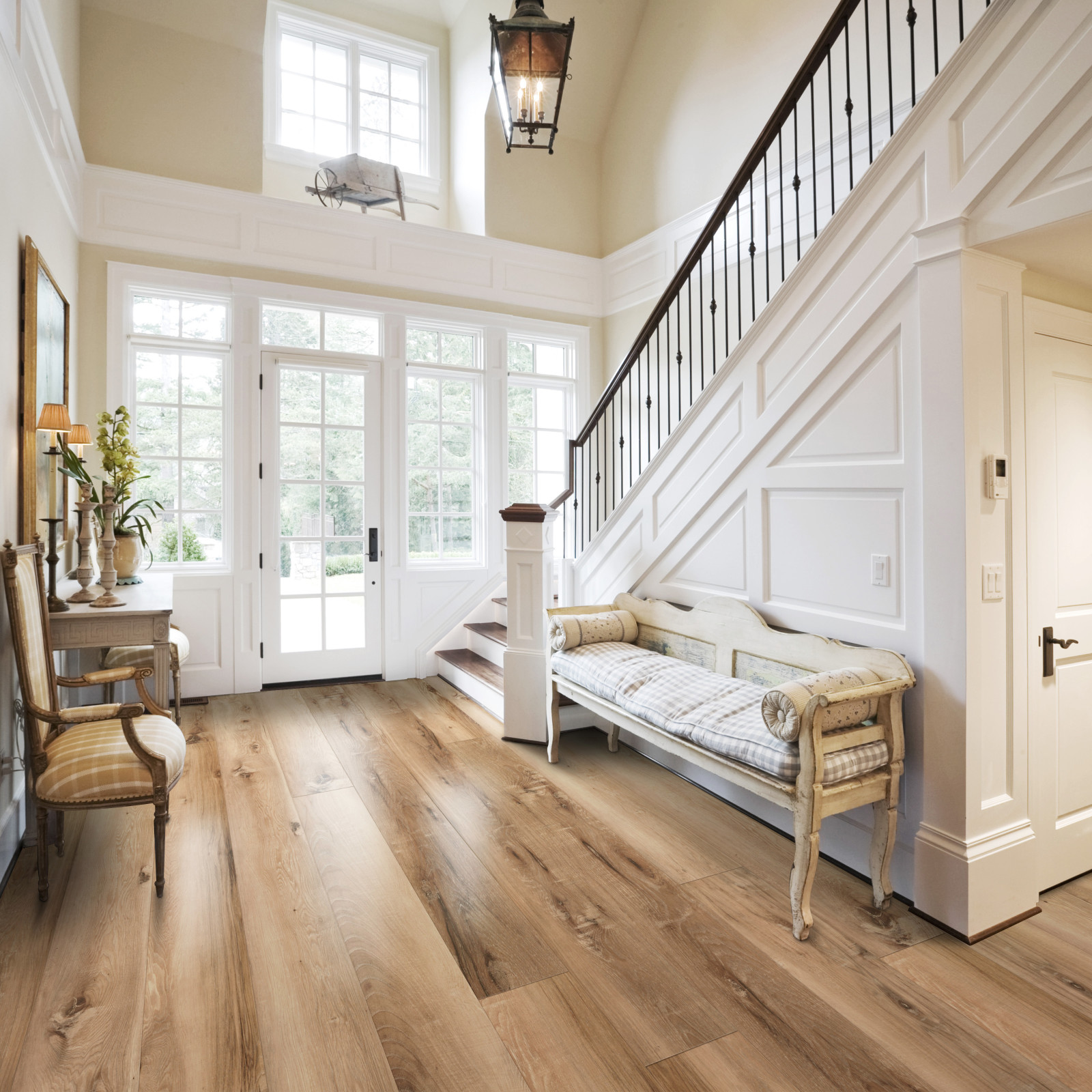
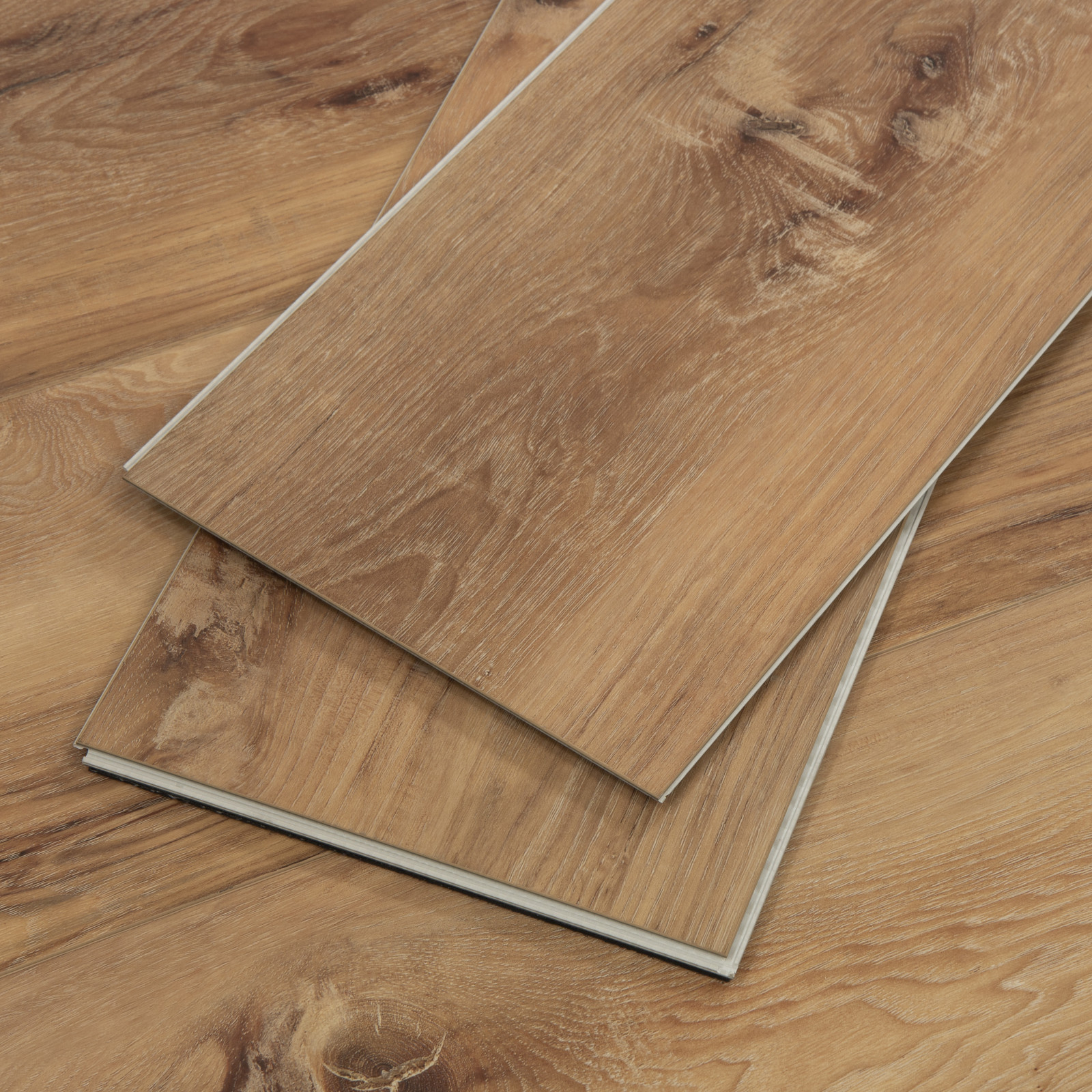
North Shore Oak (Longboards)
SPC vinyl with a 100% waterproof rigid stone-polymer core and 20-mil wear layer
Extra-wide, extra-long planks make a basement feel bigger and cut down on the seams where moisture and dirt like to collect. The rigid core floats straight over concrete and stays flat through seasonal swings, and the 20-mil wear layer takes basement traffic, gym gear, and rolling chairs without flinching.
Get a Quote for North Shore Oak →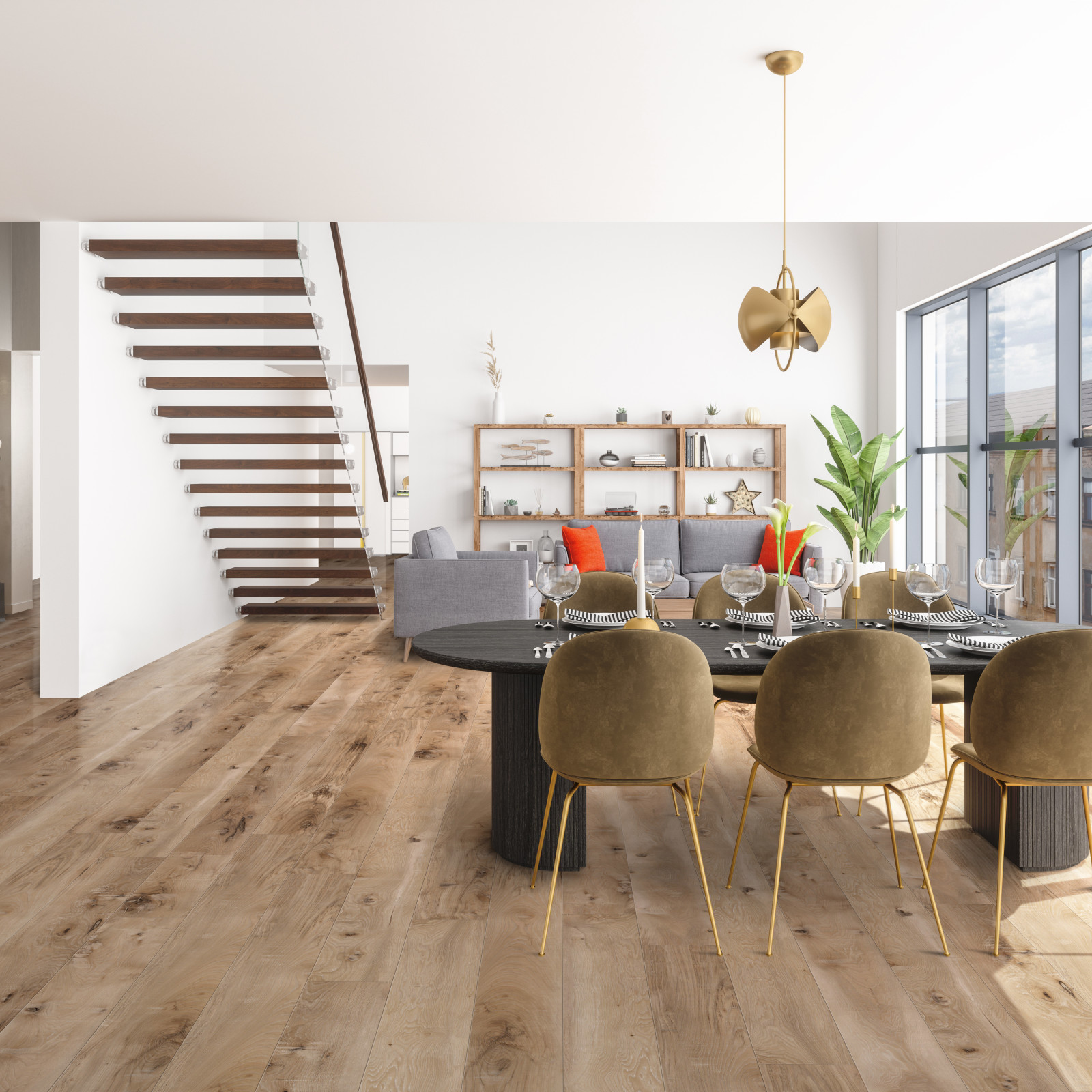
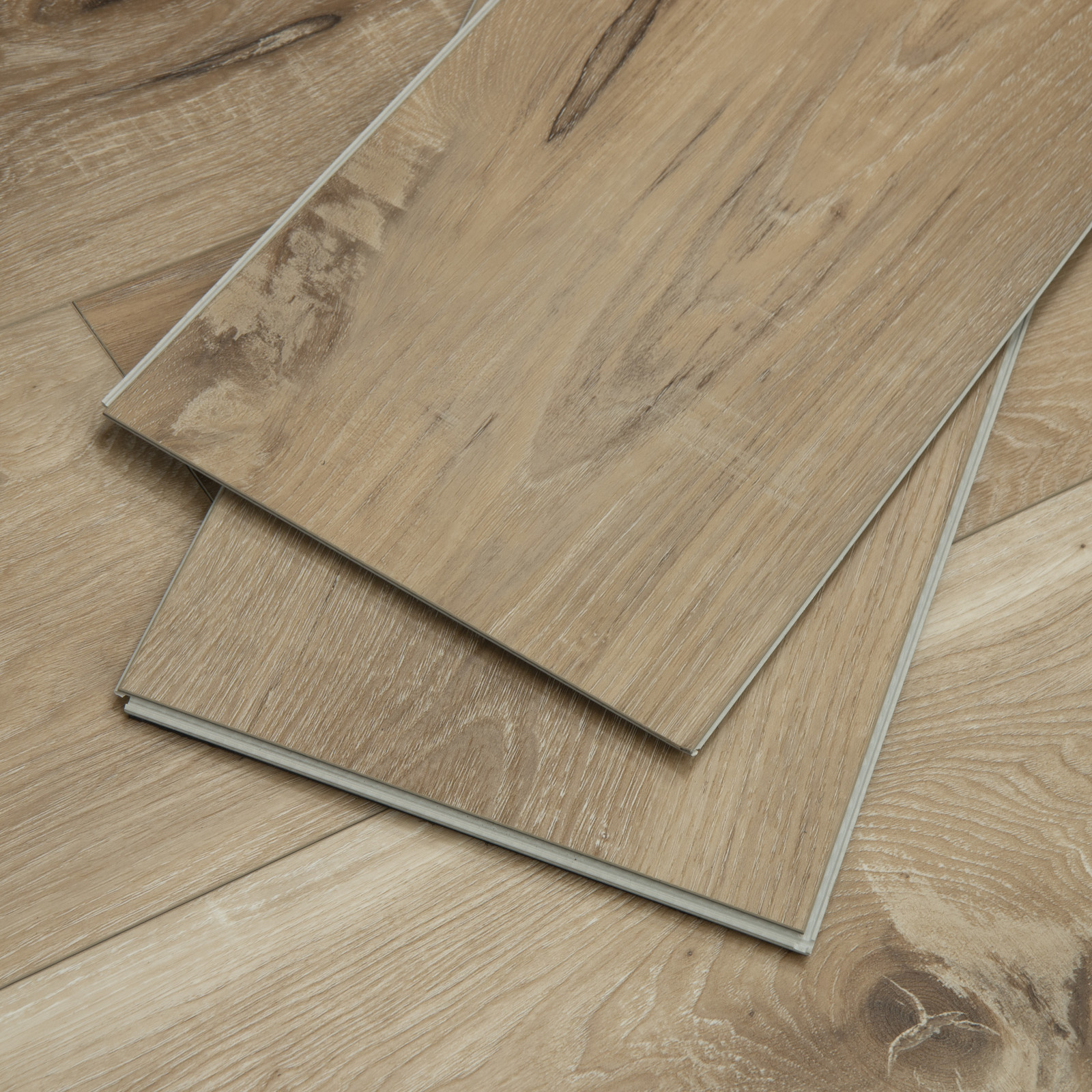
Seaboard Oak (Longboards)
SPC vinyl with a 100% waterproof rigid core and 20-mil wear layer
A warm, sandy oak with soft grain that brightens a below-grade room and hides everyday dust between cleanings. The waterproof rigid core shrugs off slab moisture and floats over concrete with a click-lock fit, so a finished basement, playroom, or home office comes together without glue or a wood subfloor.
Get a Quote for Seaboard Oak →
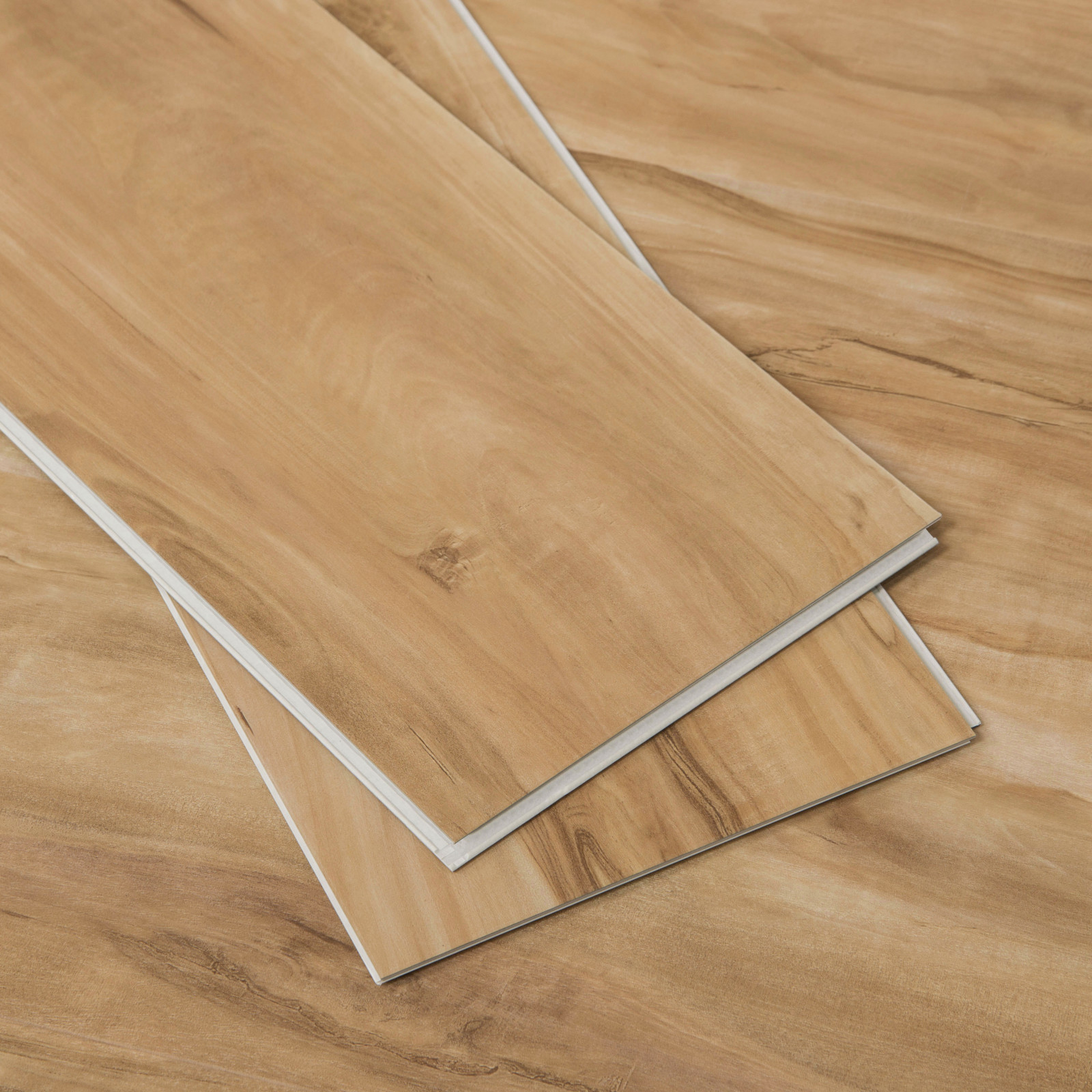
Blonde Ale (Select)
SPC vinyl with a 100% waterproof rigid stone-polymer core and 20-mil wear layer
A light, easygoing blonde that opens up a lower level and keeps a basement from feeling like a basement. The 100% waterproof core installs floating over the slab and stays dimensionally stable through the cool, humid conditions below grade, while the 20-mil wear layer holds up to years of foot traffic.
Get a Quote for Blonde Ale →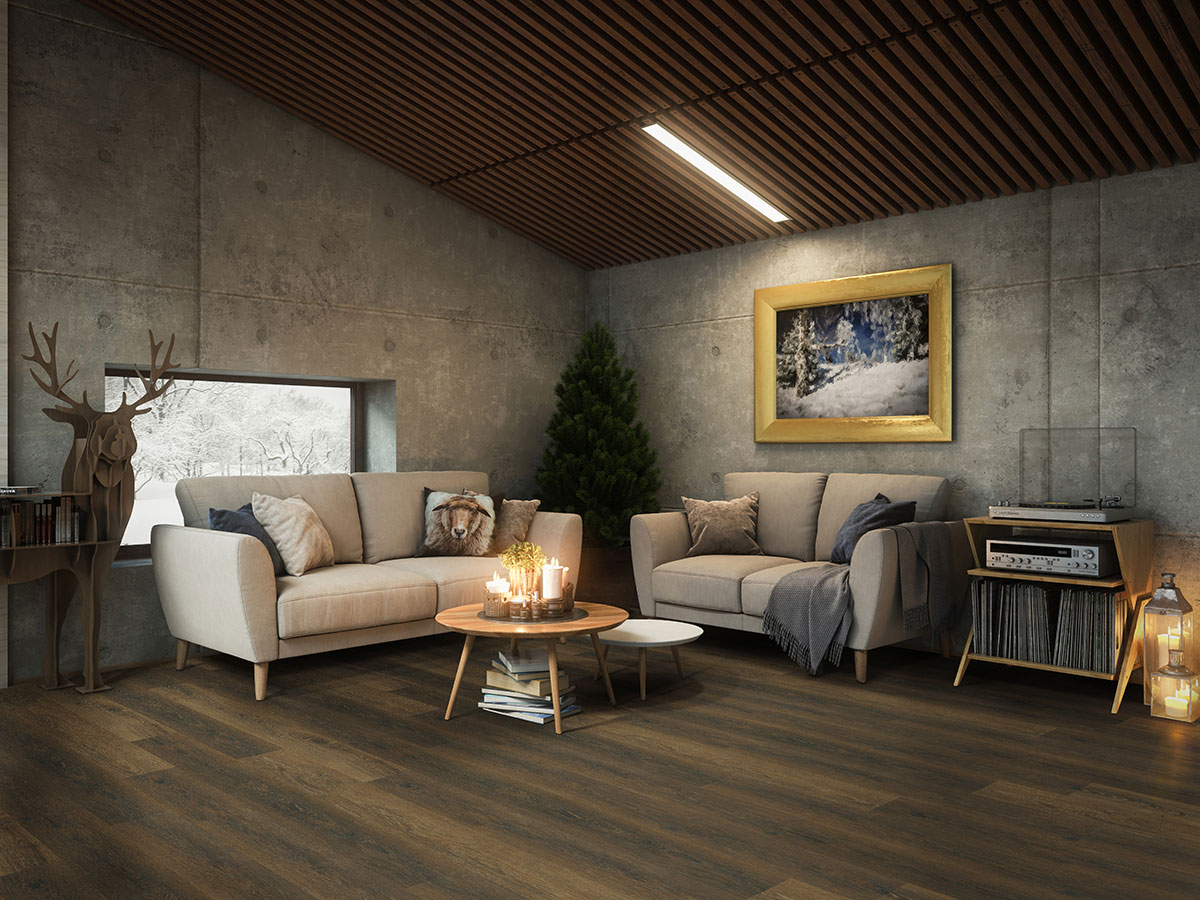
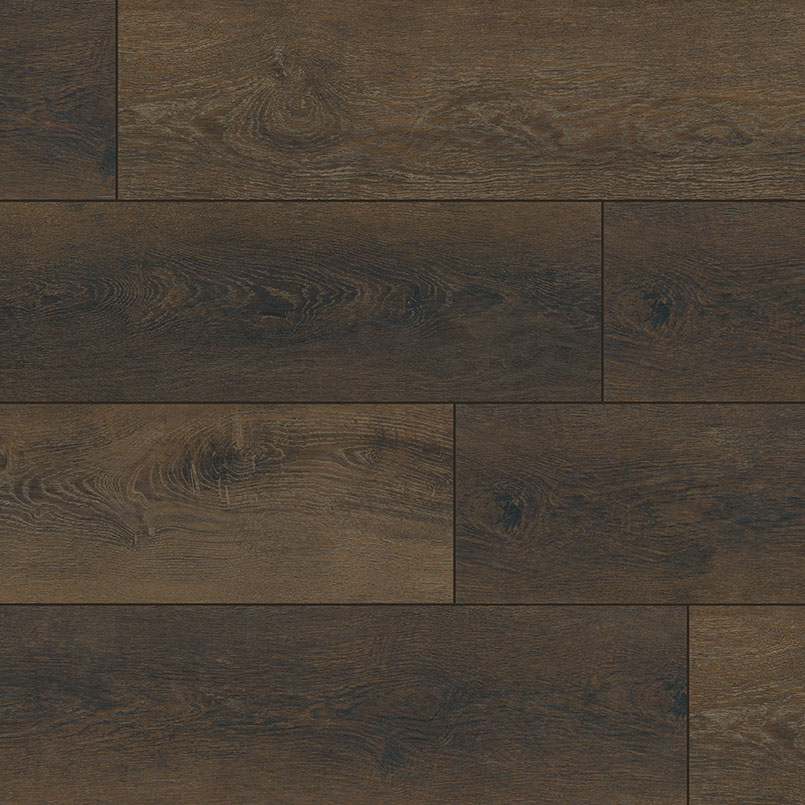
Barrell (MSI Everlife XL Cyrus)
SPC vinyl with a 100% waterproof rigid stone-polymer core, 12-mil wear layer, and 9-inch by 60-inch planks
A deep, warm brown that grounds a lower level and gives a finished basement a rich, cozy feel that reads more like a main-floor living room. The rigid core floats over concrete and holds steady through the cool, humid conditions below grade, and the extra-wide, extra-long planks keep seams to a minimum across a big open basement.
Get a Quote for Barrell →Waterproof Laminate: Warm Underfoot for Dry Basements
Waterproof laminate is an excellent choice for a dry, conditioned basement. If your slab tested dry and stable and you run a dehumidifier or the space is climate-controlled, laminate rewards you with a look and feel that is hard to beat. Modern CALI laminate ranges from water-resistant to waterproof depending on the line, so it is genuinely built for real living spaces.
Two things make laminate special underfoot. First, it has a firm, solid walking feel that reads as authentic wood, with a natural warmth many homeowners prefer for a basement lounge, bedroom, or media room. Second, the printed and embossed surface delivers deep grain and realistic wood texture that photographs and feels like the real thing. Many collections carry an AC4 durability rating, which handles heavy residential and light commercial traffic with ease.
The picks below come from CALI laminate, and you can see the full range on our laminate flooring page. For more on how far waterproof laminate has come, our guide to waterproof luxury laminate versus LVP is a good next read.
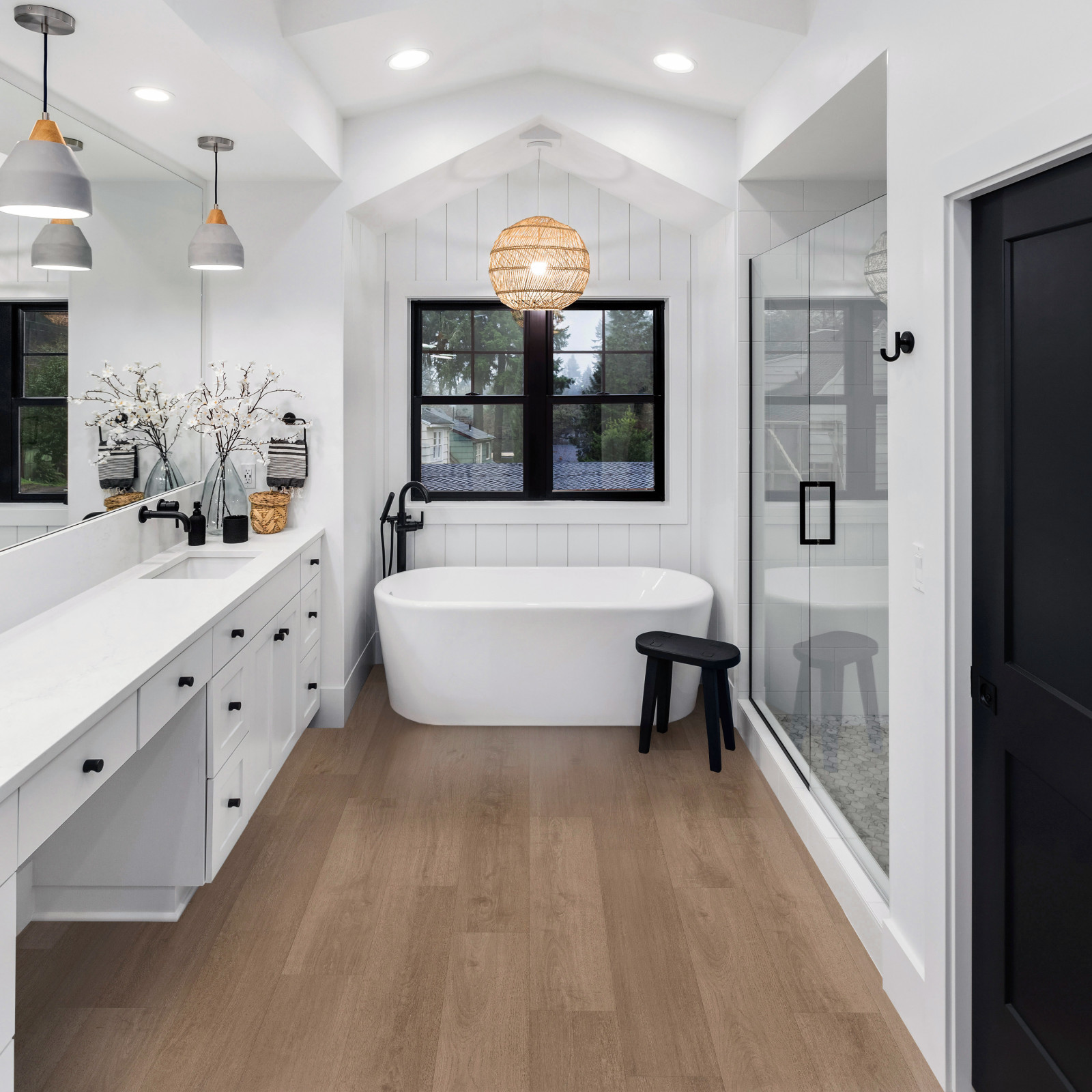
Estuary Oak (Pacifica)
CALI laminate with an AC4 durability rating and realistic wood texture
A balanced, natural oak with soft movement in the grain that brings genuine wood warmth to a dry, conditioned basement. The AC4-rated surface stands up to family traffic and rolling furniture, and the firm underfoot feel makes a lower-level living room, den, or guest suite feel like the rest of the home rather than the basement.
Get a Quote for Estuary Oak →
Half Moon Oak (Mavericks)
CALI laminate with deep embossed grain and a solid underfoot feel
A warm, honeyed oak with rich embossing that gives a dry basement the comfortable, grounded look of a real wood floor. The firm, solid walking feel and detailed grain make it a natural fit for a conditioned lower-level family room or home office where you want warmth and character without heading upstairs.
Get a Quote for Half Moon Oak →SPC vs. Laminate Over Concrete: Comparison
Both floors belong in a basement. The right one depends on how your slab tested and how the space is conditioned. Here is how they stack up over concrete.
| Factor | SPC Vinyl | Waterproof Laminate |
|---|---|---|
| Waterproof | 100% Waterproof | Water-resistant to waterproof |
| Moisture tolerance over slab | Highest, handles active slab moisture | Best on dry, stable slabs |
| Underfoot feel and warmth | Comfortable, slightly softer | Firm, solid, warm wood feel |
| Installation over concrete | Floats directly, click-lock | Floats directly, click-lock |
| Best-fit basement type | Any basement, especially higher-moisture | Dry, conditioned, humidity-controlled |
The short version: if there is any real moisture risk in your slab, go SPC and never think about it again. If your basement is dry and climate-controlled and you want that warm, authentic wood feel underfoot, waterproof laminate is a beautiful choice.
How to Install Over Concrete
Both floors install as floating, click-lock systems, so the process is similar once your moisture plan is set. Here is the basic sequence.
- Clean and level the slab. Sweep and vacuum thoroughly, scrape off any old adhesive or paint, and grind down high spots. Fill low spots with a cement-based leveler so the slab meets the flatness tolerance in the product instructions.
- Handle moisture mitigation. Based on your test results, roll out your 6-mil poly vapor barrier where required, overlapping and taping seams, or apply a dedicated moisture mitigation product if the slab reads high.
- Acclimate the flooring. Let the planks sit in the basement, in their boxes, for the time the manufacturer specifies so the material adjusts to the room before installation.
- Leave expansion gaps. Keep the recommended gap around every wall, post, and fixed object. Floating floors need room to expand and contract, and this gap gets hidden under baseboard or quarter-round.
- Click the planks together. Lay them in a floating pattern, staggering end joints, and work across the room. No glue and no nails into the slab, which keeps the moisture barrier intact.
For a step-by-step walkthrough with tools and technique, see our full guide on how to install vinyl plank flooring. The floating-floor method there applies to both SPC and waterproof laminate over concrete.
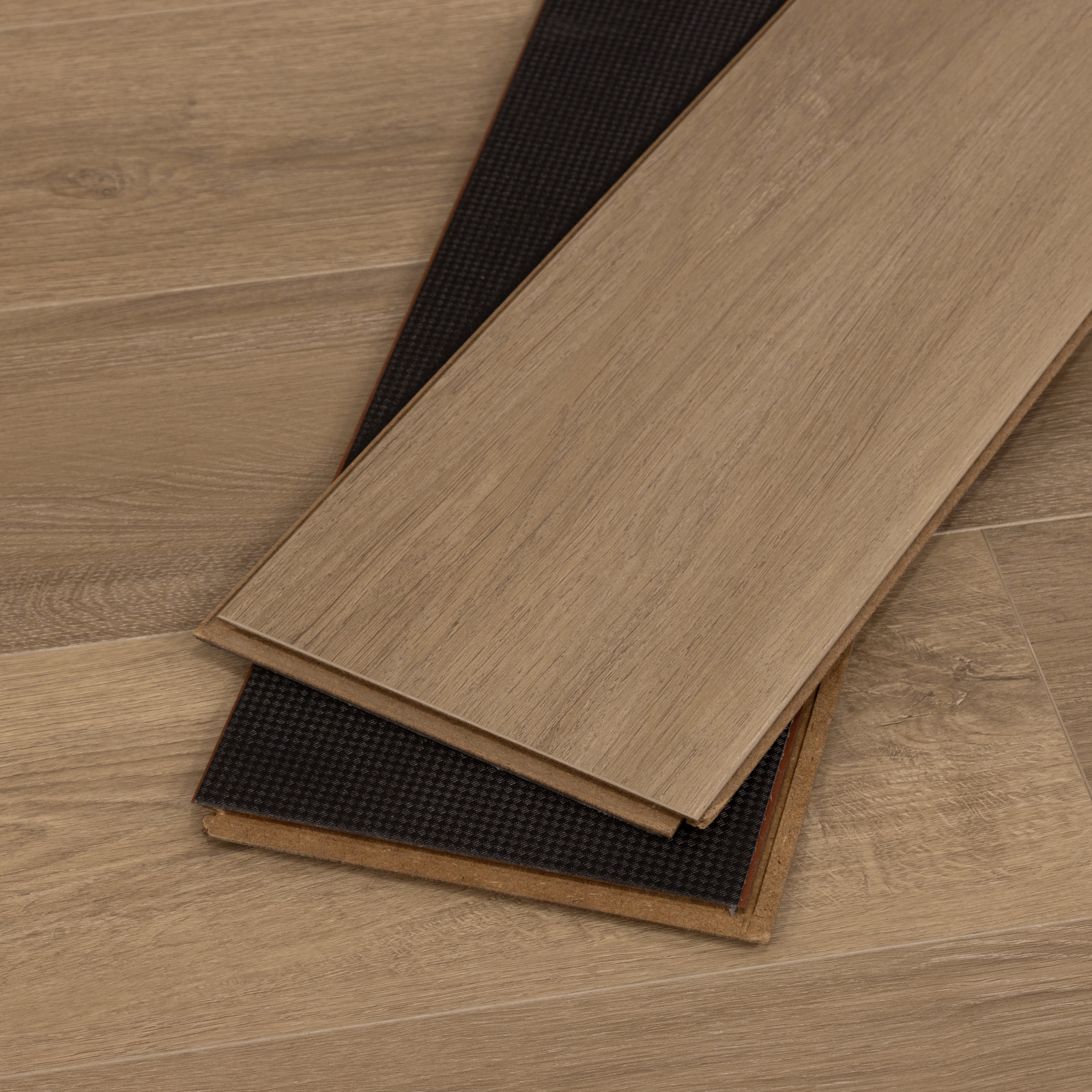
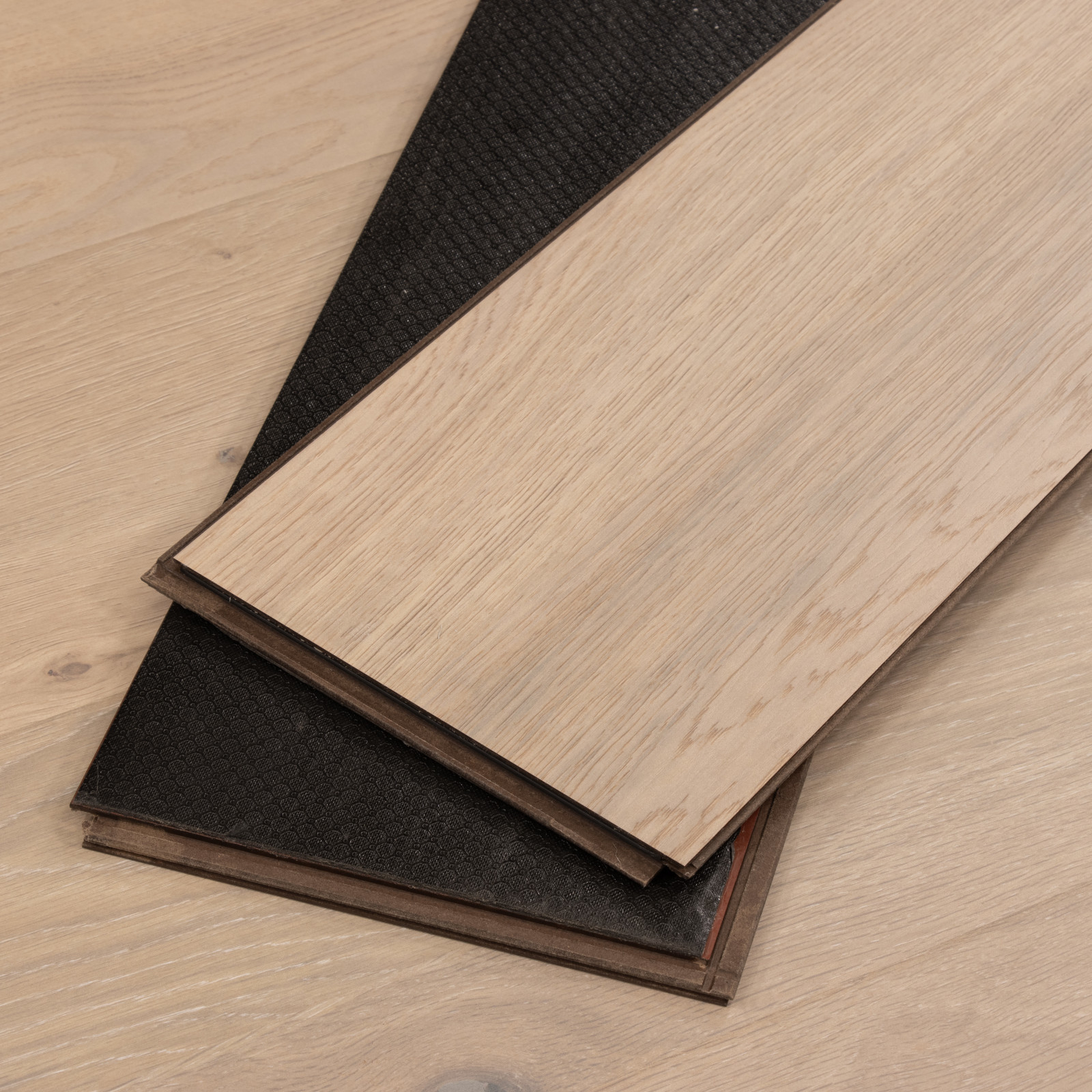
Order the samples from this guide.
Photos get you close. Holding the plank in your own light gets you certain. Samples are free, shipping is a flat $9.99, and they arrive at your door in days.
Frequently Asked Questions
Can you put vinyl plank directly on concrete?
Yes. Rigid SPC vinyl is designed to float directly over a concrete slab with no plywood subfloor. Clean and level the slab first, confirm it meets the manufacturer's flatness tolerance, and check moisture. Many SPC planks come with an attached pad, and where the manufacturer calls for it you add a 6-mil poly vapor barrier over the concrete before the click-lock planks go down.
Is SPC or laminate better for a basement?
For a below-grade basement over concrete, SPC vinyl is the safest all-around choice because its stone-polymer core is 100% waterproof and dimensionally stable against moisture and temperature swings. Waterproof laminate is a great choice for dry, conditioned basements where you want a warmer, more solid feel underfoot and a highly realistic wood look. Test your slab moisture first, then match the product to your conditions.
Do I need a vapor barrier over concrete?
It depends on your slab and the product. Concrete is porous and can wick moisture from the ground, so most manufacturers require a 6-mil polyethylene vapor barrier over bare concrete unless the flooring has an attached moisture-blocking pad. Always follow the installation instructions for your specific product, since installing without a required vapor barrier can void the warranty.
How do I test my basement slab for moisture?
Start with the plastic-sheet test: tape a 2-by-2-foot square of clear plastic tightly to the slab and check for condensation or darkening after 24 to 72 hours. For a real number, use a calcium chloride test to measure the moisture vapor emission rate (MVER) in pounds per 1,000 square feet over 24 hours, or an in-slab relative humidity probe for the most accurate reading. If readings run high, use a moisture mitigation product or choose fully waterproof SPC vinyl.
Is waterproof laminate OK in a basement?
Yes, in the right basement. Modern CALI laminate ranges from water-resistant to waterproof depending on the line, and it performs well in a dry, conditioned basement with a stable slab and controlled humidity. It gives you a warm, solid feel and a realistic wood look. If your slab tests wet or the space is prone to seepage, SPC vinyl is the safer pick.
How do I order free samples?
Samples are free. You only pay a flat $9.99 shipping fee per order, and you can add up to 10 samples to a single order. Order the swatches you are weighing, set them right on your basement slab, and check the color and texture in your own light before you commit.
Ready to Finish Your Basement?
Order free samples and see the color and texture on your own slab before you buy.